 Guide On Map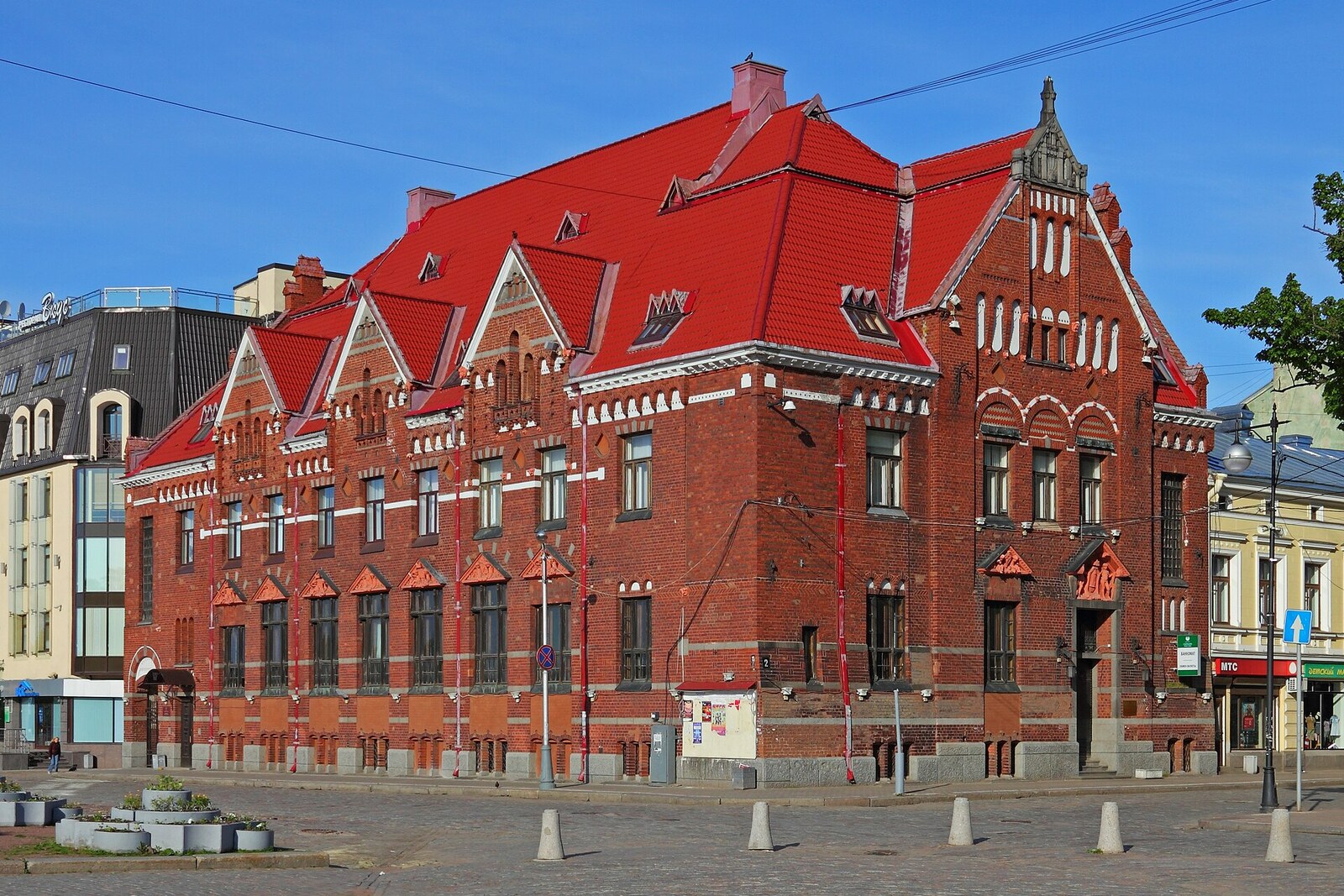
Look around first
What to notice
- The dates “1790” and “1816” on the facade
- A carved sailing ship
- Red-gray granite cladding
- The stone line of the former curtain wall
The story of the place
The house received the nickname “Granite Palace” because of its costly facing of local stone with red and gray hues. The trading house's office was placed inside, with the owner's apartment above it. The former family house, where the residence and office were combined, was dismantled before this rebuilding. Severny Val Street follows the line of the old fortress wall: its upper section was removed for a boulevard, but the lower granite facing of the curtain wall was preserved.
Two years are carved into the granite facade: seventeen ninety and eighteen sixteen. The house itself did not appear until nineteen oh eight. The earlier dates were placed here by Wilhelm Hackman, the owner of a trading firm and the grandson of the woman who effectively created Hackman & Co.
Another stone house stood on this plot at the time. Johan Friedrich Hackman, the founder of the trading house, bought it in eighteen oh six: the family lived here, where the office was also located. Johan died a year later. His widow, Maria Elisabeth Hackman, who was thirty-one years old, worked to preserve the business until her son came of age.
For the first years, she ran the firm together with her late husband's former partner. Then the partnership dissolved, and the trading house's property was placed under arrest because of an ownership dispute. The proceedings continued until eighteen eleven. When the restrictions were lifted, Maria informed her business partners that she now handled all affairs herself. At first, the documents read, “Widow of Johan Friedrich Hackman.” At the beginning of eighteen sixteen, she took an accountant into partnership, and the name Hackman & Co. appeared.
Maria bought timber and shares in sawmills north and east of Vyborg, selling boards abroad. Under her, the trading house became Finland's leading timber exporter. In eighteen twenty-nine, she brought her grown son into the business, but separately published a warning for partners in the official newspaper: management remained with her.
Almost a century later, her grandson Wilhelm ordered the old family house dismantled and had a combined office and residence built on the same site. The firm's employees worked below, with the owner's apartment above them. The number eighteen sixteen on the facade marks the year when the widow gave the company its name. A sailing ship is carved beside it—the Hackman family engaged in shipping and exported goods by sea. “Granite Palace” was a nickname: the house held no palace title and was called that for its costly cladding of local red-gray stone.
Severny Val Street follows the line of the former city fortifications. After their upper section was dismantled, a boulevard was laid out here, while the lower granite facing of the curtain wall was preserved. The Hackman office stood beside the street that appeared in place of the wall and received a facade of the same material.
The old house where Maria Hackman defended the family business has been dismantled. Not a room or a desk remains from her office. What remains is the year eighteen sixteen, carved into granite by her grandson.
Useful on site
Exterior viewing is unrestricted; interior access is not part of the route and depends on separate tours or the building's current condition.
Checked: June 24, 2026. Check the official source before visiting.This is an exterior viewing stop: the former office and residential interiors have been lost or altered. The facade is easiest to take in slowly, moving from one relief to the next.