 Guide On Map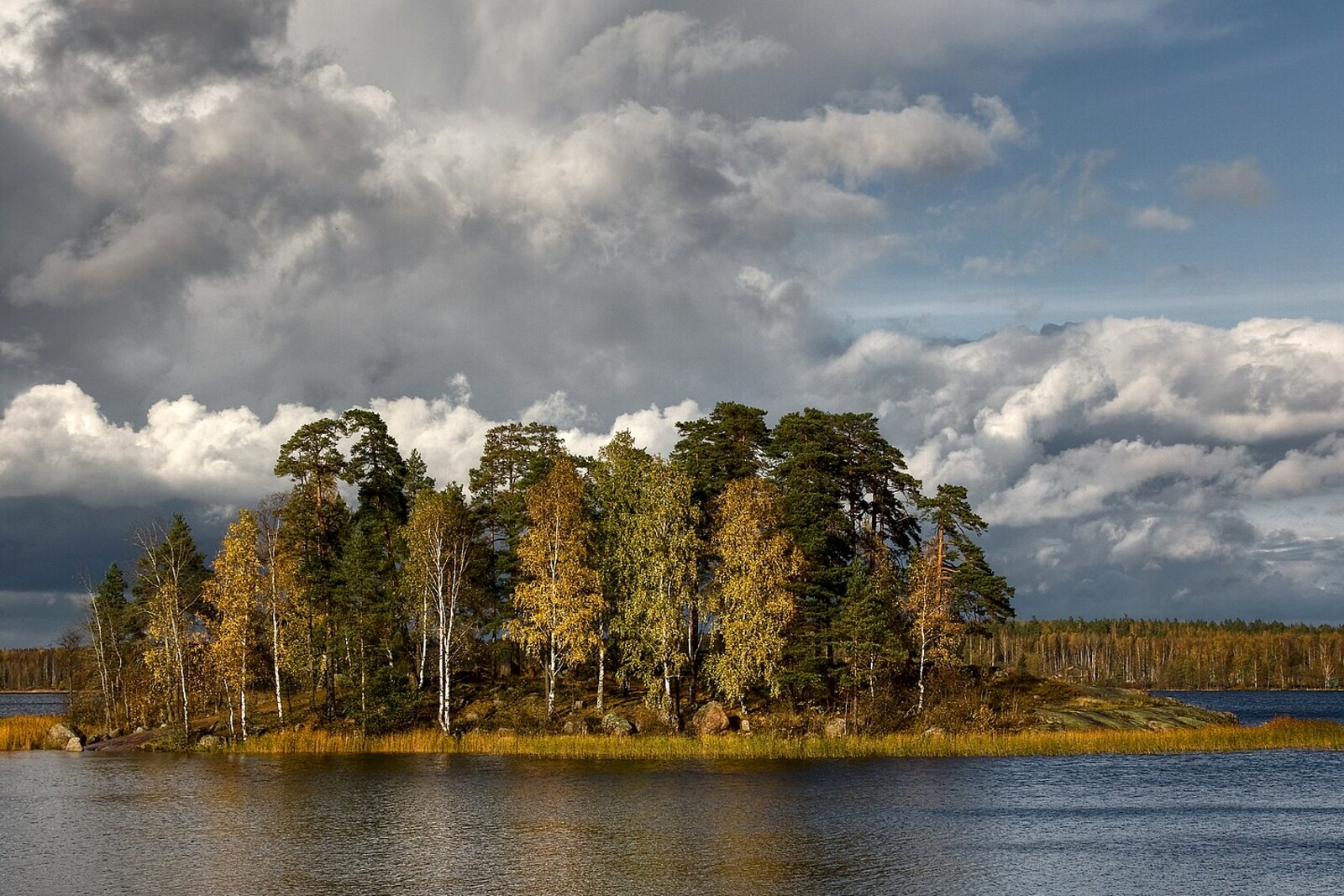
Look around first
What to notice
- Gothic Gate
- Ludwigsburg Chapel on the island
- Obelisk to the de Broglie brothers
- Narcissus Spring Pavilion
The story of the place
The former country estate stretches along the granite shore, and its owners spent two decades turning it into a landscape park. Here they laid out avenues between the rocks, reinforced the water's edge, and set up pavilions for walks. The French name remained from the former residence of the Vyborg governor-general, although the estate itself changed owners. The Gothic Gate and the Narcissus Spring Pavilion still mark this route among stone and water.
In eighteen twenty, the Russian diplomat Paul von Nicolay brought the remains of both his parents here. They died one after the other, and Paul inherited Monrepos Park while serving as Russia's envoy in Copenhagen. On a rocky island near the shore, he established a family cemetery and commissioned the neo-Gothic Ludwigsburg Chapel. The island itself received the name Ludwigstein Island—“Ludwig's Rock”—in honor of Paul's father.
His father, Ludwig Heinrich von Nicolay, was tutor to the future Emperor Paul I, a poet, and later president of the Imperial Academy of Sciences. He bought the estate in seventeen eighty-eight and for two decades hired garden masters, laid out avenues, reinforced the shores, and built pavilions. He retained the name from the previous owner—the Vyborg governor-general Friedrich Wilhelm Karl, Duke of Württemberg. The duke gave his country residence the French name Monrepos—“my place of rest”—but after a conflict with Catherine II, he was forced to leave Russia. The name remained with the next family.
For Paul, it was both his parents' estate and the place of his own family life. In eighteen eleven, he married Alexandrine Simplicie de Broglie here. Thirteen years later, Alexandrine died; she was buried on the island beside her husband's parents. In eighteen twenty-seven, Paul erected a marble obelisk on a coastal rock for her brothers, Auguste-César and Charles-François de Broglie. Both served as officers in the Russian Imperial Guard and died in battles against Napoleon's army—one at Austerlitz, the other at Kulm. The obelisk also reminded Paul of his wife, who survived her brothers by only a few years.
Under Paul, almost all the park monuments that have survived to this day appeared: the Gothic Gate, the Narcissus Spring Pavilion, the statue of Väinämöinen, the de Broglie Obelisk, and the chapel on the island. Then he decided to protect the estate itself from being divided. In eighteen thirty-four, Paul petitioned the Governing Senate and secured for Monrepos Park the status of a protected estate that could not be sold. This meant that the heirs could not sell off the land in parts: everything passed to the eldest in the family. The family kept Monrepos Park intact for more than another hundred years.
After retiring in eighteen forty-seven, Paul settled here permanently. He died in eighteen sixty-six and was buried on Ludwigstein Island beside Alexandrine. In the postwar years, the family cemetery was destroyed, and the bridge to the island was later dismantled. Today the island is closed to visitors, but the dark four-towered chapel can be seen from the shore. Paul lies there, while on this side of the water the obelisk to his wife's family remains.
Useful on site
The park is open daily: during the summer season 9:00–20:00, with exit until 22:00; during the winter season 9:00–18:00, with exit until 20:00; admission is charged, with a separate rate for foreign nationals; animals are not permitted.
Checked: June 24, 2026. Check the official source before visiting.This is a large open area with nature trails: choose a route according to your strength and the weather, without trying to see everything. Move carefully on the rocks and in wet areas.