 Guide On Map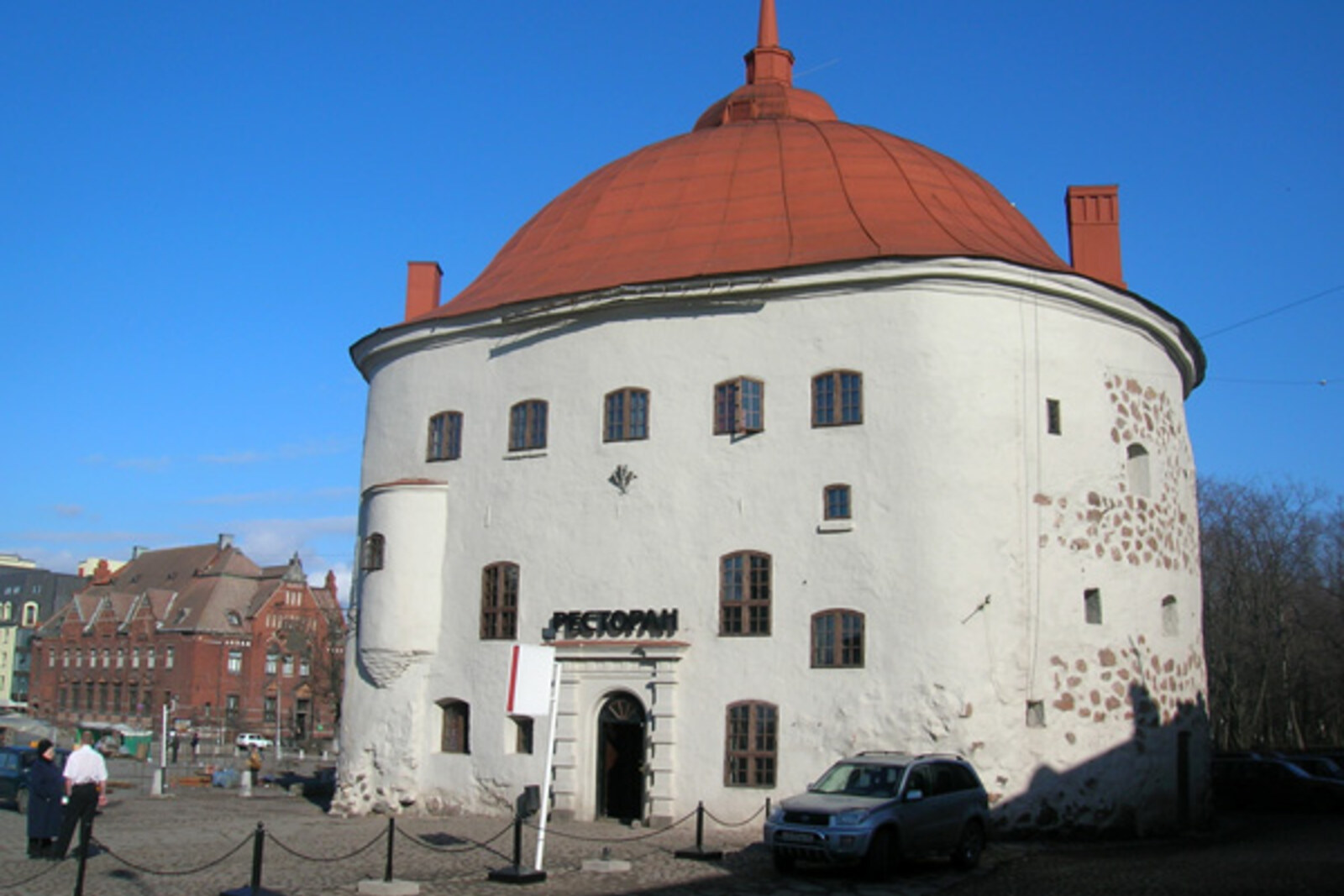
Look around first
What to notice
- A stone cylindrical tower
- The outline of the city wall and the Cattle Gate in the pavement
- Thick masonry by the entrance
The story of the place
In nineteen hundred, architect Waldemar Aspelin completed the Nordic Bank Building next door and demanded that the Round Tower be removed. It blocked the main entrance and prevented the new facade from being seen in full. To Aspelin, it was an old stone mass standing in precisely the most unsuitable place.
When the tower was built, however, the location was just right. In the middle of the sixteenth century, Swedish King Gustav Vasa was fortifying the eastern entrance to Vyborg, and the military engineer Hans Bergen placed a round artillery tower in front of the city wall, by the Cattle Gate. From here, artillerymen could fire along the wall at anyone who had come right up to it. The circular plan helped cannonballs glance off the masonry, while walls up to four meters thick withstood bombardment.
The fortifications were then dismantled, freeing the land for streets and Market Square. The outline of the vanished wall and gate is now laid out in the pavement before the entrance. The tower remained alone: first it held weapons, then goods and gardening equipment. What had once made it possible to control the approaches to the city now obstructed traffic and hid the bank facade. Some municipal administrators agreed with demolishing it.
Vyborg architect Uno Ullberg was looking for a role for the tower that would make the townspeople willing to maintain it. At the same time, the local Technical Club needed a permanent space for meetings. Ullberg brought these needs together: the club established a separate joint-stock company, obtained permission from the Commission for Ancient Monuments, and leased the tower from the city for thirty years. This was no longer a call to preserve the old, but a financial commitment.
Ullberg left the heavy stone shell outside and installed a restaurant, club rooms, and a library within it. In the upper hall, the massive central support was dismantled and replaced with four columns, allowing about one hundred fifty people to be seated at tables. Dishes were brought up from the kitchen by a small elevator, so waiters in historical costumes did not have to carry trays up the narrow stairs. On November eighteenth, nineteen twenty-three, the restaurant opened, and the tower became a place for lunches, meetings, and city celebrations.
The war years interrupted this life, the interiors were damaged, and a warehouse was set up inside again. In the nineteen seventies, architect Viktor Dmitriev restored its restaurant function, and in nineteen seventy-six the halls welcomed visitors again. The Nordic Bank Building still stands behind the round stone mass. And behind the tower door, a restaurant operates—the very role Ullberg devised for it more than a century ago.
Useful on site
The Round Tower Restaurant is usually open 12:00–23:00; outside viewing is unrestricted at any time.
Checked: June 24, 2026. Check the official source before visiting.The interior is used by the establishment and does not function as a permanently open museum. If you want to see the historic murals, check in advance whether entry is possible.