 Guide On Map
Puebla Center: Squares, Books, Markets, and Baroque
From the Zócalo through Plazuela de los Sapos and El Parián to the Chapel of the Rosary
Guide On Map on your phone
Open the walk like a regular app
It takes about 10 seconds to install. No app store needed.
The whole path
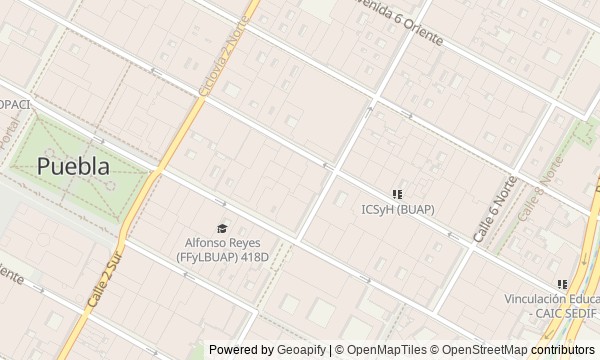
Route map
About the walk
The walk begins at the Zócalo, follows the Cathedral and the library, then heads east—to the antiques square, the craft market, workshops, and the theater. At the end, you will return along Calle de los Dulces to Santo Domingo Church and the Chapel of the Rosary.
This is a walk about how the private became public. An oath will be spoken from a balcony before the whole square. Books will be given to people who could not afford their own. One shop will bring merchants out onto the street, empty stalls will become workshops, and a convent craft will take over a whole block. But the answers remain inside the stories: why taking a book away brought the harshest punishment, what nearly appeared in place of the theater, and whose gaze you can look for among nine paintings.
The story follows decisions and objects, not a list of styles. By the end, you will be able to explain why the route from the Zócalo to the golden Chapel of the Rosary passes through a library for city residents, two market relocations, and workshops in former stalls.
Why this order
The Zócalo poses the route’s central question: how does a decision by those in power become the business of city residents? Puebla Cathedral, on the opposite side of the square, continues it through the story of episcopal power and a forced departure. The Palafoxiana Library, opposite the Cathedral’s south side, shows the same figure’s next step—from the church pulpit to books for any literate reader. The road along 5 Oriente leads to Plazuela de los Sapos, where public life emerged not by decree but around a private shop; heading north toward El Parián lets you compare that spontaneous bazaar with a market whose merchants were relocated twice. The neighboring Artists’ Quarter continues the story of the stalls: trading spaces became open workshops, while nearby Teatro Principal carries it onto a shared city stage. The return west along Calle de los Dulces shows how a convent product came to occupy a whole row of family shops. The final Chapel of the Rosary closes the route with another collective undertaking: decades of donations turned into a gilded interior and nine paintings.
Those looking for a story of city life rather than a survey of façades Lovers of libraries, markets, and craft quarters Those who want to connect Baroque interiors with human decisions
Those seeking only the main photo spots without detailed stories Those uninterested in church interiors Those who want to stay within one square and its nearest streets
Before you go
Check access to the Palafoxiana Library, Puebla Cathedral, and the Chapel of the Rosary just before your walk: these are active or controlled spaces, and getting inside is not always possible. In churches, worship takes priority over sightseeing; silence your phone, speak quietly, and do not take photographs where it is prohibited. Plazuela de los Sapos changes depending on whether the market is set up, but the square itself remains part of the story. The book hall and gilded finale reward an unhurried look, so do not schedule the route too tightly before your next commitment.
When to go
Allow about 2 hours 45 minutes; with an unhurried visit to the library, churches, workshops, and shop windows, the walk may take up to 3 hours 20 minutes.
Backup plan
If the Palafoxiana Library is closed, listen to the story at the entrance to its complex and consider the shift from Cathedral authority to public knowledge. Even without trading, Plazuela de los Sapos still reads through its square, façades, and traces of the antiques quarter. Closed workshops do not undo the story of the Artists’ Quarter: its layout, fountain, and founder’s monument can still be seen from the street. If you cannot enter the Chapel of the Rosary, finish at Santo Domingo Church and focus on how printed accounts created the fame of an interior you will not see this time.
Route conditions
Surface. Paved — 2.1 km (data covers 91% of the route)
Facilities. Toilets — 4
Elevation. Ascent — 17 m; descent — 18 m
OpenStreetMap extract of July 4, 2026: database data, not a check on the ground. Data © OpenStreetMap contributors, ODbL licence
Walk plan
Open in maps ↗- 1
Zócalo and the Portals
Here you will see how a decision by officials became an oath before the townspeople gathered there. - 2
Puebla Cathedral
This stop will connect the consecrated interior with the bishop’s final argument before his forced departure. - 3
Palafoxiana Library
Here, the difference between access to a book and the right to take it away will become clear. - 4
Plazuela de los Sapos and Callejón de los Sapos
This stop shows how one antique shop gathered a permanent street market around itself. - 5
El Parián Market
Here, the failure of the first relocation of trade and the success of the second will become clear. - 6
Artists’ Quarter
This stop explains why academy graduates needed studios with doors opening directly onto the street. - 7
Teatro Principal
This stop explains why refusing to clear the ruins preserved a theatrical stage for the city. - 8
Calle de los Dulces
Here, a convent craft will turn into a family trade that has spread to both sides of the street. - 9
Santo Domingo Church and the Chapel of the Rosary
The finale will show how the confraternity’s donations paid for an interior that taught prayer through images.
Route features
Everything you need stays in the browser
Progress, saves and your trip plan are stored on this device.
Add Guide On Map to your home screen so the walk opens outside the browser.
How we handle sources, maps and corrections: our editorial standards