 Guide On Map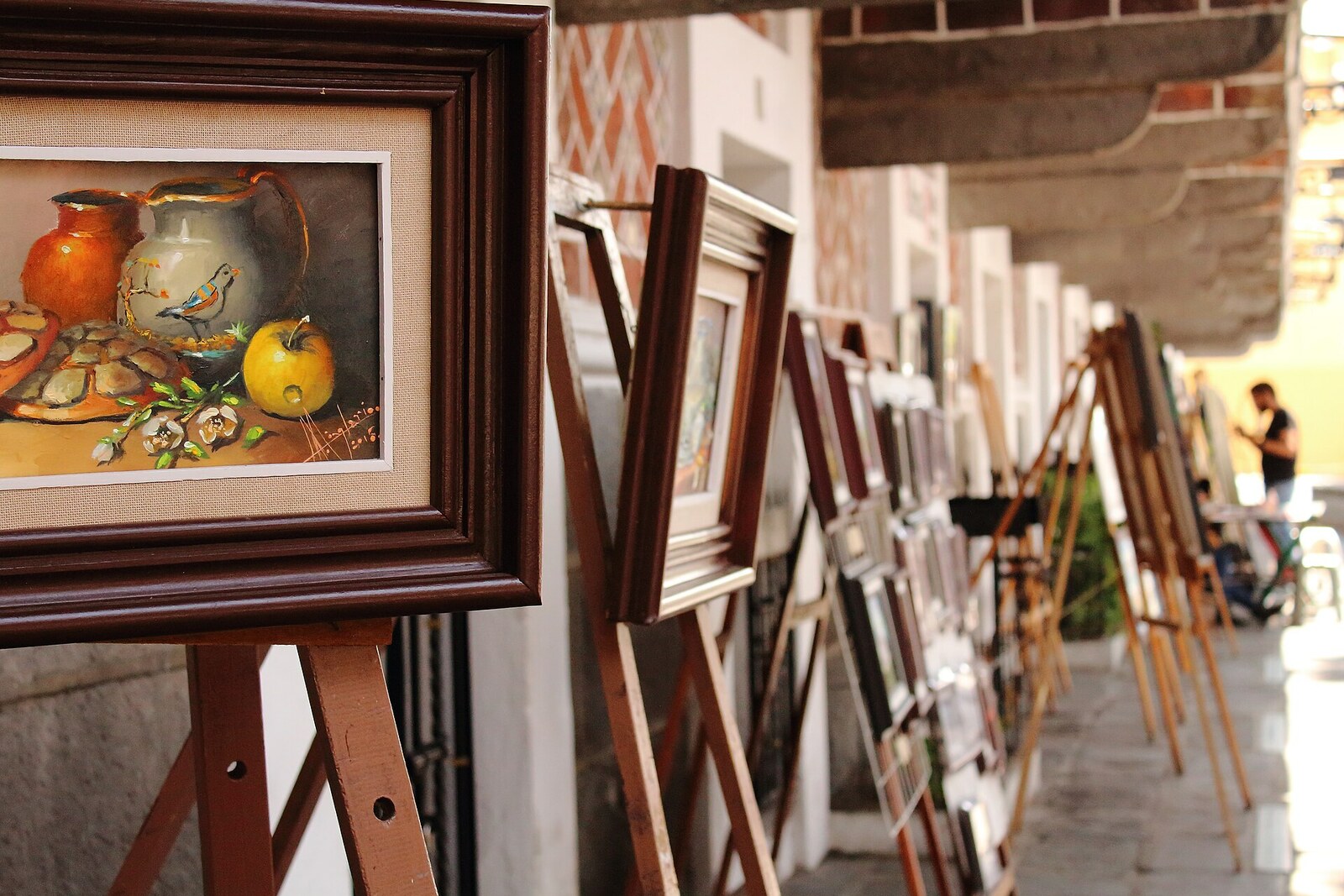
Look around first
What to notice
- Two rows of small studios
- Studio doors with the old numbering
- Paintings and sculptures
The story of the place
Artists’ Quarter occupies a small plaza by El Parián and two rows of former market shops. The numbers from twenty-eight to forty-five on the doors remain from El Parián Chico. When these narrow premises sold used clothing and coal and repaired shoes, some of the shops had already become vacant over time. Then the municipal premises passed to the artists: the studio entrances lead directly onto the street, where buyers of paintings and sculptures come to them.
In nineteen forty, José and Ángel Márquez Figueroa, teachers at Puebla’s Academy of Fine Arts, brought students to paint outdoors at El Parián. Several young artists were preparing to leave the academy. After graduating, they would need to earn money from paintings, but had nowhere to create them, show them to clients, or sell them.
José Márquez suggested that the students should not scatter on their own, but open studios of their own nearby. He taught for more than fifty years and believed that the academy should not turn out artists who could only copy other people’s models. Independent work required a place where any resident could walk in and see not only a finished painting, but also its creator at work.
Such a place stood before them. The plaza was then called Plazuela del Torno, and the row of cramped premises was known as El Parián Chico. Used clothing had once been sold here; later, the shops sold coal and repaired shoes, while some premises stood empty. The students secured a meeting with Governor Gonzalo Bautista Castillo. Together with Juan Manuel Treviño, chairman of the city council, he transferred municipal shops to the group. The artist Faustino Salazar García, who was to hold the diverse company together, became its first chairman.
On May fifth, nineteen forty-one, the group held its first collective exhibition here. For the participants, it tested Márquez’s idea: the graduates received studios and immediately brought their work to the buyer. In the same premises, they painted, took students, exhibited, and sold their works. That is why the name “Artists’ Quarter” became attached to one plaza and two rows of small studios, rather than to a residential neighborhood.
Later, the artists were given additional shops on the west side. During renovations, the old numbering of El Parián Chico—from number twenty-eight to number forty-five—was retained. Behind these doors, people still work, exhibit, and sell paintings and sculptures. The arrangement devised for Márquez’s graduates has remained the same: the studio opens directly onto the street, and the artist meets the public in the very place where they earn their living through their craft.
Useful on site
The municipal register lists Monday–Friday 11:00–19:30, Saturday and Sunday 11:00–16:00.
Checked: June 24, 2026. Check the official source before visiting.A studio does not always mean open entry. Observe from the street, and ask permission before photographing an artist or an unfinished work.