 Guide On Map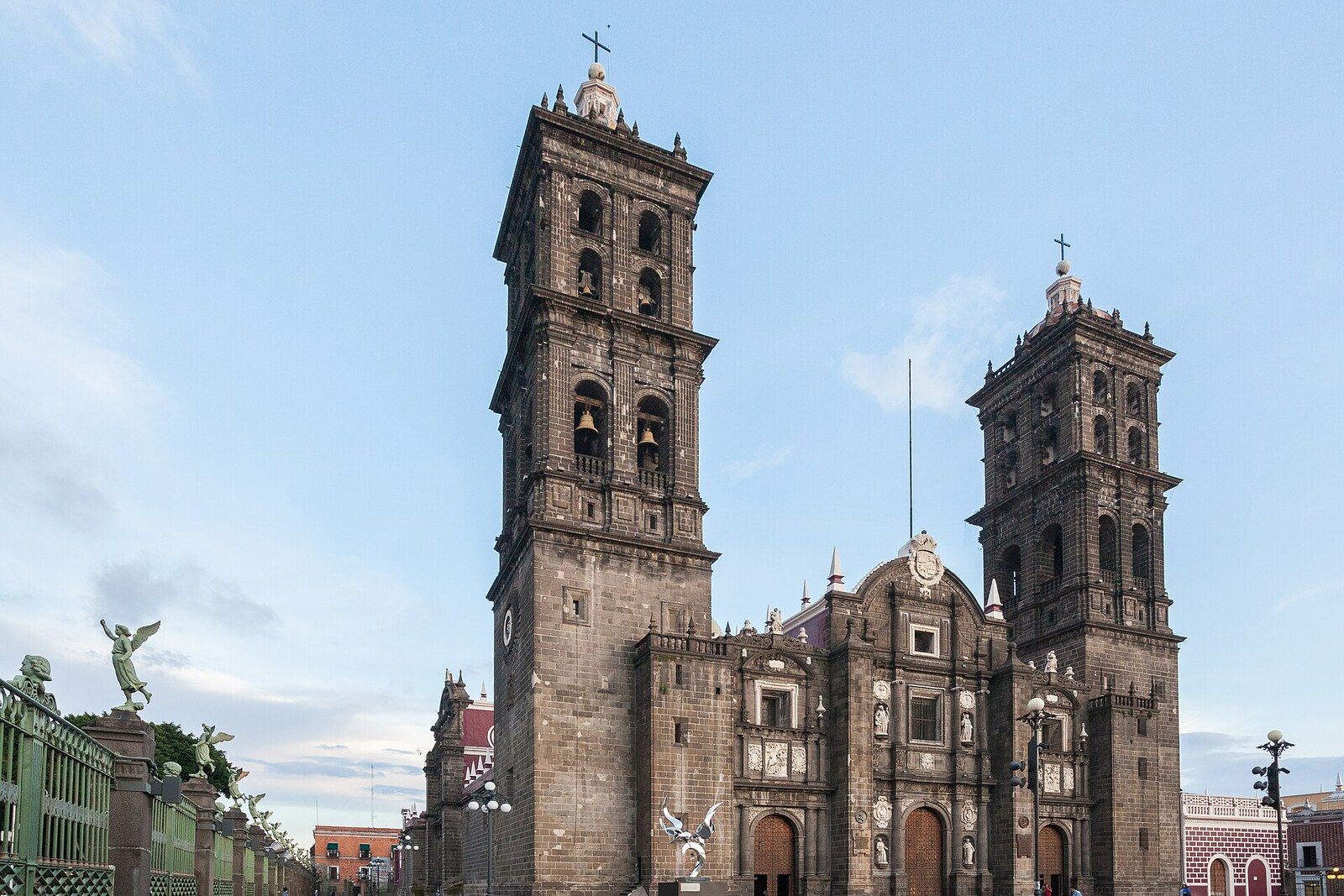
Look around first
What to notice
- Two towers
- Main portal
- Portrait of Juan de Palafox
The story of the place
Beyond the main portal begins Puebla’s principal episcopal church: from here, the clergy of the entire diocese were directed, and from the cathedra, a special chair, the bishop presided over the most important services. Construction of the present church began in fifteen seventy-five, but the work repeatedly stalled, and for a long time only unfinished walls and supports rose above the city. The two towers visible today were completed only after the church had been declared ready.
On Sunday, April eighteenth, sixteen forty-nine, Bishop Juan de Palafox y Mendoza walked around these walls three times, blessing them. At the main entrance, he drew a cross on the threshold with his staff and ordered the doors opened three times. The bishop, the cathedral clergy, and the choir entered first; the townspeople waited outside while Palafox consecrated the interior.
Only a bishop could perform such a consecration. The word “cathedral” refers to his cathedra—the chair from which he presides over the principal services and directs the clergy of the diocese. Palafox dedicated the church to the Immaculate Conception. This refers to the conception of Mary herself: according to Catholic teaching, she was free from original sin from the first moment.
They hurried to the rite. Construction of the present cathedral had begun as early as fifteen seventy-five, had repeatedly stopped, and by the time Palafox arrived, the walls and supports in some places reached only half their intended height. King Philip IV sent the new bishop with a direct commission to finish the church. Palafox invested his own money, collected donations, and required monastic orders to pay the ecclesiastical tithe and present episcopal permissions for preaching and confession.
The Jesuits resisted especially stubbornly. Their communities were accustomed to managing their own income and serving under permissions from their own order. For Palafox, the exception meant that part of the clergy in his diocese did not in fact answer to him. He continued to demand both money and documents; the Jesuits sought support from the viceroy, the Archbishop of Mexico City, and the Tribunal of the Inquisition.
In May sixteen forty-seven, the tribunal declared Palafox excommunicated. His closest supporters, including cathedral canon Juan de Merlo, were placed in custody. The bishop himself hid for five months at Hacienda San José Chiapa, about one hundred fifty kilometers from Puebla. Meanwhile, his principal patron at the Spanish court, the Count-Duke of Olivares, lost his former influence. Palafox’s opponents obtained from the king an order to send the bishop back to Spain. He delayed the first order; after the second, he had to prepare to leave.
The cathedral was now meant to become his final argument. In Spain, Palafox faced a “residencia”—a mandatory proceeding in which an official, after leaving office, answered for his decisions and expenses. The bishop hastened the consecration, hoping to present the completed church as proof of his good faith. For the ceremony, the building was declared ready, although the towers did not yet exist and the façade remained unfinished.
Eighteen days after the consecration, Palafox left Puebla and never returned. In Spain, he was given the much smaller diocese of Osma; he died there in sixteen fifty-nine. The cathedral’s north tower was completed twenty-nine years after his departure, and the south tower only in seventeen sixty-eight.
Inside, in the Chapel of the Kings, there is a portrait of Palafox by Pedro García Ferrer. The artist placed the bishop’s face among the shepherds who came to the infant Jesus. After Palafox’s departure, his supporters circulated such images and placed candles before them. The Inquisition ordered the portraits of the still-living bishop seized; in Puebla alone, thousands of prints were collected, and most were destroyed. Palafox died in Osma, the towers were completed by other people, and his face remained in the cathedral that he managed to consecrate before his forced departure.
Useful on site
The municipal register lists visits daily from 10:00 to 14:00; during Mass, tourist entry stops.
Checked: June 24, 2026. Check the official source before visiting.From outside, the scale and the later-completed towers are clearly visible. Inside, do not disturb services, and listen to the acoustics if entry is open.