 Guide On Map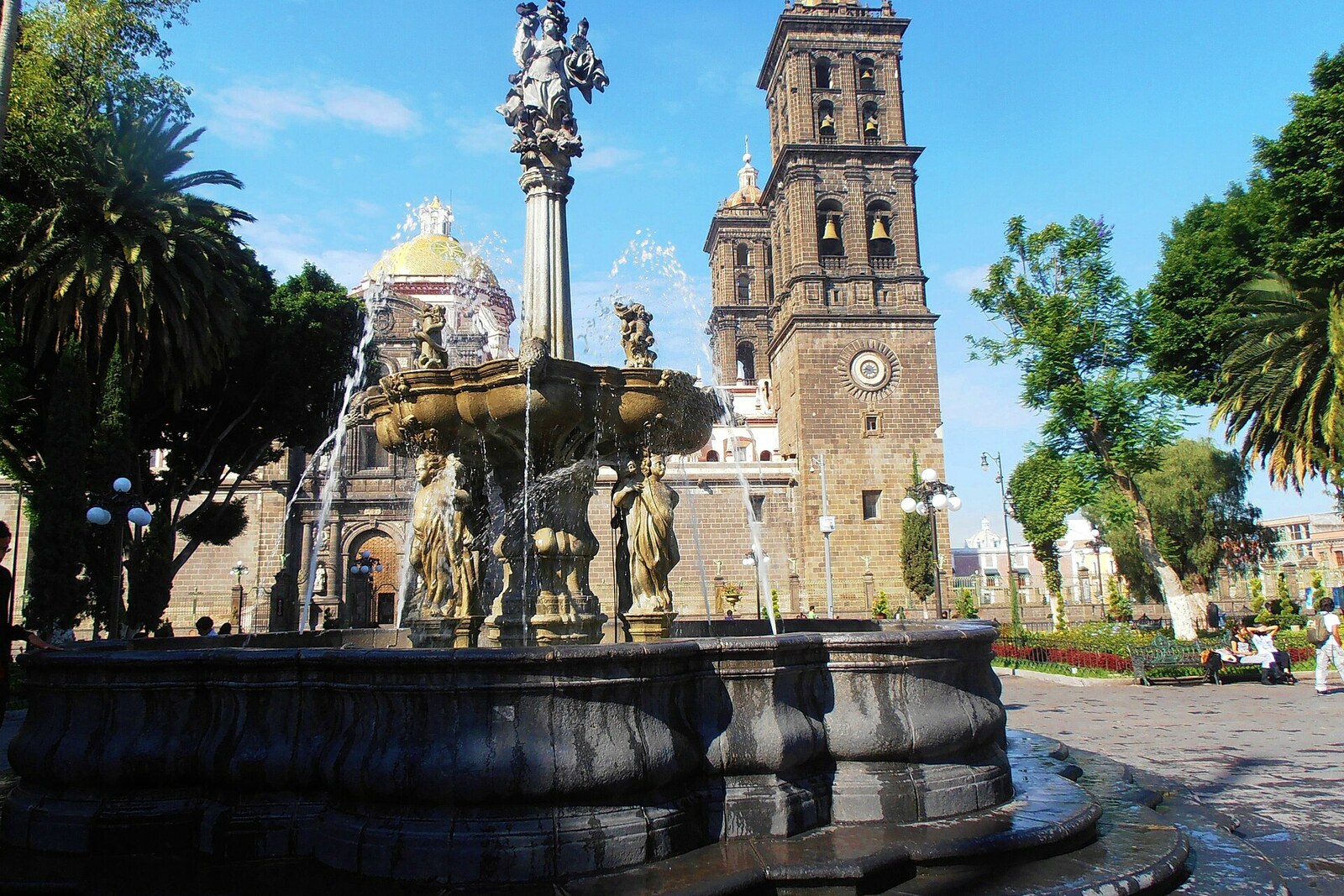
Look around first
What to notice
- Municipal Palace of Puebla
- The portal arcades
- The western portal bearing Iturbide’s name
The story of the place
The covered arcades around the edges of the square provide shade and shelter for merchants; today they contain cafés, restaurants, and shops. The space between the cathedral and the city council building was once Puebla’s main market, where food, textiles, and other goods were sold. There was no garden in the middle then: it was laid out after the market was moved out of the center. The Municipal Palace of Puebla stands on the north side, and the familiar name Zócalo came here from the custom of calling Mexico’s main squares by that name.
On August fifth, eighteen twenty-one, Agustín de Iturbide stepped onto the balcony of the old town hall and read the Plan of Iguala to the people gathered in the square—a program for separating New Spain from the Spanish Crown. The Municipal Palace of Puebla still stands on the north side of the Zócalo, although that balcony and the building itself have not survived.
Just a few weeks before the ceremony, Puebla had been under siege by insurgents. The city was defended by a royalist garrison commanded by Ciriaco del Llano. Iturbide had once served the Crown himself, but he now led the Army of the Three Guarantees—the combined forces of former royalist soldiers and insurgents. They promised independence, the preservation of the Catholic religion, and an alliance between people born in the Americas and Europeans. Iturbide wanted to take Puebla without an assault: leaving a fortified hostile city on the road to the capital was dangerous.
The negotiators agreed to a truce, and on July twenty-eighth del Llano agreed to surrender. On August first, Spanish troops left Puebla; the next day, Iturbide entered the city. The garrison avoided a final battle, but the city officials now had to decide whom to swear allegiance to.
Members of the council escorted Iturbide from the Episcopal Palace to the town hall. An altar with a crucifix was set up in the hall, the Gospel was opened, and four candles were lit. Iturbide swore an oath to his own plan, then addressed Carlos García, the first alcalde—the head of the city council. He asked whether García recognized the independence of the Mexican Empire, the Catholic religion, and the alliance of Americans with Europeans. The alcalde replied, “I swear.” The councilors then took the oath.
Afterward, Iturbide went out to the square. The city’s residents were waiting for him there, and the text of the plan was read again, this time for them. There was no present-day garden in the center then: the square remained Puebla’s main market, and merchants kept stalls beneath the arcades. The council met on one side, the cathedral stood on the other, and between them people sold food, textiles, and city goods. The public oath was administered where officials, clergy, and people who made their living through trade could all hear it.
Iturbide repeated the ceremony at the Episcopal Palace and at the city college, then went to the cathedral. A few days later, he left for negotiations in Córdoba; in September, his army entered Mexico City, and the viceroyalty ceased to exist.
The names of the three portals appeared later. In eighteen fifty-one, the city council renamed Portal de la Audiencia as Portal Hidalgo, Portal de las Flores as Portal Morelos, and the western arcade, formerly associated with the booksellers and printers of the Borja family, as Portal Iturbide. Miguel Hidalgo was a priest who launched the uprising of eighteen ten; José María Morelos continued the struggle and demanded complete separation from Spain. Both were executed before the victory. Iturbide brought the war to its conclusion and personally received Puebla’s oath in this square. Of the three, only his name is connected with an event that happened here.
Three years after the renaming, the city authorities removed the market from the center and laid out a garden. Trade remained beneath the portals; cafés, restaurants, and shops are now located there. Officially, this is Constitution Square, and the word “Zócalo” came into use in the early twentieth century. This is what main squares came to be called throughout Mexico, following the capital: of a planned Independence Monument there, only the base was built—zócalo in Spanish.
The old town hall with Iturbide’s balcony was demolished in eighteen ninety-seven. The present Municipal Palace of Puebla was built on the same site, and the name of the man who read the plan of independence to the square is written on the western portal.
Useful on site
The square is open around the clock.
Checked: June 24, 2026. Check the official source before visiting.Walk around the edge of the square and pause beneath the arcades: the story is clearer when you can see both the open center and the places of trade at the same time.