 Guide On Map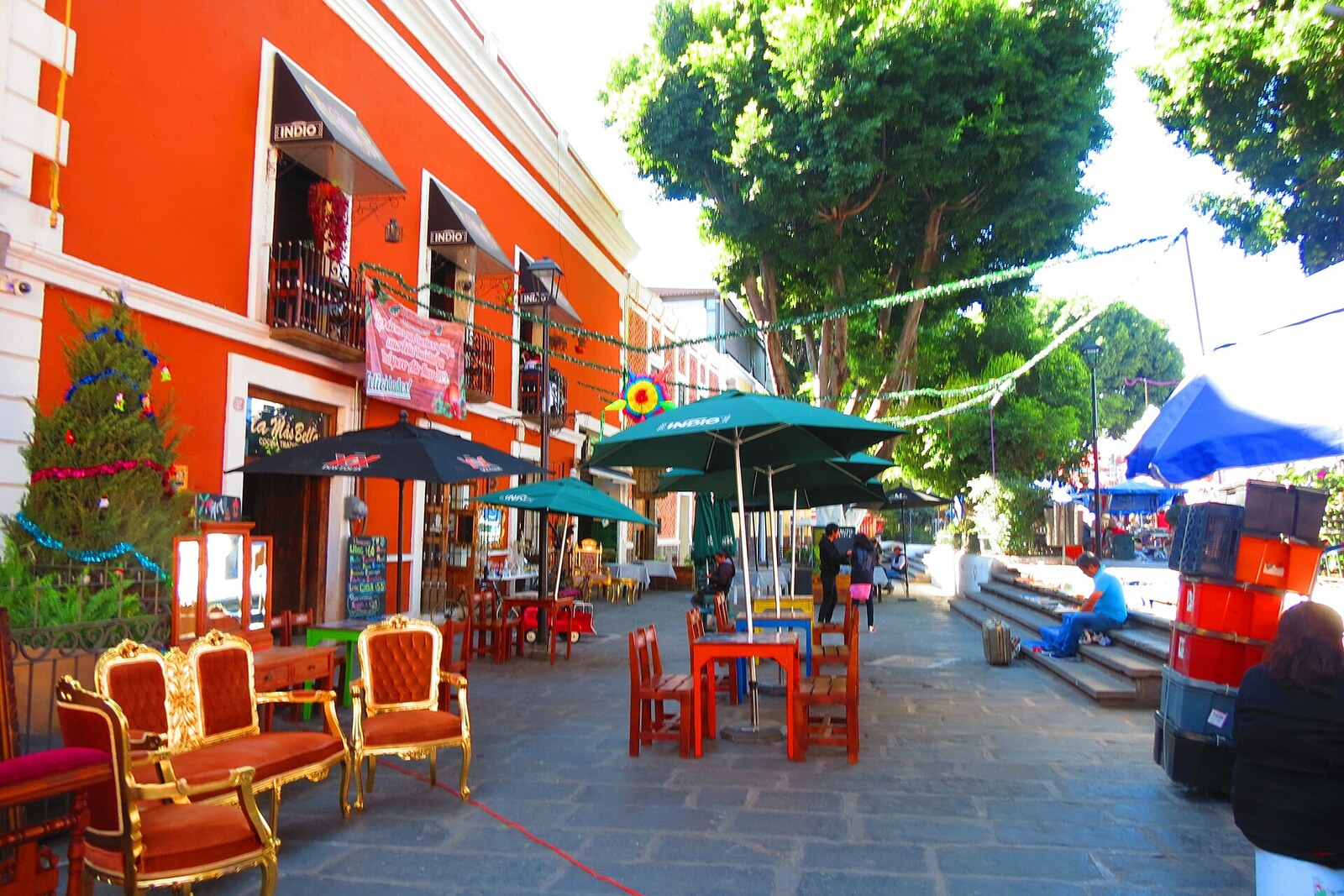
Look around first
What to notice
- The toad on the fountain
- The dome structure of Casa de la Bóveda
- Antiques displays
The story of the place
Plazuela de los Sapos and Callejón de los Sapos lie above the old channel of the San Francisco River. According to local legend, after floods, puddles remained in the low-lying area and toads bred there; the channel was put underground long ago, and a toad on the fountain in the center of the square keeps its memory alive. On weekends, things are displayed around the fountain and along the alley: old objects, later copies, collectible small items, and ordinary used household goods stand side by side in display windows and on stalls. Part of the street is cleared of cars so that the market rows can extend directly onto the pavement.
The current antiques market began with one merchant and one house opposite the square. In nineteen sixty-two, Salvador Macías, who made a living buying and reselling old things, acquired a former bakery here that had later been turned into multi-family rental housing. Its restoration took five years. Macías lit the dark staircase through a new dome structure, and the building came to be called Casa de la Bóveda.
Macías had time to learn the trade from the antiques dealer Concepción Calvo in Mexico City. He had to recognize a valuable item before the buyer did: pay for it, determine its age and authenticity, and find its next owner. A mistake remained in his hands along with the unsuccessful purchase. In nineteen sixty-seven, in the restored house at four hundred one 7 Oriente, he opened a bazaar and lived one floor above it.
There were enough buyers to change the entire way of trading around the square. People who had previously brought things to Macías saw that they could sell them themselves. They laid out their goods in front of his shop, and neighboring premises were taken over by new antiques dealers. Shops that had previously been scattered around Puebla concentrated in Los Sapos.
In nineteen seventy-six, twenty-seven merchants formed a permanent Sunday bazaar here. They sold antiques, old household utensils, and rough furniture. The state governor, Alfredo Toxqui Fernández de Lara, officially established the market, the square was rebuilt, and part of the street was cleared of cars for market rows. Macías later headed the association formed by the neighborhood's antiques dealers: the man around whose shop the first makeshift stalls had been set up now had a whole association of sellers.
The word “antiques” had called for caution here from the beginning. Macías was called a master of replicas, and local furniture makers assembled tables and cabinets from old, sometimes insect-eaten beams, repeating the forms of earlier furniture. When demand for expensive old objects fell in the nineteen eighties, such furniture helped the sellers remain in the square. That is where today's mixture of genuinely old things, later copies, collectible small items, and ordinary used goods comes from.
The name appeared long before the merchants. “Los Sapos” means “The Toads.” In eighteenth-century documents, the alley is already associated with this name. According to local legend, the waters of the nearby San Francisco River flooded, puddles remained in the low-lying area, and toads bred there. The explanation itself belongs to legend; what is reliably known is that by seventeen eighty-five, Alameda de los Sapos—the Toads' promenade—already existed here.
The old channel of the San Francisco was later put underground, and there are no longer either floods or toads on the pavement. They are replaced by a toad on the fountain in the center of the square. On weekends, things are once again laid out around it, while opposite stands Casa de la Bóveda, from which trade moved out into the street.
Useful on site
The square is accessible at all times; the antiques market operates on Saturdays and Sundays from 11:00 to 17:00.
Checked: June 24, 2026. Check the official source before visiting.Do not count on the open market being set up during every visit. When looking at antiques, ask about the objects' provenance, without taking a seller's account as established fact.