 Guide On Map
Old Montevideo: From the Citadel of Montevideo to the Port
From Plaza Independencia via Sarandí Street to Mercado del Puerto and the Montevideo Customs Building
Guide On Map on your phone
Open the walk like a regular app
It takes about 10 seconds to install. No app store needed.
The whole path
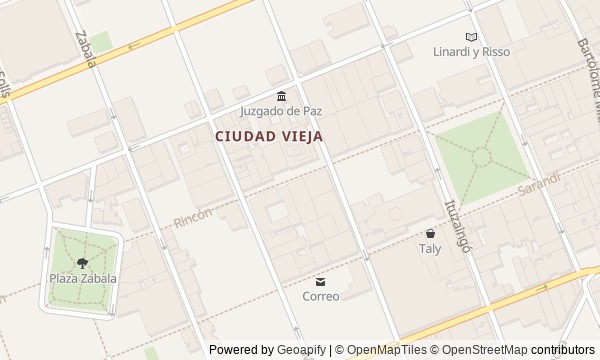
Route map
About the walk
You will begin at Plaza Independencia, on the boundary between old and new Montevideo. Then you will pass beneath a solitary arch, turn toward the theatre, and return to Sarandí Street—the straight route to Plaza Matriz. From the cathedral and the Montevideo Cabildo, the walk continues through commercial quarters to the iron roof of Mercado del Puerto, ending at the Montevideo Customs Building, just before the harbor.
Along the way, questions will surface that an ordinary survey of facades cannot answer. Why was one short phrase removed from a state memorial? How was a fortress gate dismantled twice and still set back almost where it had stood? Why did a killer put a note with his own address in his pocket? Why does one date appear twice on a fountain?
The story unfolds calmly and precisely. It separates city legends from documents and follows the consequences of private decisions. By the end, you will connect the granite of the Citadel of Montevideo, two inscriptions on a fountain, and the customs arch by the docks into one story.
Why this order
The route begins at Plaza Independencia because this is where the boundary runs between Ciudad Vieja and the quarters beyond the former fortifications. Next comes the Citadel Gate—the only major authentic fragment of the vanished fortress. From there, the turn toward Solís Theatre shows how the city took over the space beside the dismantled walls, while the return to Sarandí Street leads onto the former ceremonial route. After the street, the Montevideo Metropolitan Cathedral must come first: the procession along Sarandí Street began at its atrium. The action then moves to Plaza Matriz, where the church threshold stood beside civic ceremonies, and through it to the Montevideo Cabildo, opposite the cathedral, where the political consequences of street events were handled. The route then continues through the old part of the peninsula toward Mercado del Puerto: the administrative center gives way to commerce. The Montevideo Customs Building follows the market because goods from its stalls were destined for the harbor, and its central arch places the listener at the final boundary—between the city and the docks.
Those who want to walk through Ciudad Vieja from end to end, rather than see just one square Lovers of political history told through specific city scenes Those interested in the fates of buildings, inscriptions, and preserved details
Those looking for a light story only about architectural styles Those who prefer a route without political conflicts and state ceremonies Those who care more about the waterfront and nature than the historic center
Before you go
Check in advance whether the Artigas Mausoleum, Solís Theatre, and the Cabildo Historical Museum are open: the route does not depend on going inside, but these spaces operate separately from the street. At the Montevideo Metropolitan Cathedral, be mindful of services and explore the church without talking or photographing worshippers. You can pass through Mercado del Puerto without ordering food; if you plan lunch, do not tie your whole day to one place. At the Montevideo Customs Building, remain on the publicly accessible side of the barriers and do not try to enter the port area.
When to go
For a route with interiors, choose the first half of a weekday and check the official announcements of the theatre, mausoleum, and museum before setting out. If you only want streets and facades, daylight matters more than a specific starting time.
Backup plan
If interiors are closed, listen to the stories from outside: the square reveals the layout of the Artigas Mausoleum, the facade of Solís Theatre reveals the theatre’s design, and the proximity of the Montevideo Metropolitan Cathedral and the Montevideo Cabildo reveals the old arrangement of city power. In rain, linger beneath the market roof, but do not reduce the ending to lunch: the story of the Montevideo Customs Building can be finished from the public sidewalk, without approaching the port gates. If your energy is low, skip the interior visits while keeping the full order of stops—it is the sequence of boundaries and city functions that holds the route together.
Route conditions
Surface. Paved — 2.3 km
Facilities. Drinking water — 1
Elevation. Ascent — 21 m; descent — 55 m
OpenStreetMap extract of July 3, 2026: database data, not a check on the ground. Data © OpenStreetMap contributors, ODbL licence
Walk plan
Open in maps ↗- 1
Plaza Independencia and the Artigas Mausoleum
Here begins a conversation about who controls state memory and the words of a national hero. - 2
Citadel Gate
The surviving gate will help explain exactly what the city saved from the fortress and what can no longer be restored. - 3
Solís Theatre
The story of its long construction shows how a private venture survived a siege and became the city’s leading theater. - 4
Sarandí Street
The main street of the Old Town will link a state ceremony with the man who waited for the president in the crowd. - 5
Montevideo Metropolitan Cathedral
An ordinary electoral procedure at a church entrance will turn into a crisis that changes power in the country. - 6
Plaza Matriz and the Constitution Fountain
Two inscriptions link the adoption of the state's basic rules to the arrival of city water. - 7
Montevideo Cabildo and the Historical Museum
The former council chambers show how a city dispute turned into a separate government and then became museum history. - 8
Mercado del Puerto
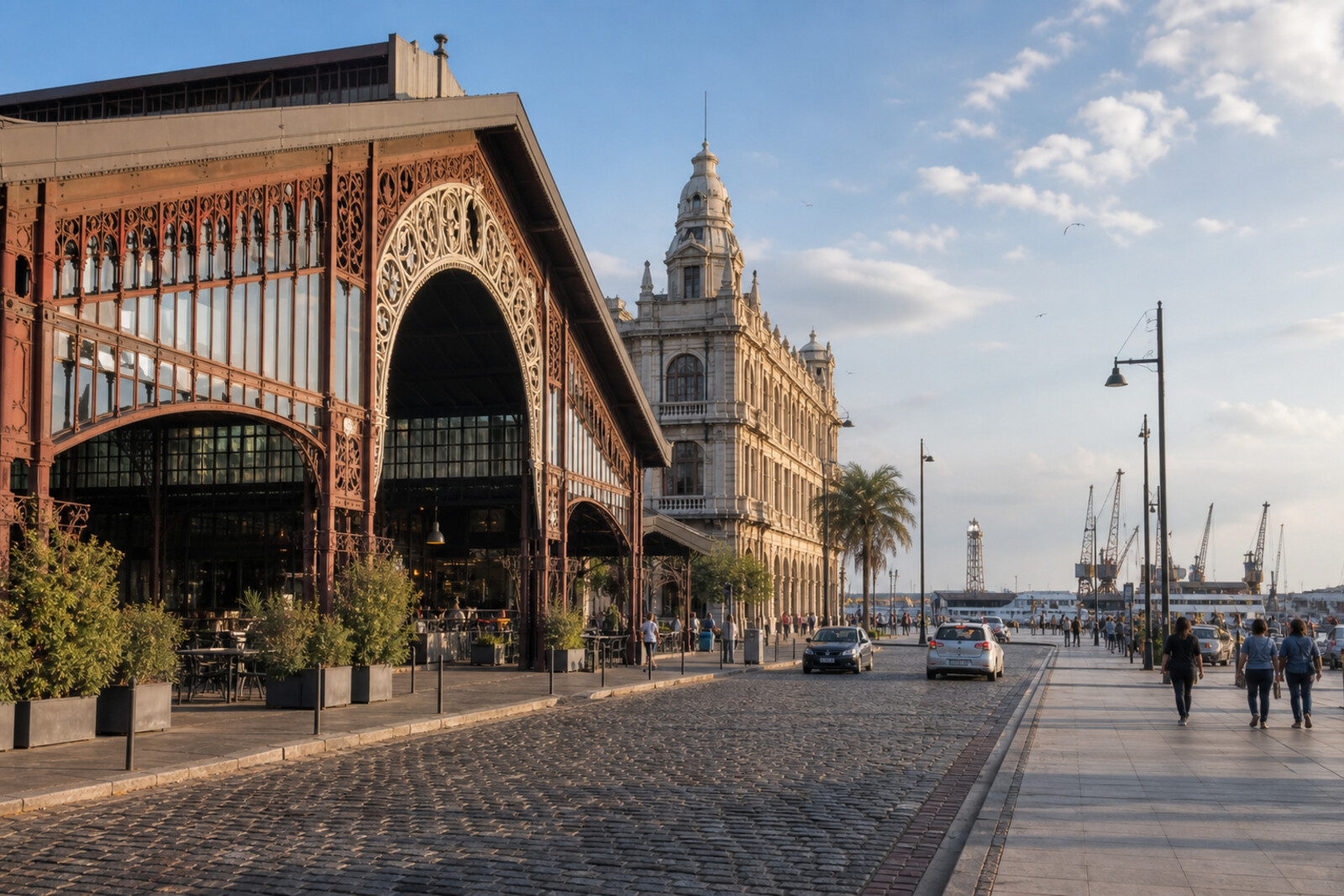
The market hall will explain how port provisioning gave way to restaurants without losing its iron frame. - 9
Port Area and Montevideo Customs Building
The final stop connects the port’s everyday work with a brief farewell, for which a passage was opened from the pier to the city.
Route features
Everything you need stays in the browser
Progress, saves and your trip plan are stored on this device.
Add Guide On Map to your home screen so the walk opens outside the browser.
How we handle sources, maps and corrections: our editorial standards