 Guide On Map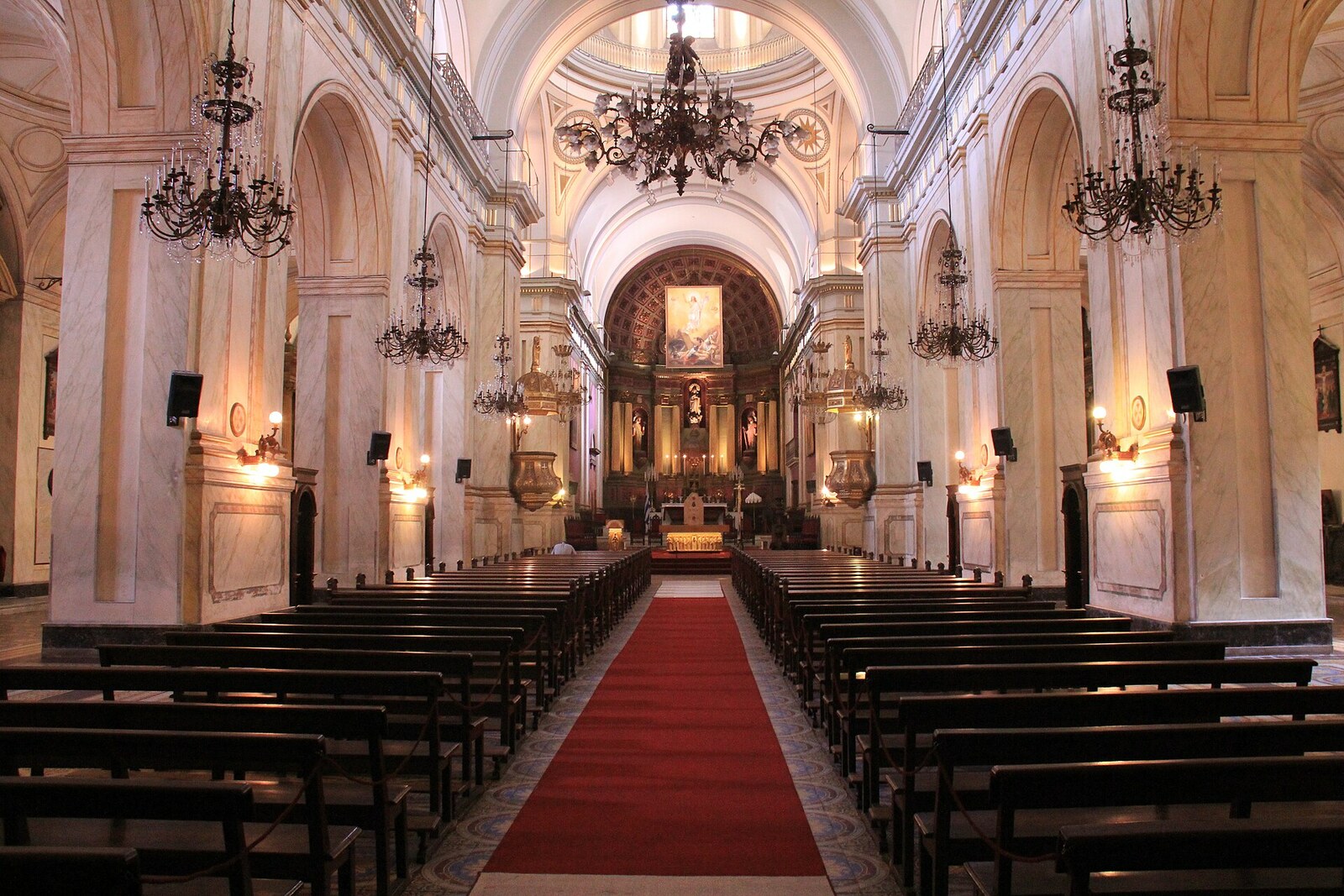
Look around first
What to notice
- Memorial plaque at the entrance
- Atrium
- Main portal
- Two towers
The story of the place
Today, this is an active Catholic church and the seat of the Archbishop of Montevideo. The present building was consecrated in eighteen oh four, and it became a cathedral only in eighteen seventy-eight, when Uruguay acquired its own bishop.
The cathedral's full dedication is to the Immaculate Conception of the Virgin Mary and to Saints Philip and James—that is, Saint James the Less. These names are older than the building. In seventeen twenty-seven, the officer Pedro Millán, who was overseeing the establishment of the new settlement, appointed Philip and James as its patron saints. Philip most likely referred to King Philip V, by whose order the city was founded; James shared a feast day with the apostle Philip. That is why the city's early full name was San Felipe y Santiago de Montevideo.
In the nineteenth century, the church was called the Montevideo Metropolitan Cathedral—the main parish church. Its atrium also served townspeople as a public space: there was no separate voting infrastructure, so elections were held at churches.
On January tenth, eighteen seventy-five, the ordinary alcalde, a municipal judicial official, was elected here. Voting was open. The Principista Party coalition, which brought together supporters of both old parties in the name of observing constitutional rules, nominated José Pedro Varela. His opponents from the traditional wing of the Colorado Party wanted to put through their own candidate. The first attempt to hold the election, on January first, had already ended in disorder.
Francisco Lavandeira defended the Principista Party list in the press and during the election campaign. He was twenty-six; he worked as a lawyer, taught political economy at the university, and edited the newspaper La Democracia. On the eve of the repeat vote, Lavandeira called on people to come to the ballot boxes unarmed and rely on the law.
By midday, the open count showed José Pedro Varela in the lead. Armed supporters of the rival group then burst into the atrium, overturned the ballot boxes, and began shooting. Lavandeira rushed to one of the ballot boxes, trying to prevent it from being carried away. A bullet struck him in the chest; he died right there. More than ten people were killed within a few minutes, and more than fifty others were wounded.
President José Eugenio Ellauri's government had been weakened by a financial crisis and internal strife even before the shooting. After the deaths, three of the four ministers resigned. Five days later, Colonel Lorenzo Latorre, who had been seeking a change of cabinet, mobilized the military, occupied government institutions, and overthrew Ellauri. José Pedro Varela left for Buenos Aires, and his opponent Pedro Varela became interim head of the country—another man with the same surname.
No ballot box remains in the atrium. The exact spot where Francisco Lavandeira died is marked by a memorial plaque at the cathedral entrance.
Useful on site
Usually Mon—Sat 9:00—18:00, Sun 10:00—12:30. Masses: Mon—Sat 12:00 and 17:00; Sun 11:00.
Checked: date not specified. Check the official source before visiting.During a service, stay by the entrance or return later. Inside, speak quietly, do not block passageways, and treat the burials as part of an active church.