 Guide On Map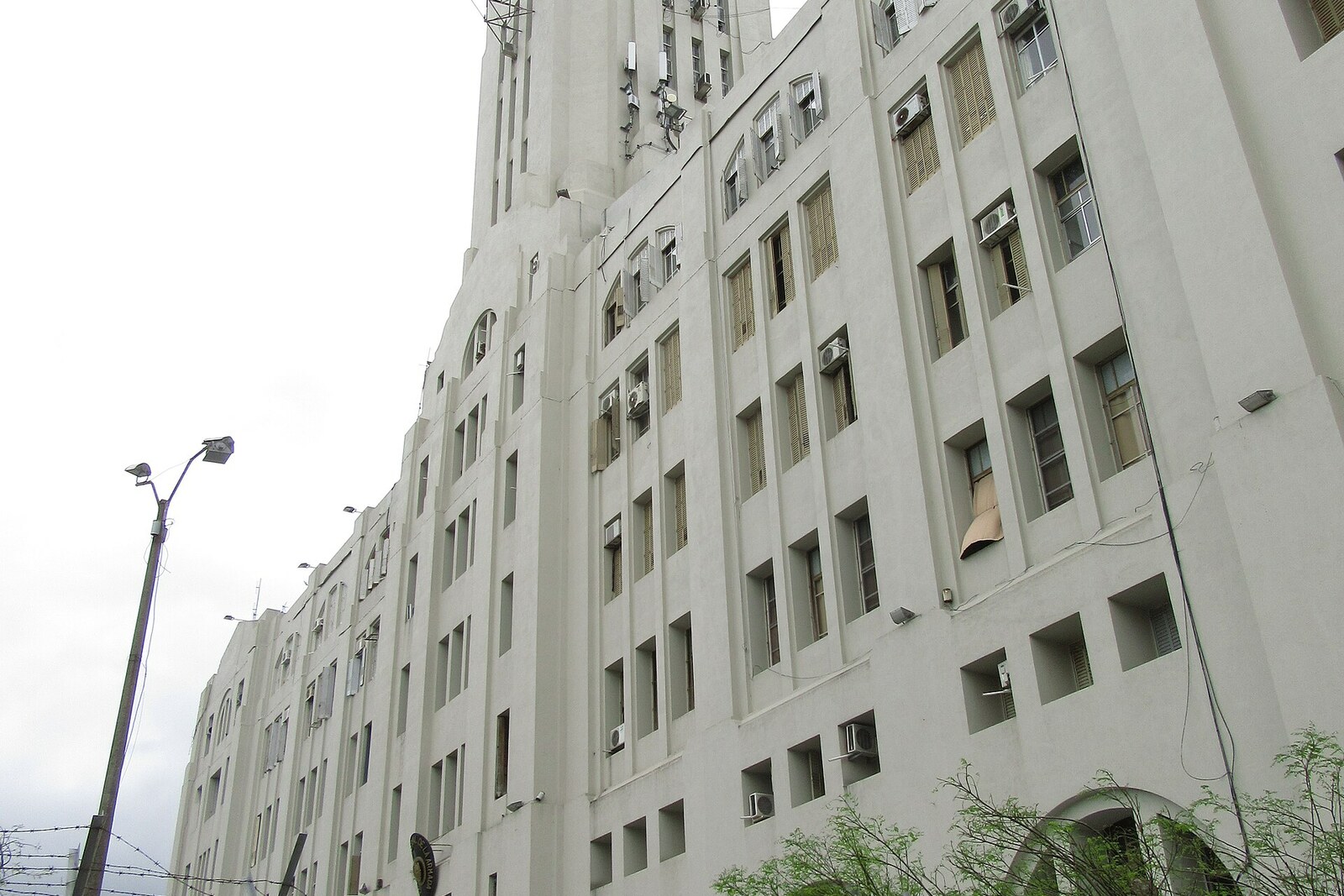
Look around first
What to notice
- Central arch
- Tower above the gallery
- Through passage
- Doors on the port and city sides
The story of the place
On December fifteenth, nineteen twenty-one, the former port customs building—habitually called the New one by local residents—burned down. The fire destroyed the enormous building near today’s port administration and, with it, some of the records that could have reconstructed the history of ship and cargo traffic through Montevideo. Customs services had to be dispersed among temporary premises.
A competition was held for the new headquarters. The jury received nineteen designs under pseudonymous mottos. By nine votes to one, it chose the entry with the word “Customs” on its cover. Only after the decision was the author’s name revealed: Jorge Herrán, a twenty-six-year-old architect who had received his degree only two years earlier. He had pursued the commission that was meant to move him at once from the ranks of recent graduates to those of the masters shaping the capital’s appearance.
Herrán had to bring together under one roof the National Customs Directorate, sanitary inspection of ships, and the General Port Captaincy. Some employees processed cargo and duties, others inspected arriving ships, and still others managed traffic in the harbor. The building was therefore placed right at the port boundary. Through its center, Herrán ran a gallery beneath a high arch, connecting Rambla 25 de Agosto de 1825 with the piers. A tower rose above it, visible from the water. By nineteen thirty-one, the services had occupied the premises; the headquarters of the National Customs Directorate still remains here, while part of the building is occupied by the Navy General Command.
On February fourth, nineteen thirty-six, the through passage was needed for a very different cargo. The steamship Pan America brought the coffin of Carlos Gardel, a tango singer who had died seven months earlier in a plane crash in Medellín, Colombia. His executor and business manager, Armando Defino, had sought to return the body to Buenos Aires. After the exhumation, the coffin was transported through Colombia by trains, automobiles, and mules, then by sea via Panama and New York. Defino was responsible for ensuring that this long posthumous journey ended with burial at home.
A Montevideo committee persuaded the steamship’s administration to allow a temporary unloading. At a quarter past four, the coffin was carried directly from the pier beneath the customs building’s central arch. The gallery walls were covered with black velvet, and a bronze railing with glass was placed around the catafalque. Thousands came to the port; police opened the doors in batches so that the line could pass by the coffin. Around midnight, it was returned to the ship. The next day, Defino brought Gardel to Buenos Aires, and after another crowded farewell, the singer was buried at La Chacarita Cemetery.
The central arch remains. Gardel’s coffin stood in the middle of the passage that the young Herrán had run between the port and the city: behind one door was the steamship, and behind the other waited a line of people from Montevideo.
Useful on site
The public sidewalk area is accessible around the clock. The port itself and the administrative buildings are not a walking area; customs serves visitors Mon—Fri 9:00—17:00.
Checked: date not specified. Check the official source before visiting.View the building only from publicly accessible space. Do not enter service driveways or try to get behind the barriers for a better view; the working port is not a walking area.