 Guide On Map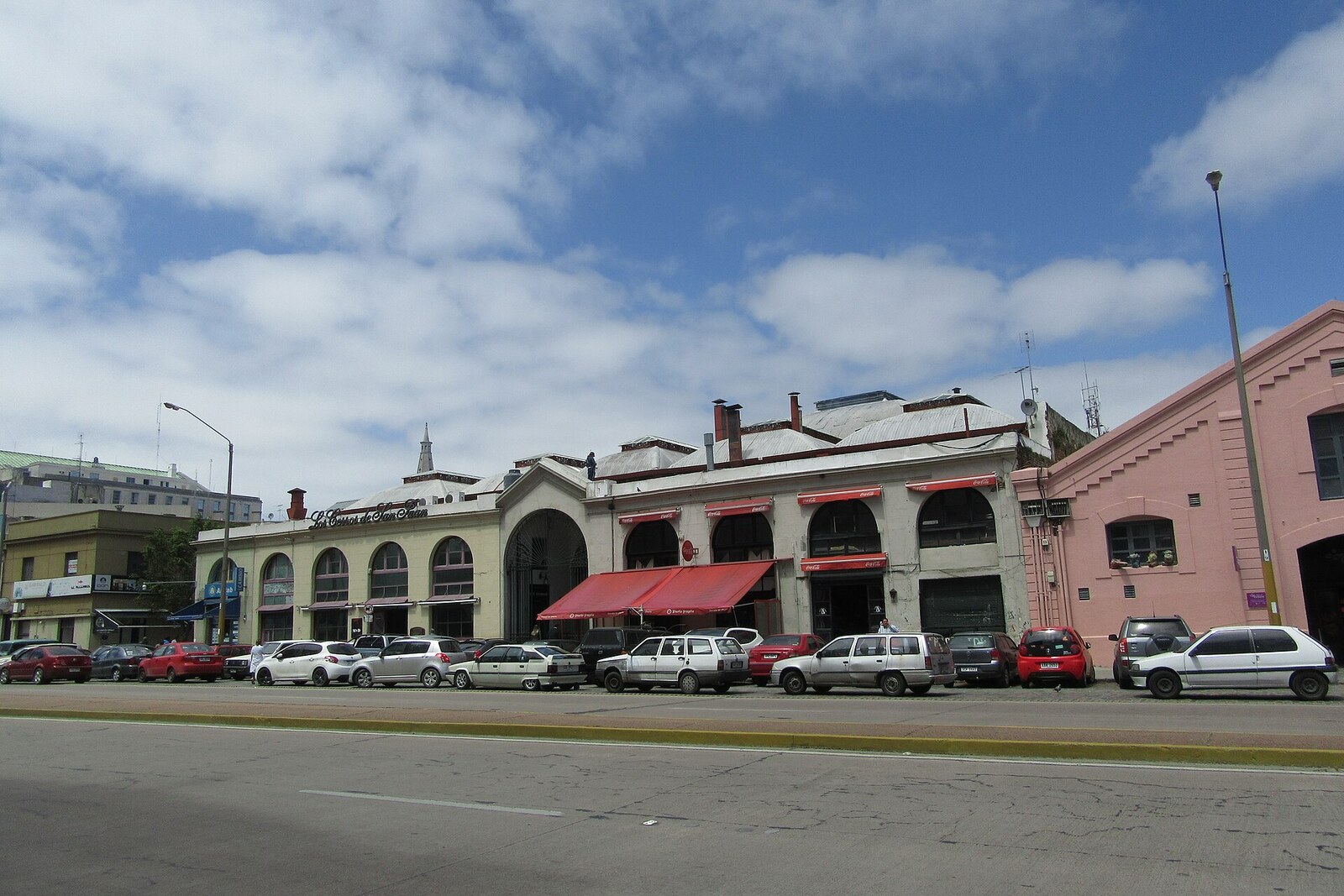
Look around first
What to notice
- Iron arches
- Stone facades
- Restaurant counters
- Parrilla grill grates
The story of the place
On the shore by the bay was first Baño de los Padres, “the Fathers’ Bath”: Franciscan monks went there to bathe. When the plot was set aside for a market hall, an iron frame made from parts cast in Liverpool was assembled above brickwork. The broad arches freed the rows from frequent stone pillars. Stone facades conceal this structure from the street, but beneath the roof it still holds up the open space of the old market.
Restaurants and parrillas—eateries with open grills for cooking meat—operate beneath the iron roof. Originally, raw products were sold here. The name “Mercado del Puerto” was literal: traders supplied ships in the bay and wealthy families settling by the harbor with meat, vegetables, and fruit.
This market might not have existed if the Spanish merchant Pedro Sáenz de Zumarán had not lost a convenient location for his business on the other side of the River Plate. He traded wholesale and, in eighteen thirty-nine, came to Buenos Aires to open a branch of a large Málaga firm. Seven years later, British and French ships blockaded Buenos Aires. Sáenz de Zumarán moved the trading house to Montevideo and continued to make his living by supplying large consignments of goods.
By the mid-eighteen sixties, the city markets could no longer cope with growing trade. Sáenz de Zumarán assembled a joint-stock company with capital of three hundred nine thousand pesos—six hundred eighteen shares of five hundred pesos each. The partners bought a plot right by the bay, at a place called Baño de los Padres, “the Fathers’ Bath”: Franciscan monks had once come down to this shore to bathe.
The entrepreneurs wanted a large hall without a forest of stone supports that would obstruct the market rows. The English engineer Richard Mesures was commissioned to calculate the iron frame. He oversaw the casting of the parts at a factory in Liverpool, then came to Montevideo with the craftsmen who assembled the structure above the brickwork of the French builder Eugène Penot.
This is where the legend came from that Sáenz de Zumarán had cheaply bought the frame of a railway station that happened to end up in Montevideo after a shipwreck. The documents say the opposite: Mesures ordered these parts for the market and personally supervised their manufacture. The iron arches were not a find but the riskiest decision of the project—such structures were almost unknown in South America.
On October tenth, eighteen sixty-eight, Sáenz de Zumarán opened the market; buyers were admitted inside the next day. His wholesale house lasted another seven years, and the trading company he created received a building considered one of the continent’s largest markets.
The transition from food stalls to today’s counters began within the same rows. In eighteen eighty-six, Juan Roldós opened a general store here. For more than forty years, he sold everything the port clientele needed. In nineteen thirty, the owners turned the shop into a bar, keeping the old wooden counter. As other food premises became vacant, new owners opened parrillas and restaurants in them. The Roldós establishment operated until two thousand twenty-three.
Outside, the iron frame is hidden behind stone facades. Inside, it still spans the former meat and vegetable rows—under which restaurant counters and parrilla grills now stand.
Useful on site
The complex and its restaurants are open daily, but the hours of individual establishments vary. For food, it is more reliable to come in the late morning, at lunchtime, or in the early evening and check the specific establishment.
Checked: date not specified. Check the official source before visiting.You can go inside for the architecture without ordering food. Stay clear of waiters and hot grills; if you are sensitive to smoke, listen to the story closer to the exit.