 Guide On Map
Gdańsk: A Merchant City and Solidarity
From Golden Gate through the old port to Gdańsk Shipyard
Guide On Map on your phone
Open the walk like a regular app
It takes about 10 seconds to install. No app store needed.
The whole path
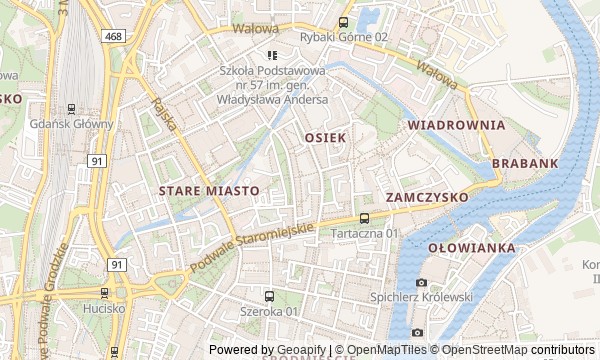
Route map
About the walk
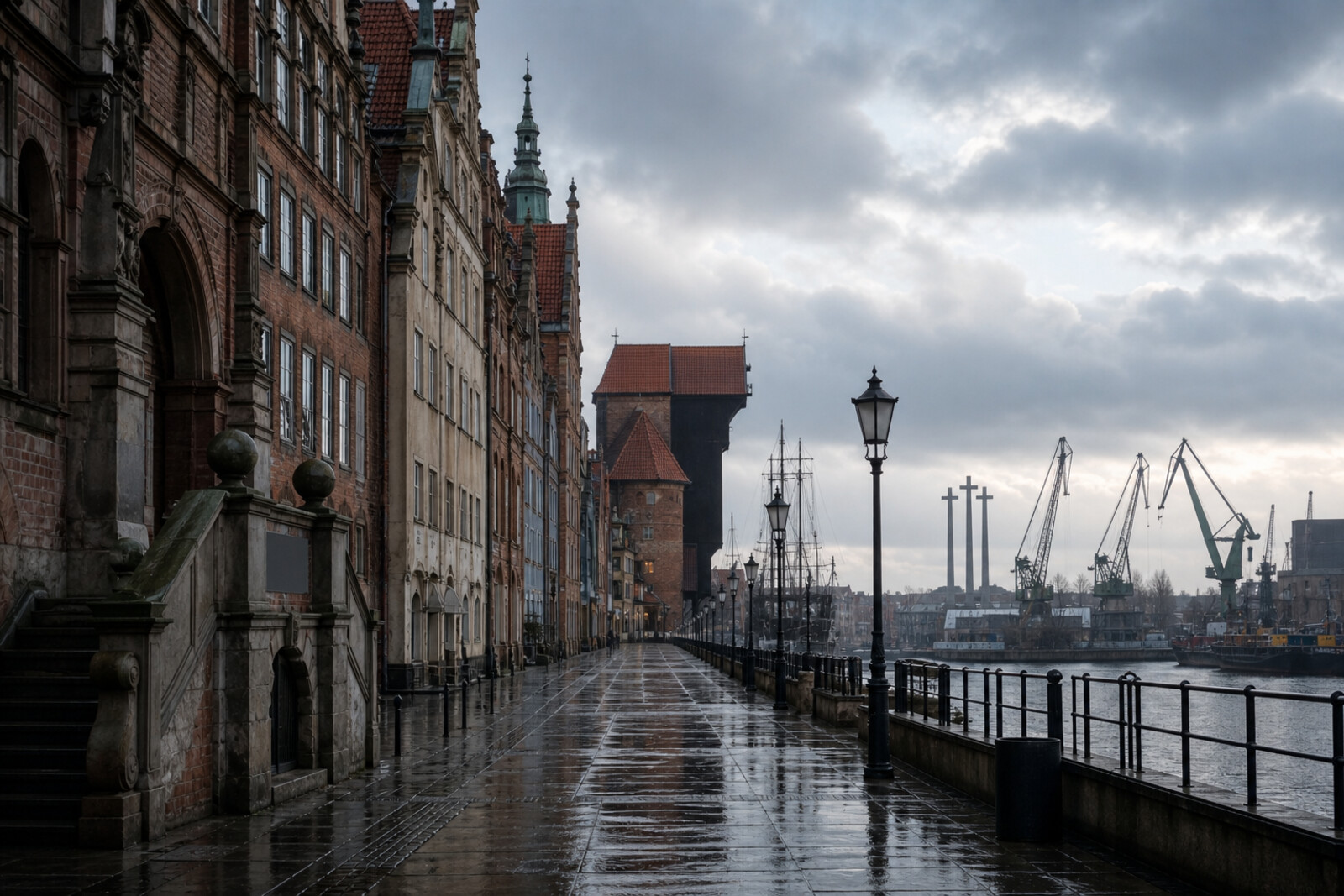
You will cross Gdańsk from end to end: from Golden Gate along Long Street and Long Market, then beside the Motława and onward to the former shipyard.
At first, grand façades, the town hall tower, Neptune's Fountain, and gates prepared for the royal court will surround you. But this story will not treat the city as scenery. Behind the stone lie loans, duties, the right to control the port, and long negotiations over who was in charge here.
By the water, the scale changes. The merchants' hall gives way to a cargo crane, the black hull of a steamship, and the gatehouse where demands were written on plywood boards. You will learn why building a port machine alarmed a neighboring castle and how a worker's surname became a promise for a lifetime.
The story moves through deals, objects, and human decisions, without grand rhetoric. By the end, you will be able to draw one line from a royal privilege to two boards at the shipyard gates—a line that belongs specifically to Gdańsk.
Why this order
The first four stops follow the old ceremonial route from Golden Gate to Green Gate. After the royal market at the entrance, Main Town Hall shows how the city council defended those same privileges, while Artus Court and Green Gate reveal where merchant money went and how the city received monarchs. Beyond Green Gate, the Motława immediately turns agreements into port work, making the Crane the next stop. Sołdek across the water continues the theme of cargo, but moves it from a medieval crane into postwar shipbuilding. From its deck, the route leads to the shipyard itself, where the surname of a model worker gives way to collective demands at Gate No. 2. The monument must come straight after the gatehouse: it returns to the event without which one of the demands of 1980 remains unclear. The European Solidarity Centre completes the route nearby, since its outdoor exhibition brings together the gates, the monument, and the hall where the agreement was signed.
Those who want to connect the grand center, waterfront, and shipyard through one story Those interested in city rights, trade, and labor rather than a list of architectural styles Those ready to set aside time for Artus Court, Sołdek, or the European Solidarity Centre
Those who want to see only the old center without going out to the shipyard Those who prefer an architectural walk without conflicts and strikes Those not ready for a detailed account of the shooting in 1970
Before you go
The outdoor route covers about 3.5 kilometers, and the longest stretch comes after Sołdek, so assess your energy and wear comfortable shoes. Main Town Hall, Artus Court, the Crane, the ship, and the European Solidarity Centre each have their own visitor spaces; check their opening hours and accessibility on official websites before setting out. Do not plan every interior one after another: each noticeably changes the pace of the walk, and the Centre's full exhibition deserves time of its own. For the crossing to Ołowianka, use current pedestrian navigation and watch for temporary restrictions by the water.
When to go
The basic walk takes about 3.5 hours without a detailed visit to museum exhibitions. Start in the first half of the day if you want to take in the details of Main Town at a calmer pace. You can add one chosen interior along the way; several museums will turn the route into a full-day program. A pause is convenient before the long walk from Sołdek to the shipyard.
Backup plan
In rain, keep the order of the stops, but listen to the longer sections under available shelter without blocking walkways or entrances. Choose interiors only after checking their current opening hours; if they are closed, the meaning of all nine stops still comes through outdoors. If you get tired, skip going aboard Sołdek and the Centre's detailed exhibition, saving them for another day. If the usual pedestrian route across the river is temporarily unavailable, consult city navigation and do not assume a short detour.
Route conditions
Surface. Paved — 2.6 km; unpaved — 183 m (data covers 88% of the route)
Stairs. Flights: 4, 59 m in total
Access. Wheelchair — no; stroller — limited (stairs)
Facilities. Toilets — 9; drinking water — 6
Elevation. Ascent — 9 m; descent — 22 m
OpenStreetMap extract of July 9, 2026: database data, not a check on the ground. Data © OpenStreetMap contributors, ODbL licence
Walk plan
Open in maps ↗- 1
Golden Gate
The ceremonial entrance will raise the route’s central question: who yielded when the city needed trading rights. - 2
Main Town Hall
Here the burgomaster's personal interest will intersect with the city council's struggle for the port. - 3
Neptune's Fountain and Artus Court
This pair of stops will show how a merchants' hall became connected with the workings of a city fountain. - 4
Green Gate
The Royal Route ends at a building that monarchs hardly ever used. - 5
Crane
The harbor mechanism will shift the walk from ceremonies and negotiations to physical work on the water. - 6
The museum ship Sołdek
The ship will connect the old trading port with the postwar shipyard and the fate of the worker whose name ended up on board. - 7
Gate No. 2 of Gdańsk Shipyard
The gatehouse shows how a closed strike gained the ability to speak to the city. - 8
Monument to the Fallen Shipyard Workers of 1970
This stop returns the route to the shooting of 1970 and the ten-year struggle for the monument. - 9
European Solidarity Centre
The finale will explain who turned the grounds of the former shipyard into a museum, archive, and public space, and why.
Route features
Everything you need stays in the browser
Progress, saves and your trip plan are stored on this device.
Add Guide On Map to your home screen so the walk opens outside the browser.
How we handle sources, maps and corrections: our editorial standards