 Guide On Map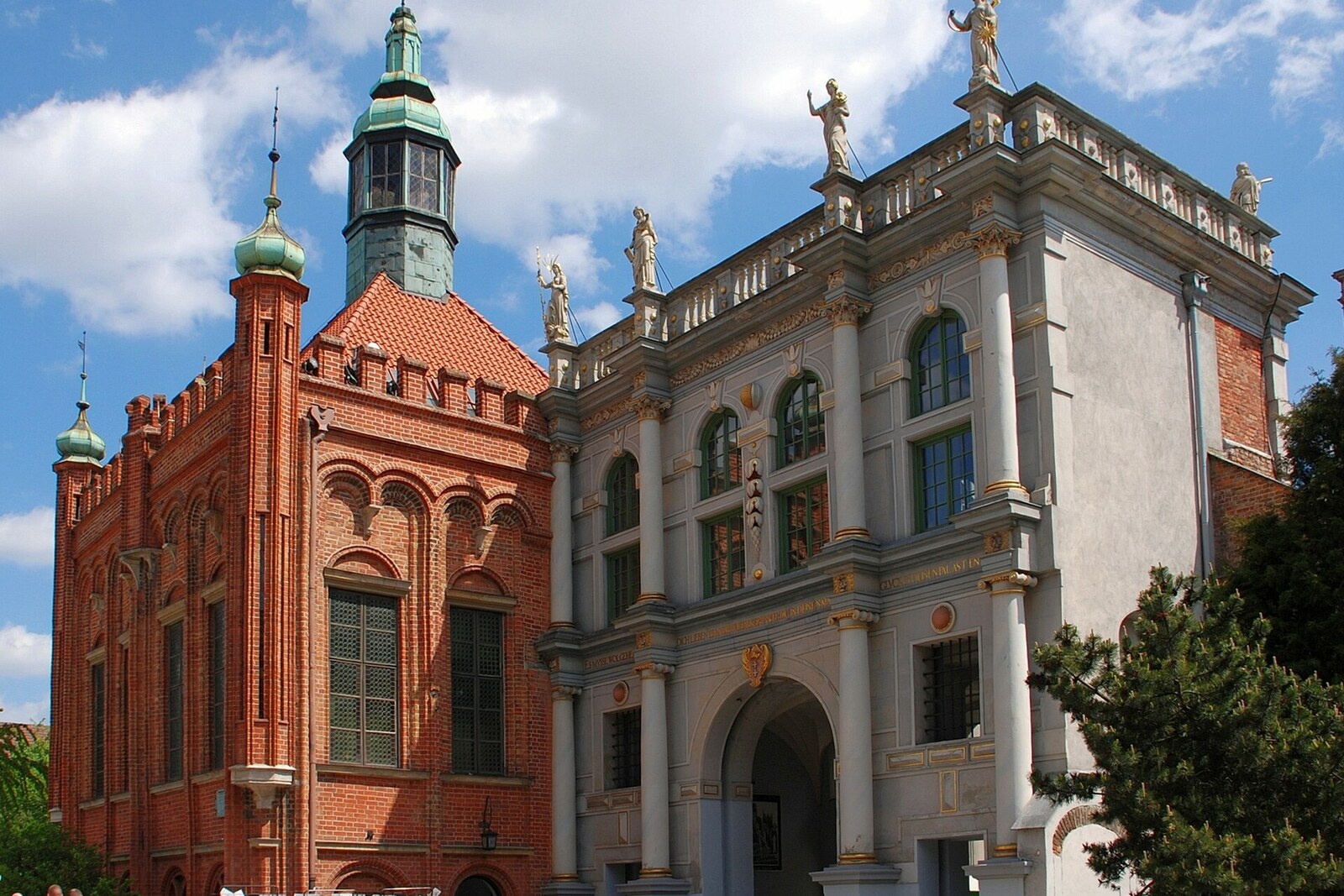
Look around first
What to notice
- Sandstone facing
- Gilded details
- Gdańsk’s coat of arms above the central passageway
The story of the place
The Golden Gate stands at the western end of Długa Street—where the Main Town, Gdańsk’s commercial core, began. In the middle of the fifteenth century, different Gothic gates stood on these foundations. They were called the Long Street Gate, after the street they closed off.
On May first, fourteen fifty-seven, Kazimierz IV Jagiellon approached them. He was the Polish king and needed money for the war against the Teutonic Order. Gdańsk merchants and city councillors wanted to free themselves from the Order’s rule and retain the revenues from goods carried down the Vistula to the Baltic Sea. They recognized Kazimierz as their sovereign and financed his war, but in return they expected written guarantees.
The clergy, craft guilds, urban estates, and residents with their families came out to greet the king. The procession passed through these gates far beyond the walls, to the last roadside stone. Then the people turned around and led the king back along the same route. The entry was arranged as a triumph: knights rode ahead, followed by a large retinue. For the next several days, townspeople watched tournaments and contests. The celebration was followed by the bargaining for which Kazimierz had come.
On May ninth, the king received the townspeople’s oath and obtained a large loan. The city council raised this money from the residents by force: the war was paid for by people whose shops, workshops, and trading shares made up their wealth. Six days later, Kazimierz issued the so-called Great Privilege. He united Gdańsk’s separate parts under one council and court, granted the city the mint and its revenues, confirmed its holdings at the mouth of the Vistula, and allowed it to govern the coast and shipping. The king also promised not to impose new tolls on the Vistula and not to interfere with goods being delivered directly to Gdańsk from Poland, Lithuania, and Prussia.
For Kazimierz, the loan meant he could continue the war. For the townspeople, the privilege set down the rules on which their trade and broad self-government grew. The war ended nine years later: the Teutonic Order ceded Gdańsk Pomerania, and the city became part of Royal Prussia under the Polish Crown.
City councillors built the present arch between sixteen twelve and sixteen fourteen, when the former gate no longer suited the ceremonial role of this entrance. The foundations and part of the northern wall remain from the medieval structure. The new gate took the form of a Roman triumphal arch: Polish monarchs were led through it onto Długa Street for city ceremonies and negotiations.
It only came to be widely called the Golden Gate after nineteen forty-five; the name became official in nineteen sixty-seven. The walls themselves are brick, faced with sandstone, and gold is used in the decoration. Above the central passageway is Gdańsk’s coat of arms: two silver crosses beneath a golden crown. On May twenty-fifth, fourteen fifty-seven, Kazimierz IV permitted this crown to be added to the city emblem—twenty-four days after his entry through the Long Street Gate that stood here.
Useful on site
Outdoor viewing around the clock; according to the latest notice found, dated 18 November 2025, all three passageways are open.
Checked: date not specified. Check the official source before visiting.All the main details can be seen from the street; view both sides of the gate and do not linger in the middle of the passageway.