 Guide On Map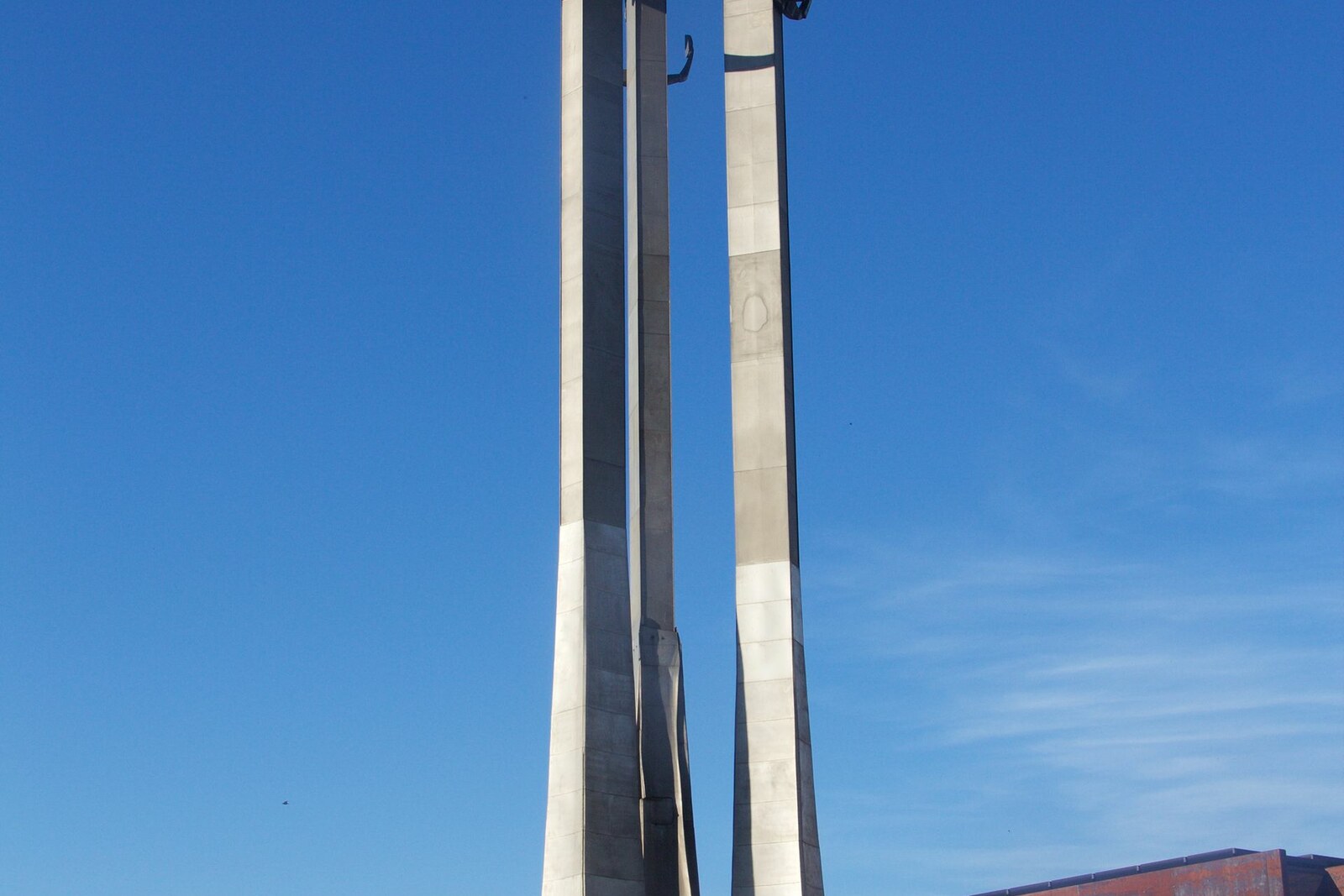
Look around first
What to notice
- Three steel crosses
- Ship anchors
- A wall with the surnames of those killed
- Two plaques in the pavement
The story of the place
On the site of the former tram turning loop stand three steel crosses, each more than forty meters tall. Ship anchors are fixed between them, and reliefs at their base show the work of shipyard workers; beside them stands a wall with the names of those killed. In December, wreaths are brought to it. Two small plaques set into the nearby pavement mark the two points for which the monument was erected precisely here.
On the morning of December sixteenth, nineteen seventy, Gate No. 2 was blocked by a line of soldiers and militia officers. Four days earlier, the leadership of the Polish People's Republic had announced price increases for meat, fish, flour, groats, and other food products. Workers at the Gdańsk Shipyard stopped production and demanded that the decision be revoked. After two days of clashes, several hundred people tried to leave the factory grounds. When a group of several dozen workers headed toward the cordon, it was fired upon.
Twenty-seven-year-old Jerzy Matelski was walking among this group. At the shipyard, he had worked first as a transport laborer and then as a crane operator, while also studying at a technical school. At home, his wife and three-year-old daughter were waiting for him. A bullet struck him in the chest.
Nearby was twenty-two-year-old Stefan Mosiewicz, a shipyard painter. He grew up as the eldest of ten children in a family that ran a small farm near Sztum, served in the army, and moved to Gdańsk to earn money. He was wounded in the head. Judging by surviving documents, in both cases the shots were fired from a distance; they were direct hits, not ricochets. Matelski and Mosiewicz died after being taken to the hospital, and several other people were wounded.
The shooting at the gate helped break the strike committee's resistance. On the night of December seventeenth, the workers ended the strike and went home. Two days later, Matelski and Mosiewicz were buried at Srebrzysko Cemetery late in the evening, without their families present. The names of those killed appeared in the local press only a month later.
Henryk Lenarciak, a fitter at this shipyard and a participant in the December strike committee, campaigned for a memorial plaque or monument to be installed at the gate. In February nineteen seventy-one, he put forward this proposal at a trade-union conference. At first, officials agreed, then they refused. Before the anniversary of the events in nineteen seventy-nine, the security service detained Lenarciak for two days.
The workers returned to the demand for a monument during the August strike of nineteen eighty. The story of the negotiations themselves has already remained at Gate No. 2; here, another result of them matters. Ship designer Bogdan Pietruszka made the first sketch of the monument on the day the strike began. After the agreement was signed, Lenarciak headed the public construction committee. Money was collected through donations, components were made at several enterprises, and the steel structures at the shipyard itself. The workers managed to complete the monument in three months and unveiled it on December sixteenth, exactly ten years after the shooting.
Three steel crosses, forty-two meters high, are connected by ship anchors. At their base are reliefs with scenes from the lives of shipyard workers, and beside them stands a wall with the surnames of those killed. The square hosts December memorial ceremonies and wreath-laying ceremonies.
The most precise markers are below the enormous crosses. In nineteen twenty, two small plaques were set into the pavement in front of the gate: one where crane operator Jerzy Matelski was mortally wounded, the other where painter Stefan Mosiewicz fell. The monument occupies the site of a former tram turning loop, and these plaques preserve the two specific places for which it was erected precisely here.
Useful on site
The square and monument are accessible around the clock.
Checked: date not specified. Check the official source before visiting.Walk around the base of the monument to see the reliefs and inscriptions; treat the square as a place of mourning, not only as a striking photo spot.