 Guide On Map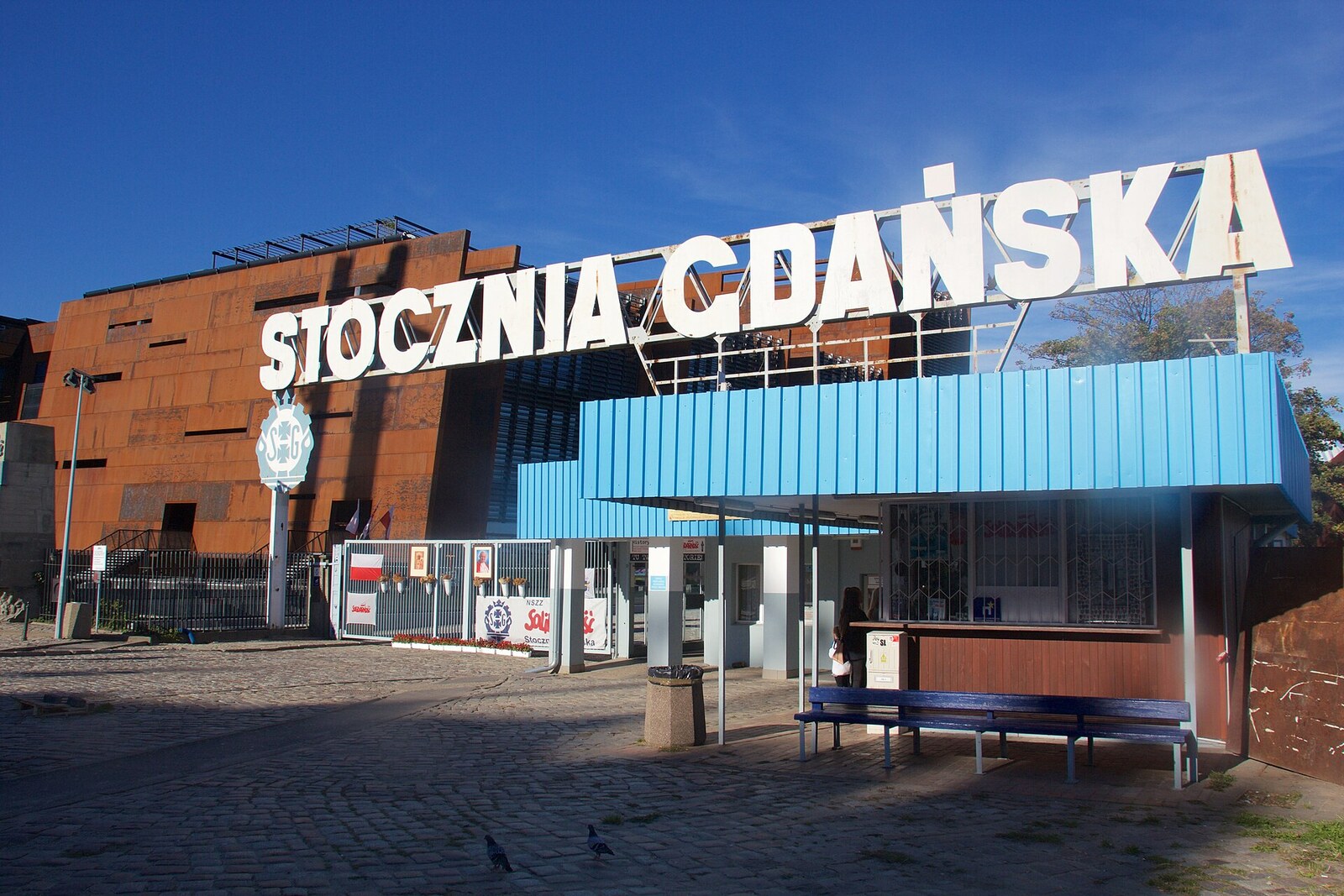
Look around first
What to notice
- Rust-brown walls
- Corten steel
- Winter garden
The story of the place
On January seventeenth, two thousand nineteen, the coffin of Paweł Adamowicz, the recently deceased mayor of Gdańsk, was laid out in the winter garden of the European Solidarity Centre. His family made that decision. Fifty-three thousand people came to pay their respects in twenty-four hours. It was here because, without Adamowicz, this Centre would probably not exist.
In August nineteen eighty, he was fourteen. The family lived on Mniszki Street, three hundred fifty meters from Gate No. 2 of the shipyard. His older brother Piotr served as an altar boy at Mass for striking shipyard workers, then worked in Lech Wałęsa's circle. After martial law was introduced, the communist government interned Piotr for several months. As a schoolboy, Paweł edited the underground bulletin Jedynka, printed illegal publications, and traveled with his brother by train to carry them between Gdańsk, Kraków, and Lublin. He knew the price of such activity from the fate of a man who lived in the same building.
By March nineteen ninety-eight, Adamowicz had become a lawyer and chairman of the city council. Together with the historian Jerzy Kukliński, he developed a plan for the Polish Roads to Freedom museum. A year later, already serving as mayor, Adamowicz secured the involvement of Lech Wałęsa, union leaders, Gdańsk Shipyard, the archbishop, and the authorities of the Pomeranian Voivodeship. They established a foundation that was to create the European Solidarity Centre.
A museum sign alone was not enough for this. The project depended on the city, the state, the region, the union, and people long since dispersed among different organizations. In nineteen ninety-nine, they agreed to establish a foundation; in two thousand five, twenty-nine people signed the founding act of the future centre in Solidarity Square—among them were twenty-two European presidents and heads of government. In two thousand seven, the partners established a joint cultural institution, and on August thirtieth, two thousand fourteen, Adamowicz entered the newly opened building together with Lech Wałęsa and the centre's first director, Basil Kerski.
The site was chosen inside the former shipyard. Gate No. 2, the monument to the fallen shipyard workers, and the Occupational Health and Safety Hall, where the Gdańsk Agreement was signed, were incorporated into the centre's permanent exhibition as its outdoor section. That is why the story begins before the ticket office. The rust-brown walls are clad in Corten steel: the architects of Gdańsk's FORT Architects chose a material resembling the plates of a ship's hull.
The word “centre” is used literally here. Inside are a permanent exhibition, an archive, a library, research and educational spaces; the winter garden hosts meetings, performances, and public discussions. Paweł Adamowicz's coffin stood here for only twenty-four hours. Now, through that same winter garden, people disperse to the museum galleries, the library, and the auditorium.
Useful on site
On 24 June 2026, the Centre is closed. From May to September, exhibitions are usually open: Monday–Friday 10:00–19:00, Saturday–Sunday 10:00–20:00.
Checked: date not specified. Check the official source before visiting.The exterior visit completes the main route. The permanent exhibition is a separate continuation, for which it is best to set aside time in advance.