 Guide On Map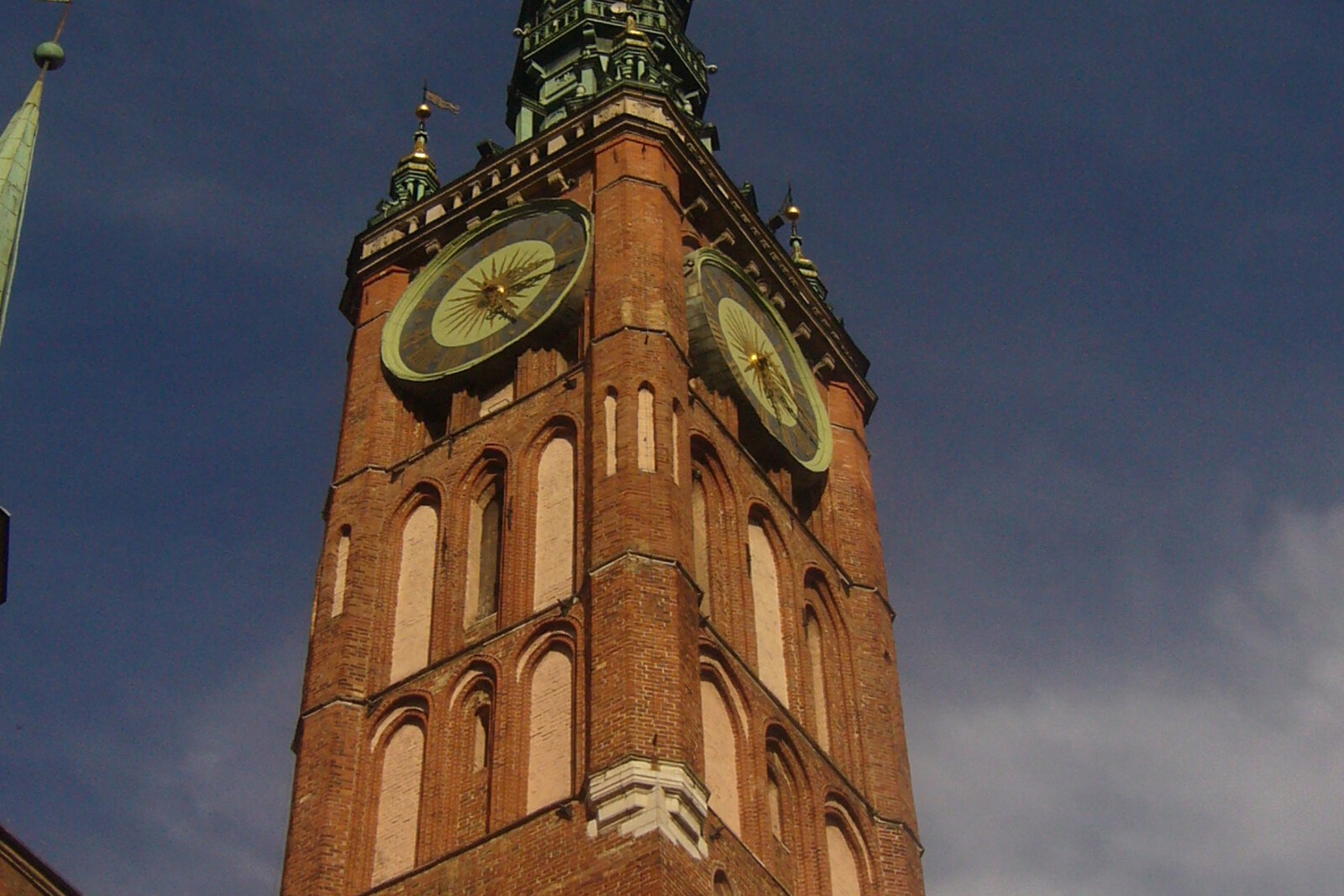
Look around first
What to notice
- The town hall tower
- The gilded figure of Sigismund II Augustus
The story of the place
A gilded figure of Sigismund II Augustus is visible on the town hall tower's spire. In the halls of this building, the city council set trade regulations and controlled port duties and the treasury. Grain and timber from the inland lands of the Polish-Lithuanian Commonwealth passed through Gdańsk, so decisions made here concerned the income of the entire city. The figure of the Polish king was placed on the tower during his reign, and it still stands above the place from which port trade was managed.
In fifteen seventy-six, the councilors meeting in this town hall refused to swear allegiance to Stefan Batory, the Transylvanian prince whom most of the Polish nobility had elected king. Batory demanded that they recognize him as the lawful sovereign. At first, Gdańsk's leaders wanted to see another candidate on the throne.
Emperor Maximilian II of the Holy Roman Empire also laid claim to the Polish crown. He promised to protect Gdańsk merchants, preserve religious tolerance, and abandon the maritime policy of the previous king, who had tried to limit the independence of the city's port. For the council, this concerned the city's income: grain, timber, and other goods from the inland regions of the Polish-Lithuanian Commonwealth passed through Gdańsk, while the council controlled port duties, the city treasury, and trade regulations.
One of the people who drew Gdańsk into this choice was the burgomaster Konstantin Ferber, the senior member of the council and the city's diplomat. He made his living from the timber trade, landed estates, and large loans he extended to monarchs. When the question turned to control of shipping, Ferber defended both the city's order and the business on which his own fortune rested.
Ferber signed the act electing Maximilian. But the emperor soon died, and Batory was already wearing the crown. The burgomaster then tried to stop the dispute: he went to the king to negotiate recognition in exchange for the removal of restrictions on Gdańsk. Supporters of war among the city's leaders rejected the compromise he proposed. On February ninth, fifteen seventy-seven, the king's men arrested Ferber along with the other envoys and sent him to prison in Łęczyca.
The council continued its resistance without him. The councilors confiscated silver from city and church storehouses, required residents to hand over precious metal, and minted it into coins to pay mercenaries. Armed townsmen suffered a heavy defeat at Lubiszewo: thousands were killed or captured. However, Batory lacked the forces and artillery needed to capture fortified Gdańsk. The siege dragged on, and the trade blockade caused losses for both sides.
Ferber was released on September twenty-fifth. This time, he headed a new city delegation and brought the negotiations to an agreement. On December twelfth, Gdańsk formally apologized to the king, recognized him, and undertook to pay two hundred thousand Polish zlotys over five years. Batory lifted the trade restrictions, confirmed the city's privileges, and allowed Gdańsk's Lutherans to keep their confession. Ferber remained burgomaster and, by fifteen eighty-five, secured an agreement that returned full control of shipping and trade to the city council.
The gilded figure on the town hall spire depicts Sigismund II Augustus, the previous Polish king, during whose reign it was installed and against whose restrictions Ferber had spoken out. Stefan Batory is not on the tower: his recognition remained in the agreement concluded by the Gdańsk burgomaster who had come out of prison.
Useful on site
On 24 June 2026, the building is closed. Usual hours: Monday 12:00–18:00, Tuesday–Sunday 10:00–18:00; the tower is closed for repairs.
Checked: date not specified. Check the official source before visiting.From outside, the town hall's role in the city scene is clearly visible; the Red Hall and the carillon require a separate visit under current conditions.