 Guide On Map
Pilsen: Murals and Neighborhood History
From 18th station (Pink Line) through Harrison Park (Zapata Park) to the wall on 16th Street
Guide On Map on your phone
Open the walk like a regular app
It takes about 10 seconds to install. No app store needed.
The whole path
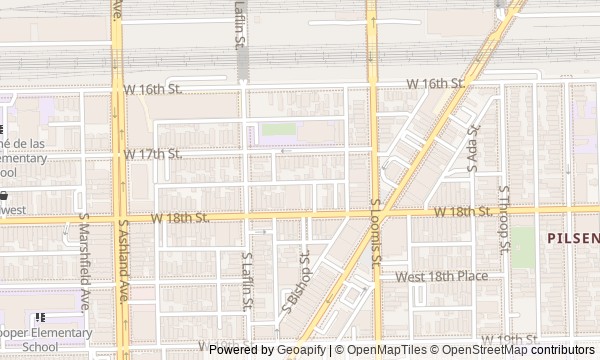
Route map
About the walk
You will enter Pilsen from the Pink Line platform and leave it through Harrison Park (Zapata Park) toward Blue Island Avenue. Then 18th Street will bring you to Thalia Hall, and the final stretch will pass by the long railroad wall on 16th Street.
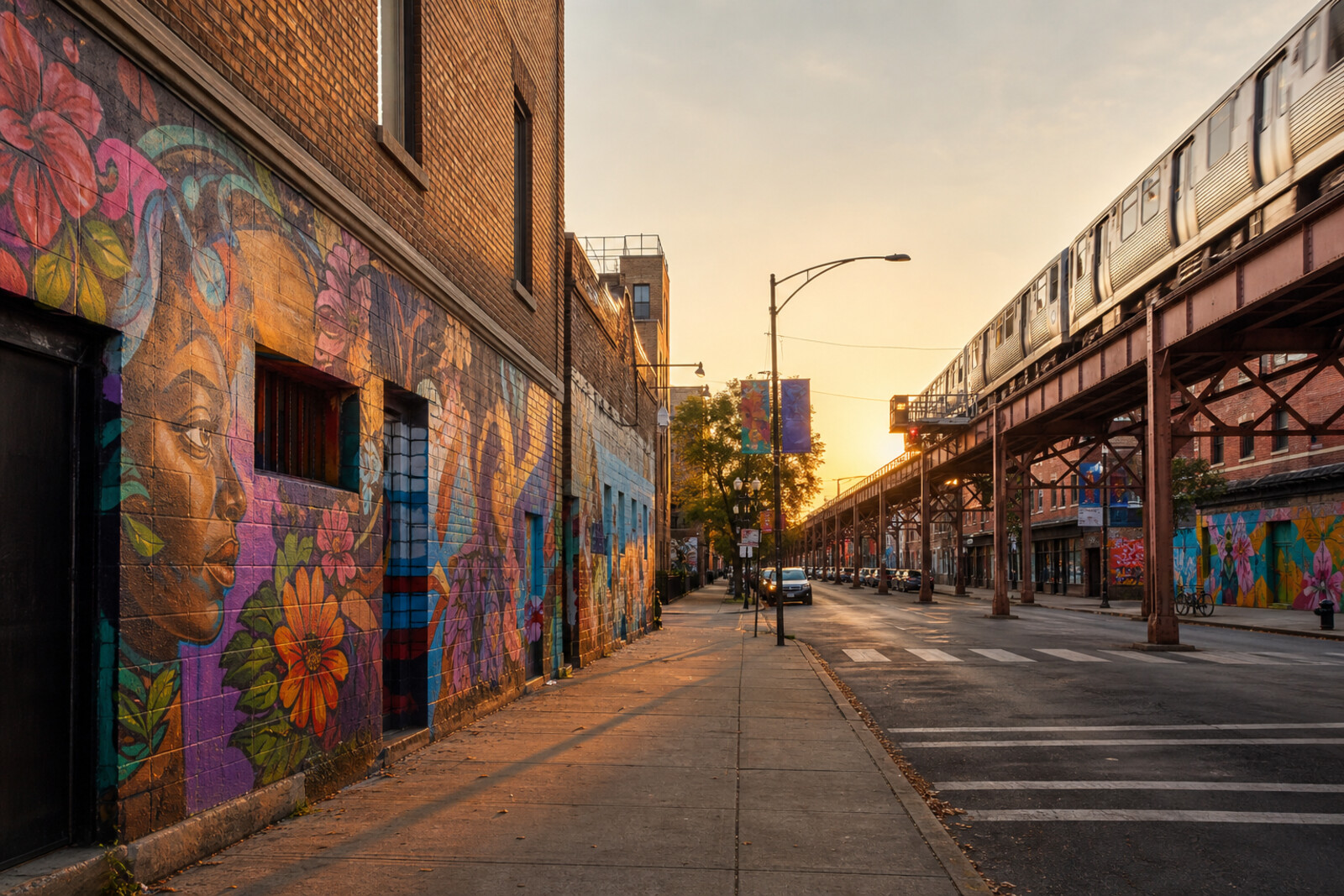
The station will be your first exhibition. At Harrison Park (Zapata Park), you will learn why an art museum needed a former boathouse and why one evening would undo months of negotiations. Faces, slogans, and fresh layers of paint will appear on the concrete walls nearby. Why would an artist's friend preserve someone else's work? How would nighttime vandalism help young creators be heard? What would remain of a work the artist tailored to one exact viewing angle?
The story rests on the people who painted, preserved, and painted over these walls. After the walk, you will read Pilsen's walls in layers: where a student work remains, where a friend of its author brings it back, and where a new mural takes the old one's place.
Why this order
The route begins at the station because its student murals were created with support from the museum, the next stop. The museum stands in Harrison Park (Zapata Park), so after the story of its founding, you will remain in the very community space for which the organizers chose a former boathouse. From the park, the route heads to two murals on Blue Island Avenue: after the institution and the setting, you will see how artists brought back an old work and added a new one. Then 18th Street links a wall text restored after vandalism with Thalia Hall, which also reopened after a long closure. From the stage, the route leads out to the railroad wall. There it ends with a work that was not restored: after the rescued images, the final replacement reveals another fate of street art.
Mural and public-art lovers Those who want to see Pilsen beyond downtown Chicago Those interested in local initiatives and the fate of city walls
Those looking for a walk among skyscrapers and along the waterfront Those who want an indoor museum-only route Those who do not want to walk beside railroad walls
Before you go
Choose daylight hours: details are easier to make out beneath the viaduct and in the alleys during the day. Charge your phone and bring headphones, but stay alert near traffic and the active station. Include the museum in the walk only if you can go inside without rushing; check its current hours and any restrictions before you leave. Do not expect the walls to fully match the descriptions: murals are restored, painted over, partly blocked by cars, and covered by new paintings.
When to go
About two hours at an easy pace. Leave time to look closely at both sides of the street and to pause between audio stories; rain, snow, and busy traffic can slow the walk.
Backup plan
If the museum is closed, view its building from the park and focus on the transformation of a former natatorium into a neighborhood cultural institution. In bad weather, spend less time at exposed walls, but do not try to view them from unsafe spots or from the roadway. If a particular mural is blocked by a car, construction, or new paint, do not look for an unofficial way through: note the surviving fragments and continue the route—the changing nature of the images is part of Pilsen's story.
Route conditions
Facilities. Toilets — 1
Elevation. Ascent — 13 m; descent — 9 m
OpenStreetMap extract of June 18, 2026: database data, not a check on the ground. Data © OpenStreetMap contributors, ODbL licence
Walk plan
Open in maps ↗- 1
18th station (Pink Line)
Shows how paid work for teenagers became part of the neighborhood’s entrance and what was preserved after damage. - 2
National Museum of Mexican Art
It will connect the station’s street art with an institution that grew out of a teachers’ initiative and has kept admission free. - 3
Harrison Park (Zapata Park)
Reveals the park’s community role through an attempt to preserve a neighborhood truce and the memory of a slain mediator. - 4
Galería del Barrio and “Weaving Cultures”
Brings together on one street a children’s mural from the seventies and a composition of women created forty years later. - 5
Mural “We Are a Nation of Immigrants”
It will show how young artists responded to vandalism not by giving up, but by completing the work. - 6
Thalia Hall
Will explain why the immigrant theater retained its original layout after its owner lost it and after a long closure. - 7
Murals Along 16th Street
The route concludes with an example of a mural whose concept depended on the shape of the wall but did not guarantee its preservation.
Route features
Everything you need stays in the browser
Progress, saves and your trip plan are stored on this device.
Add Guide On Map to your home screen so the walk opens outside the browser.
How we handle sources, maps and corrections: our editorial standards