 Guide On Map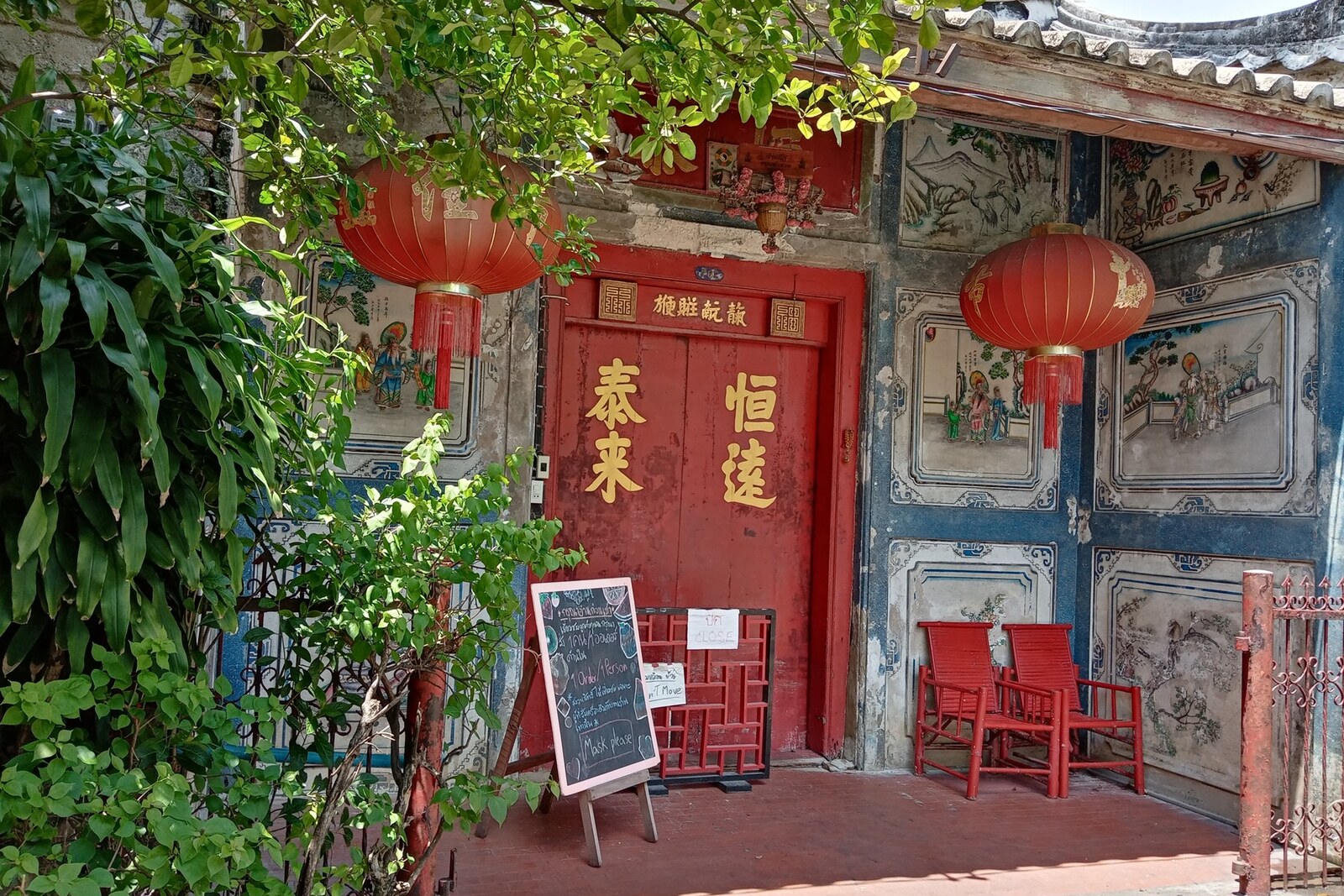
Look around first
What to notice
- Red gate bearing the name “So Heng Tai Mansion”
- Four buildings around the courtyard
- Deep pool
- Main building with ancestor tablets
The story of the place
The four-meter pool in the middle of an old Chinese courtyard was built by Poosak Posayachinda, an eighth-generation descendant of the founder of So Heng Tai Mansion. He needed to support his family and preserve the house, which was beginning to deteriorate faster than he could pay for repairs.
When Poosak was twelve or thirteen, his father died. He left his eldest son responsible for his younger siblings and for So Heng Tai Mansion. At eighteen, Poosak returned after studying in the United States and saw that relatives were selling land to pay for the children's education. The house was burdened with debts, and fifteen or sixteen employees remained on its staff. The nineteen-year-old heir opened a restaurant, installed billiard tables, and traded in used cars. The profits went toward supporting the people and the building. Whenever plaster crumbled or a fence fell, money was needed for repairs again; Poosak had almost no savings left.
The size of this burden explains the house's origins. In the first half of the nineteenth century, the wealthy merchant Chat, who had received the Siamese title of Phraya Aphaiwanit, established his home and office here. He came from the Chinese province of Fujian, traded with junks equipped for sea voyages, and received from the royal court the right to collect duty on edible birds' nests, an expensive ingredient in Chinese cooking. Talat Noi suited such a business because it opened onto the Chao Phraya. In front of the estate, Chat established his own trading pier, Po Seng Pier; goods arrived directly from the river.
The name of his family business remains above the red gate. “So” is the family's surname, and “Heng Tai” is the business's name. Four buildings surrounded a shared courtyard: relatives and people dependent on the family lived in the side wings, the owners gathered in the main building, and ancestor tablets were kept upstairs. So Heng Tai Mansion was conceived as a place where the family could live, trade, and pass property on to the next generations at the same time.
Poosak looked for new income for this system. He took up diving, traveled to Pattaya every week to train, and qualified as an instructor. His students had to rent other people's pools, where there was not enough available time. So Poosak decided to dig a training pool in the central courtyard of So Heng Tai Mansion. In two thousand four, together with an architect he knew, he installed a pool basin with several depth levels and a room for equipment. Construction cost about seven and a half million baht. Feng shui experts warned that the owner was disrupting the old layout, while local people considered the pool incompatible with a Chinese house. Poosak gave a very practical answer: without it, there would soon be nothing left to preserve.
By twenty twenty-five, almost ten thousand people had trained at this school. Fees for lessons gave the family money to live on and to keep repairing the walls, roof, and fence. The main building with its ancestor tablets still stands behind the pool, and the name of the old family business still hangs above the gate. The family's new business now occupies the very center of the courtyard.
Useful on site
TAT: So Heng Tai Mansion daily 09:00–18:00, closed Mondays; Soul's Cafe 10:00–18:30; access to private areas is limited.
Checked: June 28, 2026. Check the official source before visiting.So Heng Tai Mansion remains a private residence: the possibility of visiting must be confirmed separately, and closed doors and areas should be taken literally. In the alleys, do not enter workshops or household shrines without an invitation.