 Guide On Map
Battle of Stalingrad: From Central Volgograd to Mamayev Kurgan
From Fallen Fighters Square, along the embankment, to Mamayev Kurgan
Guide On Map on your phone
Open the walk like a regular app
It takes about 10 seconds to install. No app store needed.
The whole path
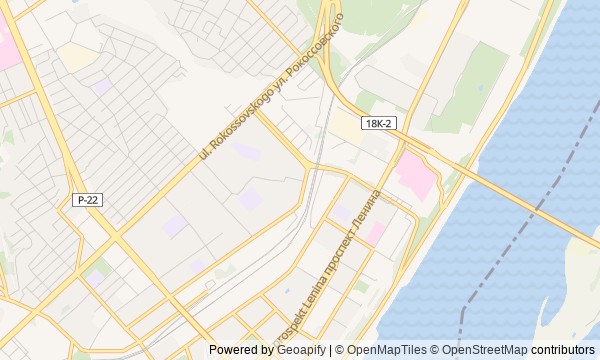
Route map
About the walk
You will begin in the main square, walk along the postwar Alley of Heroes, and descend to the Volga. Here the ceremonial center gradually gives way to traces of the defense: among restored facades, at the former ferry crossing, and beside the white museum rotunda. The bullet-scarred brick of Gerhardt Mill becomes the boundary between the rebuilt city and what was deliberately left as evidence.
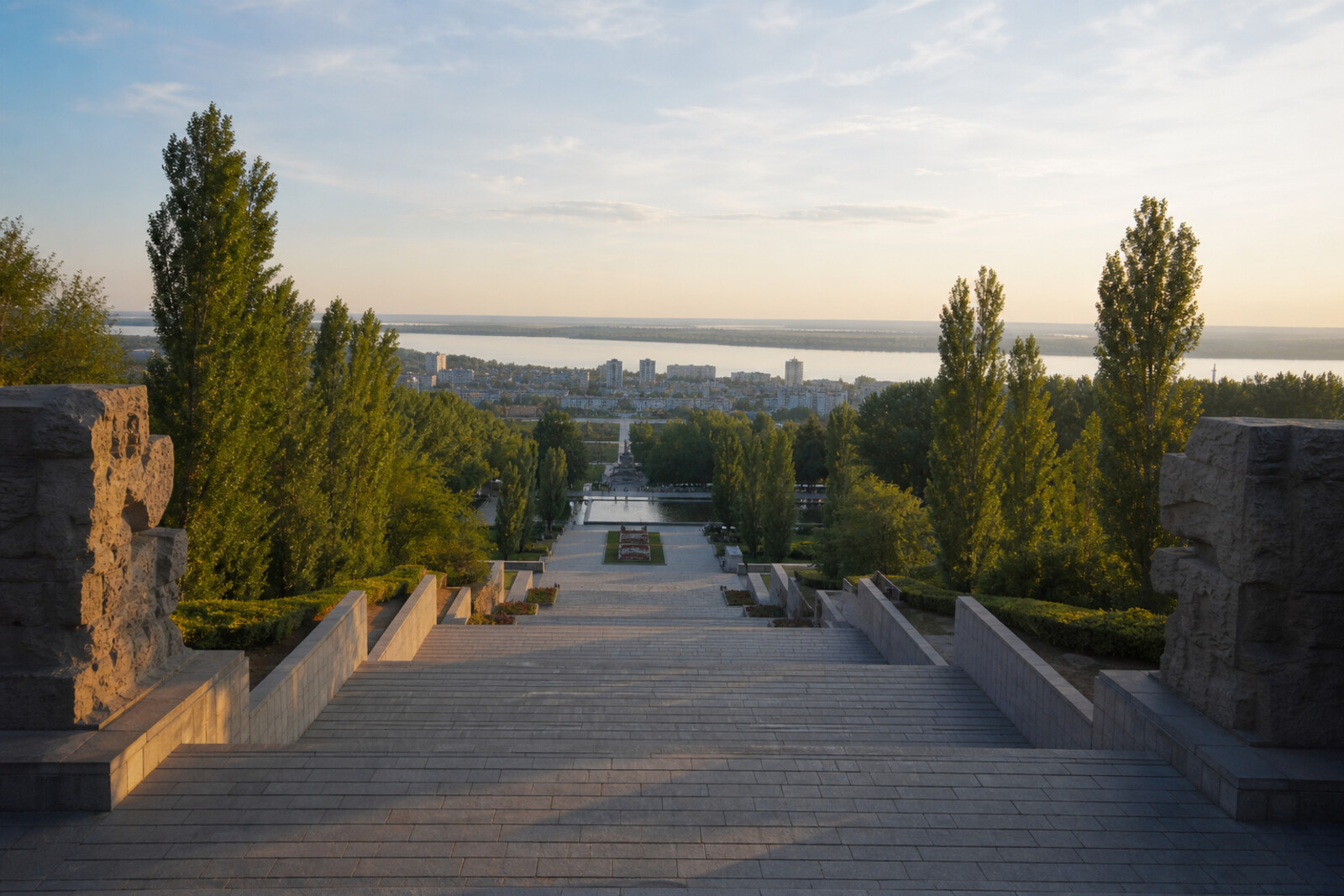
Then a short ride brings you to Mamayev Kurgan. The climb runs from Square of Those Who Stood to the Death to the hall, Square of Sorrow, and The Motherland Calls!.
Questions will arise along the way. Why does one ruin bear two surnames? Who gave the famous house its name if another man commanded the garrison? The account will be calm and grounded in documents. Familiar names will be checked against what is known for certain; images created after the war against surviving objects. By the end, you will understand why Volgograd's road of memory begins in a city square and ends above a vast mass grave beneath The Motherland Calls!.
Why this order
Fallen Fighters Square establishes the first layer of the route: the city's commemoration began here even before the Battle of Stalingrad. Alley of Heroes continues it not as an abstract list, but through the specific site of surrender in the rebuilt center. Its descent to the Volga leads to the former ferry crossing and explains why holding these blocks depended on the riverbank. From the embankment, the route follows the bridgehead of the division that landed here—first to the later museum panorama, then to the authentic ruins of the mill. After the artists' image of battle, the building left by the battle itself matters all the more. Pavlov's House carries the same line of defense farther from the water: from a riverside strongpoint to an observation house on the square. A short ride to Square of Those Who Stood to the Death shifts the story from holding houses to the struggle for the height that controlled the crossings. The final climb up Mamayev Kurgan shows how a battlefield became a memorial and a burial ground.
Those who want to connect the center, the Volga, and Mamayev Kurgan in one story Those who care about documents, human decisions, and the difference between a trace of battle and a later memorial Those prepared for a long and emotionally difficult walk
Those looking for a light overview of the main sights Those who do not want to hear much about war, burials, and contested memory Those who need a route without a ride and a long climb
Before you go
Check the visiting conditions for the Battle of Stalingrad Museum-Panorama on your chosen date in advance: going inside requires separate time, and access to the exhibitions may differ from the possibility of seeing the complex from outside. The route has two parts—one in the center and one at Mamayev Kurgan—so plan how you will travel between them. The kurgan involves stairs, open spaces, and a long climb; choose comfortable shoes, bring water, and take the weather into account. These are active memorial and burial sites: speak quietly, do not step beyond barriers, and do not use the ruins as a backdrop for staged photographs.
When to go
Start in the first half of the day so you can cover the center without rushing and still have enough strength for the kurgan. The museum can noticeably extend the walk, so decide in advance whether you want the full visit or only the exterior of the complex. Do not hurry at Mamayev Kurgan: the walls are designed to be experienced in sequence with sound, and the Hall of Military Glory and Square of Sorrow call for pauses. In heat and strong wind, it is especially important to leave extra time for the climb and rest.
Backup plan
If you cannot get inside the Battle of Stalingrad Museum-Panorama, do not skip the whole section: see the round building and the accessible outdoor exhibits, then approach Gerhardt Mill and Pavlov's House from permitted public areas. Their stories work without a museum ticket too—through the shape of the buildings, inscriptions, and traces of destruction. In bad weather, you can shorten the central section and postpone the visit to the open kurgan: a rushed climb up wet or icy steps is not worth the risk. If you do not have the strength for the full memorial, stop after the ruin walls and return for the final section separately.
Route conditions
Surface. Paved — 2.8 km; unpaved — 1.8 km (data covers 69% of the route)
Stairs. Flights: 3, 72 m in total
Access. Wheelchair — no; stroller — limited (stairs)
Facilities. Toilets — 1
Elevation. Ascent — 111 m; descent — 35 m
OpenStreetMap extract of July 7, 2026: database data, not a check on the ground. Data © OpenStreetMap contributors, ODbL licence
Walk plan
Open in maps ↗- 1
Fallen Fighters Square
It will establish the starting point: the city's memory of the fallen appeared here long before the Battle of Stalingrad memorial. - 2
Alley of Heroes
It will link the postwar boulevard with the block where the resistance of the southern group of the encircled army ended. - 3
62nd Army Embankment
Here, the defense of the city center's dependence on a narrow strip of shoreline and a nighttime crossing will become clear. - 4
Battle of Stalingrad Museum-Panorama
This stop shows how, decades later, artists assembled an image of the entire battle inside a new rotunda. - 5
Gerhardt Mill
The original building will remain the main physical trace of the defense of the riverside strip. - 6
Pavlov's House
This stop explains why the house kept the surname of the first scout, although another officer led its defense. - 7
Square of Those Who Stood to the Death
The ascent will shift the story from holding city houses to storming the height that controlled the crossings. - 8
Mamayev Kurgan
The finale links the memorial sculpture, the mass grave, and the commander’s personal choice to be buried beside his soldiers.
Route features
Everything you need stays in the browser
Progress, saves and your trip plan are stored on this device.
Add Guide On Map to your home screen so the walk opens outside the browser.
How we handle sources, maps and corrections: our editorial standards