 Guide On Map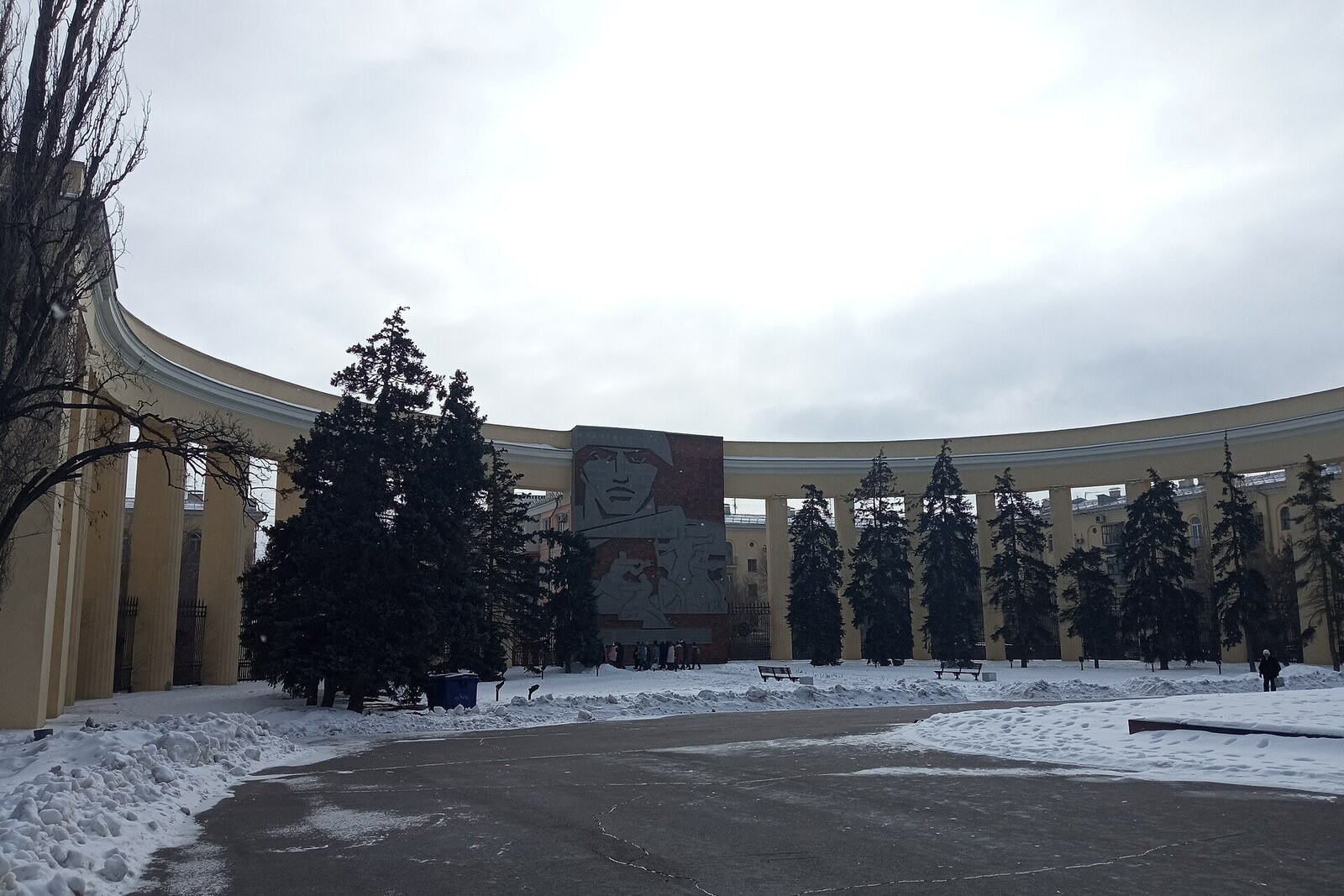
Look around first
What to notice
- Restored residential building
- Memorial wall
- The inscription “fifty-eight days in fire”
- The surnames Afanasyev and Pavlov
The story of the place
At the end of September nineteen forty-two, Sergeant Yakov Pavlov, commander of a group of four scouts, was ordered to inspect a four-story house on 9 January Square and establish a position there. From the upper floors, the square and the approaches to the Volga could be observed. While the enemy occupied this house, it could see any movement across the open ground; once Soviet soldiers occupied it, they gained the same opportunity.
Pavlov's group drove German soldiers out of the building and held it alone for more than two days. To withdraw after the reconnaissance would have meant giving the enemy the best observation point on the square again. The four men had to cover the stairways, windows, and breaches in the walls, without knowing when help would arrive.
On the third day, reinforcements made their way into the house with a heavy machine gun, mortars, and anti-tank rifles. They were led by Senior Lieutenant Ivan Afanasyev, commander of a machine-gun platoon, who had been assigned to organize a permanent defense. As the senior-ranking officer, he commanded the garrison from then on.
Sappers mined the approaches, the soldiers set up several positions for each machine gun, and they dug a communications trench to their own lines. Ammunition and food were brought along it, and reports were passed through it. Residents of the house sheltered in the basement together with the headquarters. Food was scarce: machine gunner Ilya Voronov recalled how fighters crawled under fire to the shattered mill warehouses for burnt wheat.
The house was attacked by infantry and tanks and shelled with mortars and artillery. The garrison held it for almost two months. During the night of November twenty-fourth to twenty-fifth, the defenders received a new order: leave their positions and advance across the square toward the neighboring building. In that battle, Pavlov was wounded in the leg. After the hospital, he returned to the front and finished the war in artillery reconnaissance. Afanasyev also survived his wounds and settled in Stalingrad after the war.
Pavlov's surname became attached to the house in the very first days. Artillerymen marked the occupied building on maps with the name of the commander of the first group, and it then passed into reports. On October thirty-first, a front-line newspaper published a feature article titled “Pavlov's House.” Pavlov himself later admitted that, when he first heard this name, he did not immediately understand which house was meant: Afanasyev's garrison had carried out most of the defense here.
Today it is a restored residential building. On the memorial wall built on its end wall in nineteen sixty-five, beneath the words “fifty-eight days in fire,” both surnames—Afanasyev and Pavlov—appear in a single list.
Useful on site
Viewable from outside around the clock; this is a residential building, and no interior access is provided.
Checked: June 24, 2026. Check the official source before visiting.The story at this stop is read from outside; remember that what stands before you is not a set piece, but part of the everyday city.