 Guide On Map
Old Seoul: Palace, Bukchon, and Jongno
From Gwanghwamun Square through Gyeongbokgung Palace and Bukchon to Jogyesa Temple
Guide On Map on your phone
Open the walk like a regular app
It takes about 10 seconds to install. No app store needed.
The whole path
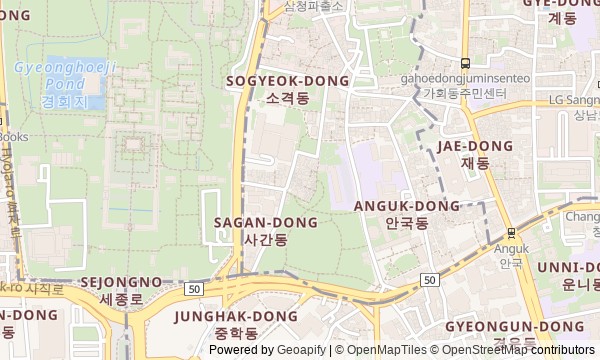
Route map
About the walk
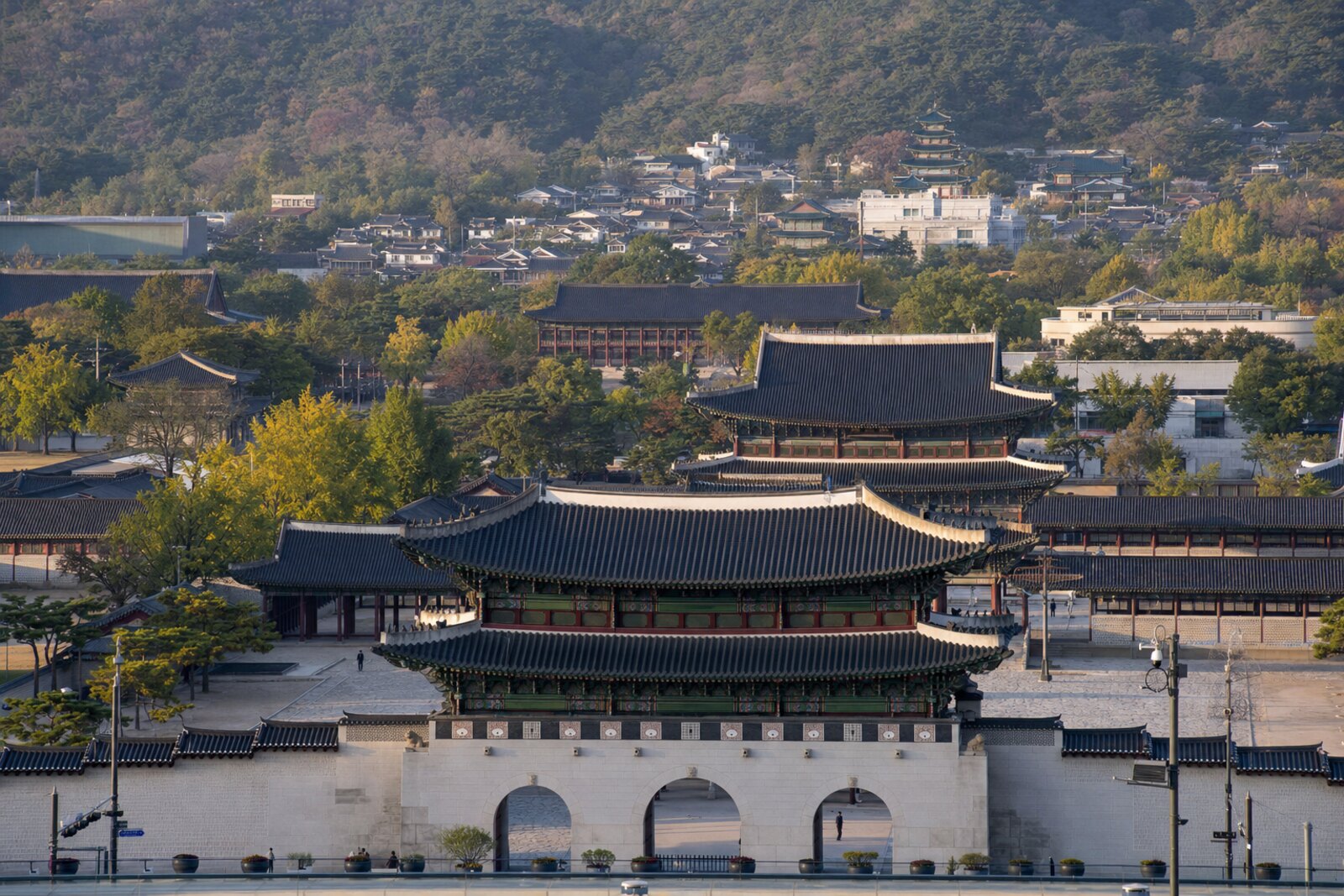
You will begin in the broad square before Gyeongbokgung Palace, pass through the main gate to the throne courtyard and the palace pond. Then the route will leave the ceremonial spaces behind, climb the slope of Bukchon, narrow into a residential lane, and descend through Insadong-gil to Jogyesa Temple.
In the square, you will encounter an examination for which an ordinary courtyard proved too small. At the gate, you will learn why a saved building still ceased to be an entrance. In the palace, a solemn rite will conceal a coup, while by the pond a legend will leave one man choosing between immediate death and conspiracy.
Farther on, smaller things take center stage: a plot of land, a private house, an old book, and a temple signboard. The story will calmly separate documents from later versions and show the cost of every act of preservation. By the end, you will see old Seoul not as a backdrop of palaces and hanoks, but as the trace of specific attempts to hold on to an entrance, a house, a book, and the right to one's own tradition.
Why this order
The square places the listener before the palace and first shows the state from outside—through the road of ministries and the struggle for office. Gwanghwamun Gate is the necessary next step: through it, public power moves into the workings of the palace itself, while the story of the gate's relocation introduces preservation at the cost of its original function. Beyond the gate, Geunjeongjeon Hall shows how a decision was turned into a legitimate rite; nearby Gyeonghoeru Pavilion continues that palace conflict through the consequences of the ceremony. After the pond, the route leaves the palace for the slope of Bukchon, where the struggle for a Korean form shifts from rulers to urban development. The broad view of the neighborhood narrows to one preserved house, then Insadong-gil carries the same question from architecture to old books. Jogyesa Temple closes the chain with a dispute no longer over a single object, but over a temple, a name, and the right to represent an entire tradition.
Those who care about human decisions behind grand facades Those who want to connect Gyeongbokgung Palace, Bukchon, and Insadong-gil in one walk Those who enjoy distinguishing documents, later testimony, and local legend
Those expecting an easy walk only about palaces and hanoks Those who do not want to climb slopes and walk for a long time Those who find stories of coups, executions, and persecution difficult to hear
Before you go
Check Gyeongbokgung Palace visiting conditions in advance: entry to the palace is separate from a free walk through the square, and access to individual palace areas may be regulated separately. Bukchon remains a residential neighborhood, so keep your voice down, do not film through windows, and respect signs at private homes. At Jogyesa Temple, be mindful of services and do not block passageways; when viewing the main hall, choose a place where you will not disturb worshippers.
When to go
About 1 hr 40 min of walking and listening time; stops at the palace, a tea house, or craft shops will make the walk longer.
Backup plan
If Gyeongbokgung Palace is closed or entering the palace is not part of your plans, take a close look at Gwanghwamun Gate and the reconstructed platform from the square, then continue to Bukchon: the gate's story still links the city's axis to the palace complex. If Bukchon is too crowded, do not chase the famous photo at any cost—focus on the overall line of the rooftops and move more quickly to the wider streets. In rain or if you are tired, shorten the residential section to one stop, keeping Insadong-gil and Jogyesa Temple as a meaningful ending.
Route conditions
Surface. Paved — 1.3 km; unpaved — 66 m (data covers 30% of the route)
Stairs. Flights: 7, 17 m in total
Access. Wheelchair — no; stroller — limited (stairs)
Facilities. Toilets — 19; drinking water — 2
Elevation. Ascent — 57 m; descent — 56 m
OpenStreetMap extract of June 18, 2026: database data, not a check on the ground. Data © OpenStreetMap contributors, ODbL licence
Walk plan
Open in maps ↗- 1
Gwanghwamun Square
Here, the route begins with an attempt to obtain a government post and the price of one such attempt. - 2
Gwanghwamun Gate
This stop will show how a monument can be preserved while also being stripped of its former purpose. - 3
Geunjeongjeon Hall
The ceremonial courtyard will help us understand how a seizure of the throne acquired a lawful form. - 4
Gyeonghoeru Pavilion
Here, the consequences of a palace ceremony will turn into a choice between giving up life and trying to restore the former king. - 5
The Bukchon Slope
The overall view of the neighborhood will explain where its small plots and dense rows of houses came from. - 6
Bukchon's Alley of Old Houses
One private house will show what the city’s preservation program left in place. - 7
Insadong-gil
The bookstore shifts the conversation about preservation from old houses to things that are easy to mistake for unwanted paper. - 8
Jogyesa Temple
The final stop will show how a dispute over the image of monastic life changed the temple, its name, and the structure of the order.
Route features
Everything you need stays in the browser
Progress, saves and your trip plan are stored on this device.
Add Guide On Map to your home screen so the walk opens outside the browser.
How we handle sources, maps and corrections: our editorial standards