 Guide On Map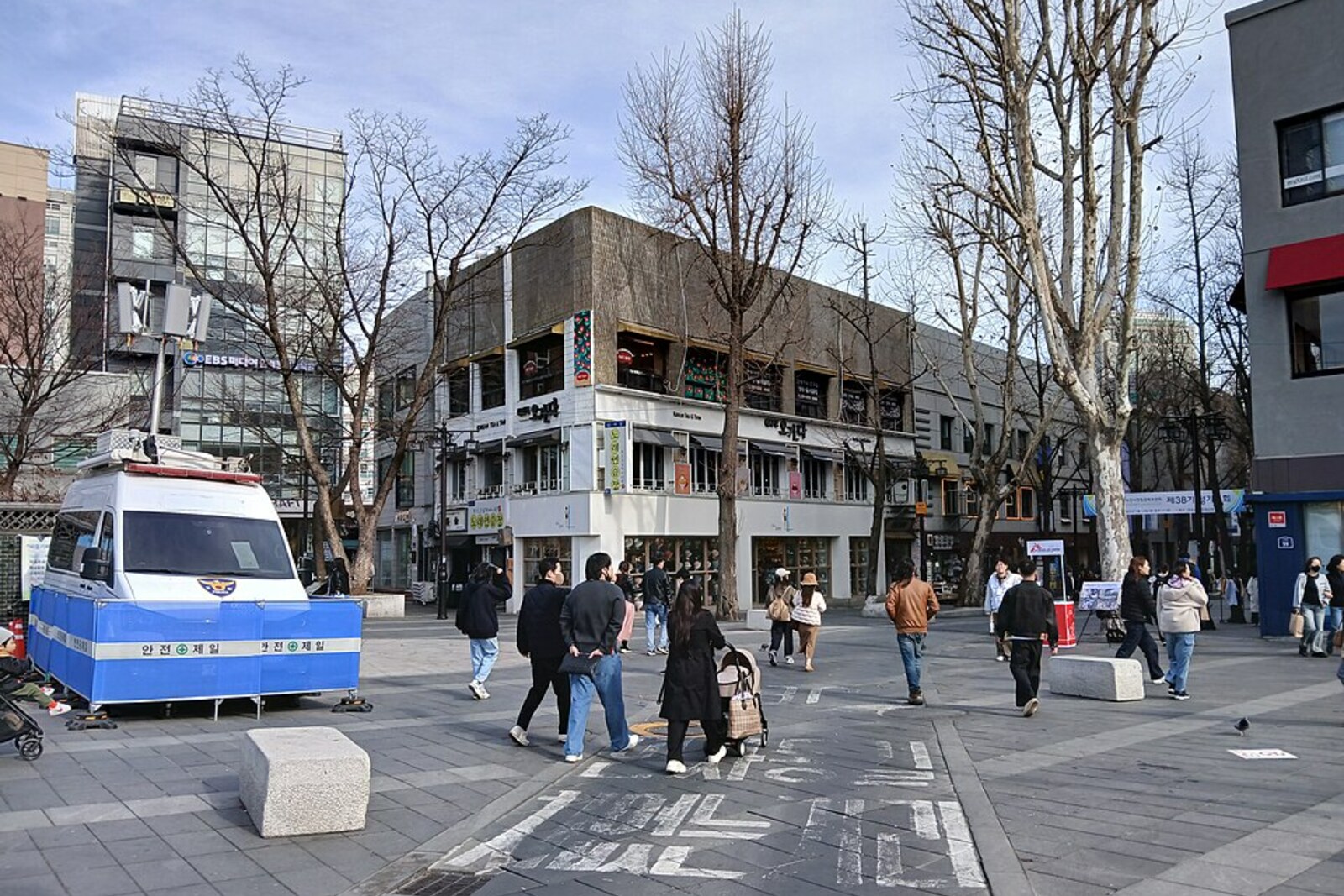
Look around first
What to notice
- The sign reading “Tongmungwan Bookstore”
- Bookshelves
- Old editions
- The facades of neighboring shops
The story of the place
Among the galleries, tea houses, and souvenir shops of Insadong-gil, a small sign reading “Tongmungwan Bookstore” has survived. This bookstore explains why Korean antiquities here are sold rather than kept in museum storage.
The name Insadong was formed from the syllables of two former administrative districts—Gwanin-bang and Daesa-dong. There were no old books there. They appeared later. Nearby stood Dohwaseo, the court painting office of the Joseon dynasty. Painters, bookbinders, and sellers of paper, brushes, and ink stayed nearby. During the colonial period, impoverished families of former officials and landowners began handing paintings, calligraphy, porcelain, furniture, and books over to dealers. Many buyers were Japanese collectors. By the nineteen thirties, the antiques trade had concentrated on this street.
Lee Gyeom-no came here as a teenager. He needed money for food and hired on as a clerk in a bookstore owned by a Japanese man. Later, Lee said that he began working with books because of hunger, not because he loved them. To make a living, he had to learn to distinguish a rare manuscript from a bundle of old paper: a homeowner might not know what he had brought in to sell, and the bookseller paid for a mistake out of his own pocket.
In nineteen thirty-four, twenty-five-year-old Lee bought the bookstore. At first, he sold textbooks and reference books, then he increasingly dealt in old Korean editions. In nineteen forty-three, he moved the shop to the section of Insadong-gil where it still stands. After the end of the colonial period, Japanese owners sold off or left behind the manuscripts they had collected, and a stream of Korean books began to pass through the bookstore. Lee gave the shop a new name, “Tongmungwan Bookstore,” and also went into publishing.
When the Korean War began in nineteen fifty, Lee gave priority over all his other possessions to a collection of eighty volumes on the military organization of Joseon and took it with him. After returning, he sorted through books scattered across the ruined Seoul. Some looked like unwanted wastepaper until Lee established their age and provenance.
In nineteen sixty-one, he came across a copy of Wolinseokbo, a Buddhist work on the life of Buddha, printed in fourteen fifty-nine. Lee gave the find to the library of Yonsei University. Other texts he found entered university collections or were published as facsimile editions. At Tongmungwan Bookstore, philologists and historians met who needed for their work books not listed in any ordinary catalog.
Lee Gyeom-no lived to be ninety-seven. The shop passed first to his son, then to his grandson. Most neighboring secondhand bookshops closed or moved away because of high rents, and galleries and souvenir shops took over their premises. Tongmungwan Bookstore still stands at fifty-five slash one Insadong-gil: behind its sign, the family’s third generation sells books that the first owner once learned to save because he had first learned to earn money for food from them.
Useful on site
An open city street; the opening hours of shops, galleries, and tea houses vary, so it is best to come during the day.
Checked: June 28, 2026. Check the official source before visiting.Do not assume that every old item is a genuine antique: if you plan to buy an expensive object, separately establish its provenance and the conditions for taking it out of the country. Ask permission to take photographs in shops and tea houses.