 Guide On Map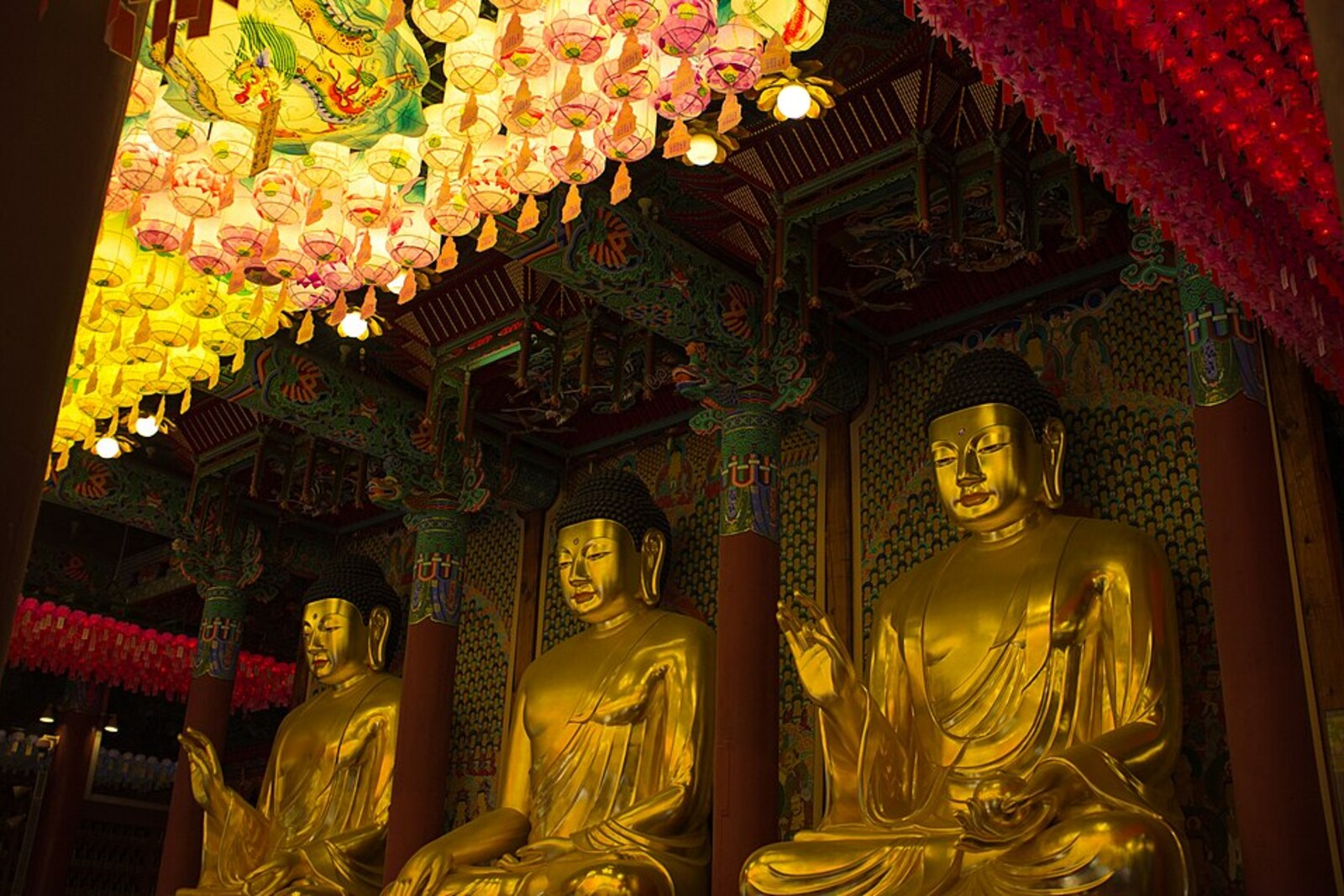
Look around first
What to notice
- Main hall
- Sign reading “Jogyesa Temple”
- Temple entrance
- Central administration buildings
The story of the place
The main hall of Jogyesa Temple was built here in nineteen thirty-eight, when the leaders of Korean Buddhism were creating a capital headquarters. The temple was called Taegosa Temple—after Taego Bou, a fourteenth-century monk whom they then regarded as the founder of Korea's main Seon tradition, that is, Buddhist meditation. So the dispute over this site was a dispute over the right to appoint abbots and manage temples across the country.
After Korea's liberation from Japan, most Korean monks were married: this practice had spread during the colonial decades. Celibate monks made up less than one tenth of the community and did not run a single monastery. For them, the issue was also about the possibility of continuing monastic life. Land reform deprived the temples of the fields whose income supported the monasteries; meditation centers were closing, and practicing monks had nowhere to live or undertake long retreats. Married monks, by contrast, held temple offices, kept the accounts, performed rituals, and supported their families. Exclusion from the community deprived them of their clerical status, housing, and income.
In the spring of nineteen fifty-four, Ha Dong-san and Lee Cheong-dam, leaders of the supporters of celibacy who were seeking to have the monasteries transferred to them, appealed for support to Syngman Rhee, the first president of South Korea. The president demanded that married monks be removed from the temples. For the small group that had previously had no monasteries of its own, this decided the outcome of the first confrontation.
On November fifth, eighty monks walked from Seoul's Seon Study Center to Taegosa Temple and occupied the headquarters. A sign reading “Jogyesa Temple” appeared on the temple, and the administration bore the name of the Jogye Order. The new name linked the community to Jinul, a twelfth-century monk who combined the study of Buddhist texts with meditation and lived at Songgwangsa Temple on Mount Jogye. At the same time, the supporters of celibacy rewrote the charter: they declared Jinul their spiritual predecessor and reclassified the married monks as laypeople.
A few days later, the expelled side tried to retake Taegosa Temple. Monks were driven out of here one after another, clashes spread to other monasteries, and then years of court cases began. In the summer of nineteen fifty-five, a convention of the supporters of celibacy appointed abbots for six hundred twenty-three temples; Lee Cheong-dam became secretary general, and the state recognized the new leadership. The married monks continued to challenge this decision. In nineteen sixty, they again tried to occupy Jogyesa Temple, while five hundred of their opponents declared a hunger strike here as they awaited a decision from the Supreme Court of Korea. The ensuing protest outside the court building ended with injuries, hundreds of arrests, and sentences for twenty-four monks.
The attempt to unite both groups in one order fell apart. After their final lost court case, the married monks created a separate order in nineteen seventy and restored the name Taego to it. The supporters of celibacy retained the Jogye Order and this temple. Services are now held in the main hall, the order's central administration operates in the neighboring buildings, and above the entrance remains the name first put up during the occupation: Jogyesa Temple.
Useful on site
The temple grounds are open around the clock; individual halls, services, and events may have their own schedules.
Checked: June 28, 2026. Check the official source before visiting.Jogyesa Temple is an active temple: speak quietly, do not photograph people during prayer without permission, and do not walk in front of those making bows. During a ceremony, view the hall from the edge of the courtyard.