 Guide On Map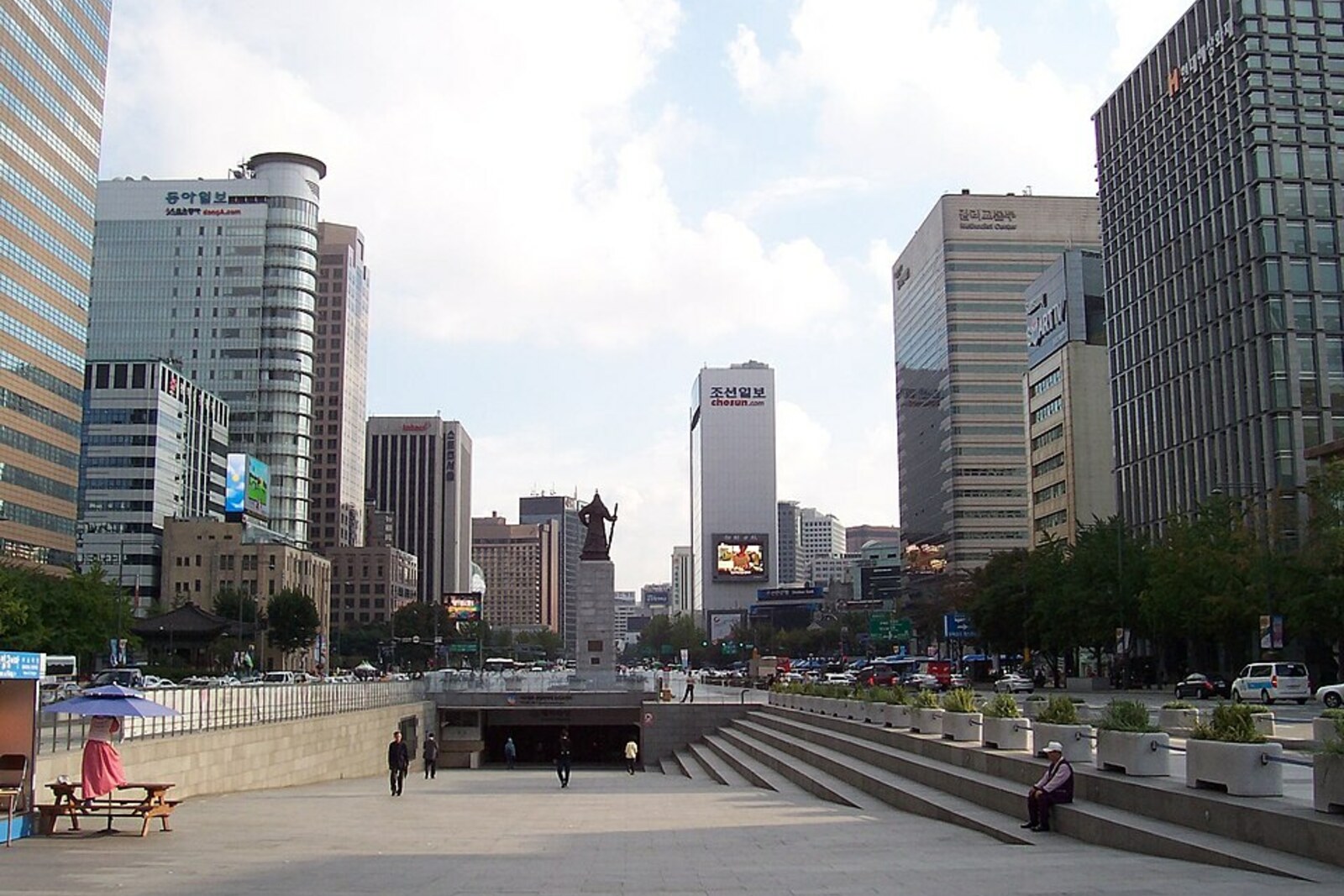
Look around first
What to notice
- Protective pavilion
- Excavated gate
- Stone wall
- Well and drain
The story of the place
In the spring of eighteen hundred, officials of the Ministry of Rites stretched a canvas enclosure across what is now Gwanghwamun Square. The palace gate formed the northern boundary of the examination grounds, and the capital administration formed the southern one. Thirty-two thousand five hundred ninety-eight people were admitted inside.
This place was not yet a square. The broad road laid out in thirteen ninety-five before the main palace of the new capital was called Yukjo-geori—the Street of Six Ministries. Along it stood institutions responsible for appointments, the treasury, ceremonies, the army, courts, and construction. Here officials served, heard cases, and held state examinations. The square received its present name from Gwanghwamun Gate, the gate at its northern end.
King Jeongjo ordered the examination of eighteen hundred to mark the appointment of his son Sunjo as heir. The Ministry of Rites usually received applicants at its own compound, but this time its courtyard could not hold all who wished to take part. The officials set up three examination sites; the first occupied almost all of Yukjo-geori.
The candidates sought the right to enter government service. For an educated man, such an examination was the main path to a post and a salary. The contemporary Yun Gi wrote that the crowd included farmers, woodcutters, and shepherds: people left their usual livelihoods for a single chance to change their family's circumstances.
Tens of thousands passed through the enclosure at Yukjo-geori, yet officials received only thirteen thousand seven hundred thirty-seven answers here. Across all three sites on the first day, they counted one hundred eleven thousand eight hundred thirty-eight entrants and thirty-eight thousand six hundred fourteen submitted papers. Ten people passed the examination.
The rest had to prepare again or give up an official career. Some did not leave here on their own. Yun Gi recorded that even three sites were not enough: people were killed and injured in the crush, and candidates fleeing the crowd climbed onto the roofs of neighboring houses.
The canvas enclosure, the Ministry of Rites, and those houses have disappeared. In the northern part of the present square, the old name, Yukjo-geori, has been preserved. Nearby, under a protective pavilion, at a depth of one meter twenty centimeters, lie the excavated gate, wall, well, and drain of Sahonbu (Office of Inspector General), an institution that inspected officials. Its compound was part of that same row of ministries, among which, in the spring of eighteen hundred, ten people received examination certificates while thousands left the square empty-handed.
Useful on site
The public square is accessible at all times; festivals, ceremonies, and city events may alter passageways.
Checked: June 28, 2026. Check the official source before visiting.The square is open to city traffic and events; if part of the space is occupied by a stage, barriers, or a gathering, listen to the story from an accessible section while keeping the gate in view.