 Guide On Map
Historic Center of Santiago: From Colony to Republic
From Plaza de Armas through La Moneda to Londres 38
Guide On Map on your phone
Open the walk like a regular app
It takes about 10 seconds to install. No app store needed.
The whole path
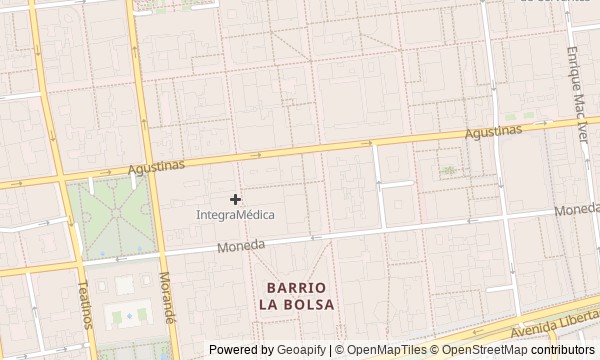
Route map
About the walk
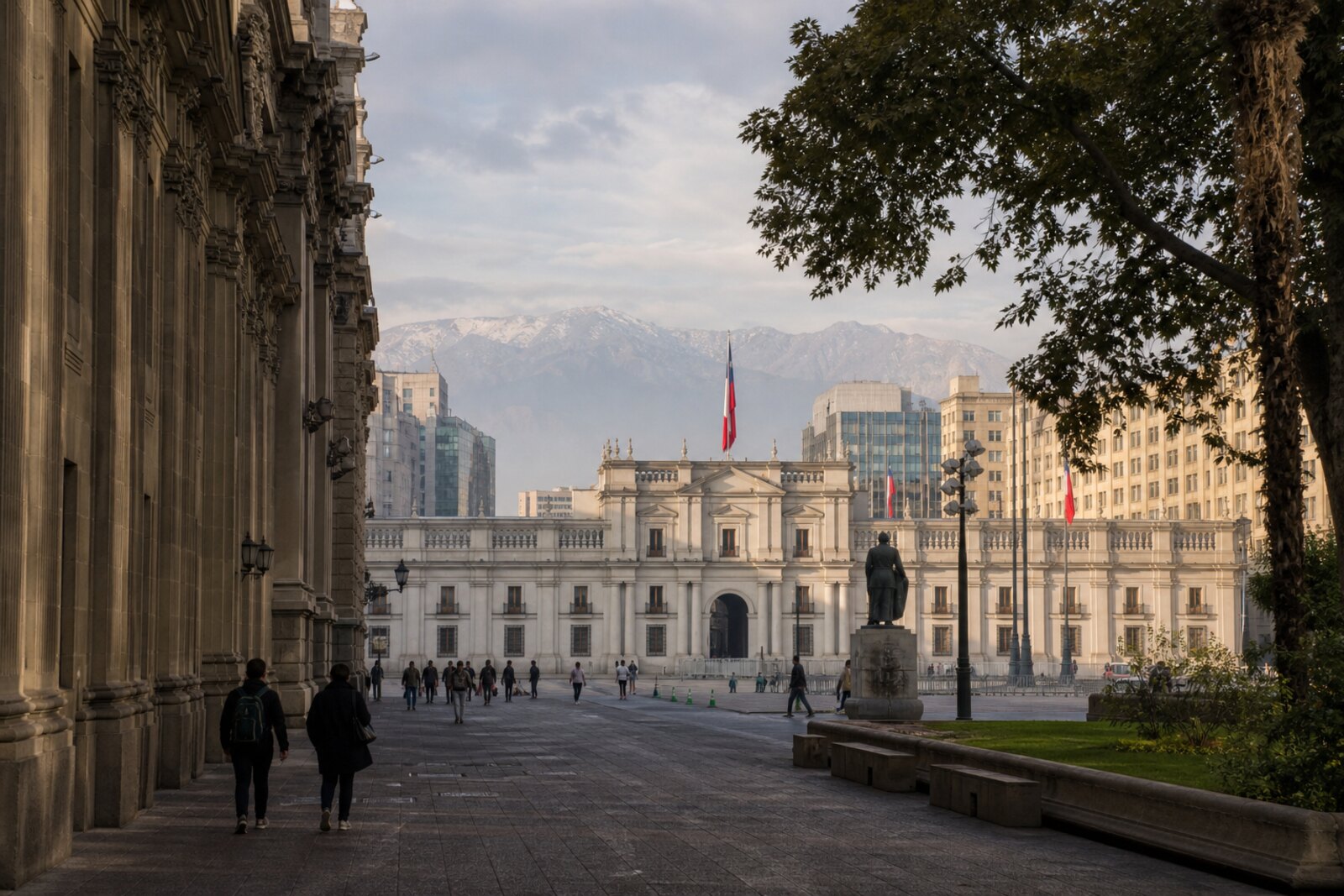
You will begin at Plaza de Armas, walk past the Santiago Metropolitan Cathedral and the museum, then cross a district where the Former National Congress, the Palace of the Courts of Justice, and La Moneda stand close together. The final stretch will take you from broad state squares to the narrow cobbled streets of Barrio París-Londres.
This is a walk about power at the moment when the familiar order stops working. Why does the bronze founder hold a document written after a fire? Why would restorers leave an ancient figure without an arm? How did the Noise of Sabers in a parliamentary gallery change the country? And why did the restored presidential palace acquire a door that, for a time, had not been there?
The story moves from object to testimony. It distinguishes established fact, disputed version, and what the documents never made possible to know. No heroic declamation.
By the end, you will read central Santiago through a restored record, a missing arm, the door at Morandé 80, and the names in the pavement at Londres 38.
Why this order
At Plaza de Armas, you will see the original grid of the Spanish city, and in the Santiago Metropolitan Cathedral on its western side, a system of power in which a church dispute could become a matter of state. Behind the cathedral, at the Chilean Museum of Pre-Columbian Art, you will return to the objects of the peoples whose land this grid crossed, and to the question of how to treat a damaged past. Bandera Street begins the republican district: first the Former National Congress, where the military pressured parliament, then the Palace of the Courts of Justice opposite, which took the place of a hall of peaceful transfers of power. Farther on, Morandé Street leads to the presidential palace and shows what a new military intervention brought about. The final crossing takes you out of the monumental civic center and into an ordinary residential district, where the consequences of the coup must be read not from a palace facade but from cobblestones, a house number, and names.
Those who want to understand the history of Chile through specific decisions and human actions Fans of political history without ceremonial rhetoric Those who care about documents, disputed testimony, and visible traces of events
Those looking for an easy overview walk without difficult subjects Those more interested in architectural styles than in the history of power Families with children not ready to discuss abductions, torture, and a military coup
Before you go
Check separately whether the Santiago Metropolitan Cathedral, the Chilean Museum of Pre-Columbian Art, and Londres 38 are open: entry should not be assumed as part of the walk. Treat the Palace of the Courts of Justice, the Former National Congress, and La Moneda chiefly as exterior stops; barriers, security, and official events can change the usual approach to their facades. For the memorial ending, leave yourself some emotional room and do not plan entertainment immediately afterward.
When to go
About 2 hr 55 min, including stops for stories and exterior viewing; a full visit to the museum or memorial space will require additional time.
Backup plan
If the interiors are closed, the route still works in full from the street. Walk around Plaza de Armas, study the cathedral and museum facades, the court's caryatids, and the garden and bells by the Former National Congress from accessible public space. At La Moneda, stay within the permitted area along the northern axis, and in Barrio París-Londres follow the black-and-white tiled path to the name plaques. If a particular district is closed off, skip that stop without trying to get around service barriers and continue to the next public address.
Route conditions
Surface. Paved — 1.3 km (data covers 55% of the route)
Stairs. Flights: 2, 11 m in total
Access. Wheelchair — no; stroller — limited (stairs)
Facilities. Toilets — 3; drinking water — 1
Elevation. Ascent — 27 m; descent — 30 m
OpenStreetMap extract of June 18, 2026: database data, not a check on the ground. Data © OpenStreetMap contributors, ODbL licence
Walk plan
Open in maps ↗- 1
Plaza de Armas
Here you will see why the main square of a barely built city became a place of defense and rebuilding. - 2
Santiago Metropolitan Cathedral
The story of one dismissal explains how a church matter split the ruling political camp. - 3
Chilean Museum of Pre-Columbian Art
You will learn why careful restoration sometimes has to leave a loss in plain view. - 4
Former National Congress
Eight days of parliamentary history will show how a demand to pass laws turned into a demand to dissolve parliament itself. - 5
Palace of the Courts of Justice and Plaza de la Justicia
You will find yourself on the site of a vanished hall where the country’s armed leader chose resignation over fighting in the capital. - 6
La Moneda and the northern civic axis
Here the story will reconstruct the events of the coup through the façade, the square, and the restored doorway. - 7
Barrio París-Londres and Londres thirty-eight
The final stop will link one man's disappearance to a survivor's testimony and a preserved address.
Route features
Everything you need stays in the browser
Progress, saves and your trip plan are stored on this device.
Add Guide On Map to your home screen so the walk opens outside the browser.
How we handle sources, maps and corrections: our editorial standards