 Guide On Map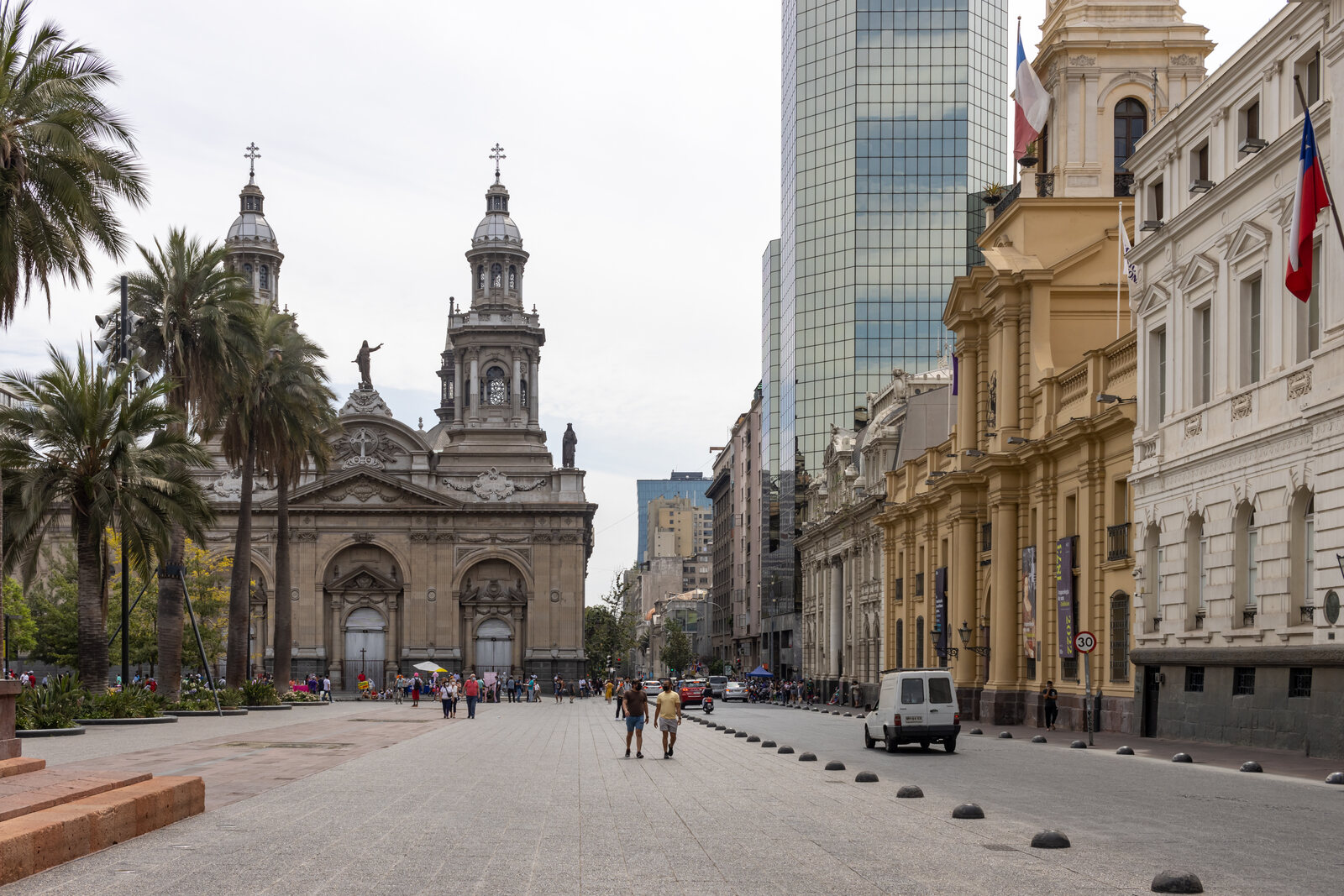
Look around first
What to notice
- The archbishop's cathedra
- The central nave
- The image of the Virgin Mary
- The statue of Santiago the Apostle
The story of the place
Deep in the central nave stands the cathedra, the archbishop's permanent chair. The chapter operates at the cathedral: it is a council of priests responsible for ceremonies, administration, and the cathedral's attendants. The cathedra remains the cathedral's main distinction from an ordinary church. Beside an image of the Virgin Mary stands a statue of Santiago the Apostle, the city's patron, and the cathedral itself is dedicated to the Assumption of the Virgin Mary.
In January eighteen fifty-six, Francisco Martínez Garfias, the cathedral's head sacristan, dismissed Pedro Santelices, a sacristy attendant. The sacristy is a service room where vestments and liturgical objects are kept and everything needed for worship is prepared. Santelices lost his income and demanded that his position be restored.
The archbishop was not in Santiago at the time. The cathedral chapter—a council of priests responsible for ceremonies, administration, and the cathedral's attendants—overturned the dismissal. In response, Martínez Garfias resigned and secured a new hearing. When Archbishop Rafael Valentín Valdivieso returned to the city, he upheld the dismissal. Two canons refused to comply, and Valdivieso forbade them from conducting services.
It was the very structure of the cathedral that turned a dispute over a job into a matter for the whole country. This is where the cathedra stands—the archbishop's permanent chair, from which the word “cathedral” is derived. The archbishop was the final church authority, but in Chile at that time the Catholic Church had not yet been separated from the state. Priests could appeal a church decision in an ordinary court. The two punished canons did exactly that.
The Supreme Court of Chile supported them and demanded that the punishment be suspended. Valdivieso sought independence for the church court and refused to carry out the secular judges' ruling. He faced expulsion from the country for disobedience; the archbishop decided to leave rather than yield. President Manuel Montt, obliged to ensure that the court ruling was carried out, faced a choice: expel the head of the Chilean Church or allow him not to obey the court.
The government persuaded the canons to withdraw their appeal. Valdivieso remained in Santiago and lifted the ban on their conducting services; Santelices did not secure his final reinstatement through the court. But the ruling conservative camp split. Supporters of church independence turned away from the president and joined their former liberal opponents. The dismissal of a sacristy attendant changed Chile's political balance for decades.
The chapter still operates at the cathedral, and the archbishop's cathedra remains its main distinction from an ordinary church. Deep in the central nave, beside an image of the Virgin Mary, stands a statue of Santiago the Apostle, which Valdivieso brought from Europe. In Spanish, James is Santiago: Pedro de Valdivia gave the city his name, and Santiago the Apostle is considered its patron. The cathedral itself is dedicated to the Assumption of the Virgin Mary, and beside her stands the statue of the saint who gave Santiago its name, brought by the archbishop who nearly left this city because of one dismissed attendant.
Useful on site
Enter only when access is unrestricted, keep quiet, and do not disturb the service; for this route, it is enough to examine the building carefully from outside.