 Guide On Map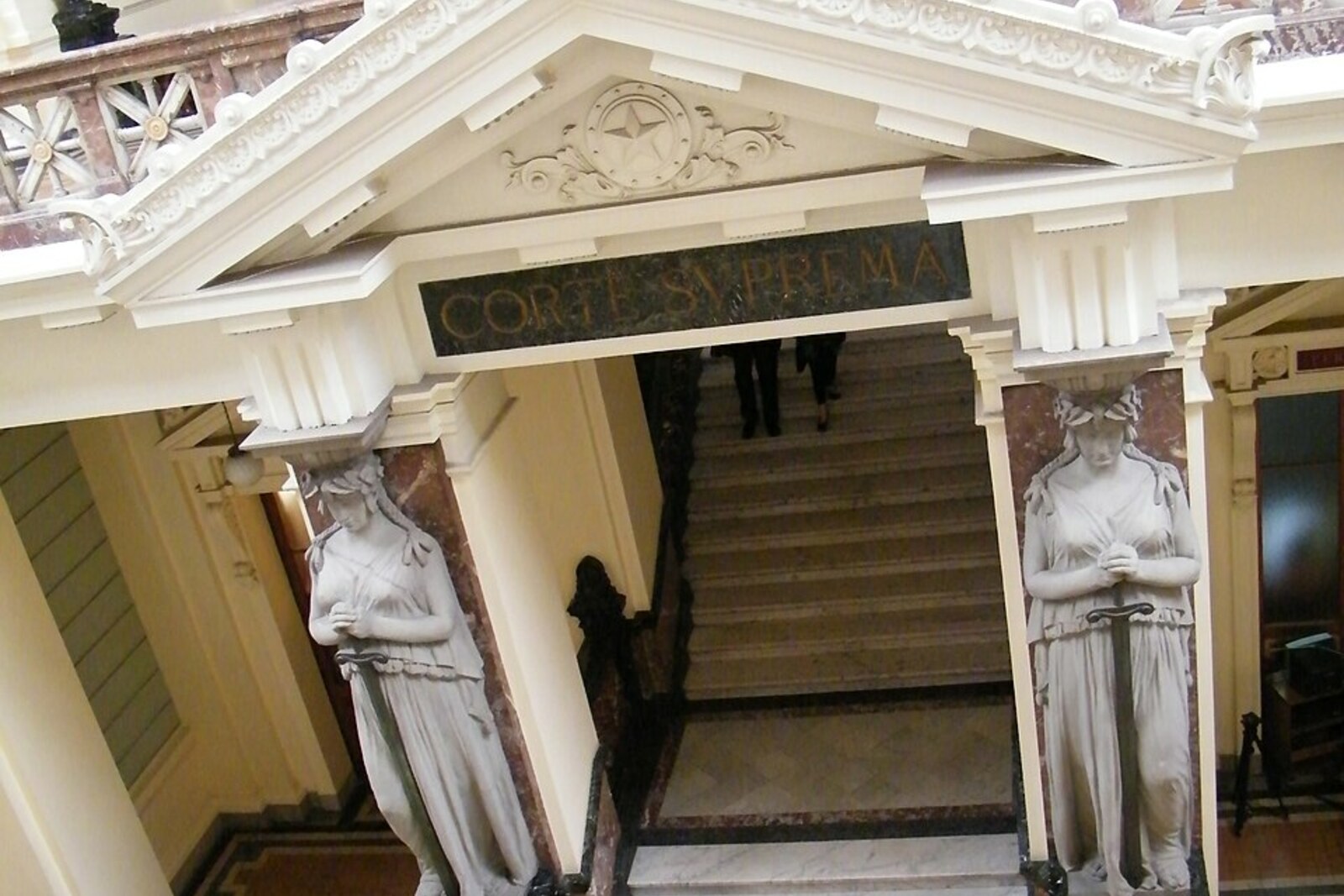
Look around first
What to notice
- The bronze group of Montt and Varas
- The facade of the Palace of the Courts of Justice
- Plaza Montt-Varas
- The iron grille at the entrance from Bandera Street
The story of the place
The name “Plaza de la Justicia” is explained by the palace in front of it. Its other name, Montt-Varas, came from the bronze group at its center. Manuel Montt was president of Chile, and Antonio Varas was his closest minister of the interior. After his presidential term, Montt headed the Supreme Court of Chile for almost two decades. The monument to this political pair was unveiled in nineteen oh four, when construction of the present palace had not yet begun.
The Supreme Court of Chile and the Santiago Court of Appeals now sit here. Most cases begin in other buildings: appeals against lower-court decisions come here, and Supreme Court judges consider questions on which the uniform application of laws throughout the country depends.
Before the palace, the Royal Tribunal of the Consulate stood on the eastern part of the site—a commercial court created under Spanish rule for disputes between merchants. In its great hall, on January twenty-eighth, eighteen twenty-three, the fate of Bernardo O'Higgins, the Supreme Director—the title then given to the leader of the young republic—was decided.
O'Higgins led the country for six years after the War of Independence. The constitution of eighteen twenty-two extended his powers, while levies introduced because the treasury was empty and the abolition of hereditary privileges made him enemies. Ramón Freire, governor of the province of Concepción and commander of the southern forces, refused to obey Santiago and led soldiers toward the capital. The province of Coquimbo joined him.
Representatives of Santiago gathered in the Tribunal hall and demanded that O'Higgins step down. The Supreme Director still had the loyal Honor Guard, and he himself had spent his entire adult life in the army. An attempt to remain in office meant a battle with Freire’s soldiers and an armed clash in the capital. O'Higgins relinquished his powers and transferred them to a provisional junta of three people.
Two months later, provincial representatives appointed Freire the new Supreme Director. O'Higgins left for Peru that summer and never saw Chile again. In exile, he lived on the income from Montalván Estate: he grew sugarcane and produced aguardiente—grape vodka; about fifty enslaved people worked on the plantation. He spent nineteen years there and died.
The hall where the resignation took place has vanished. In nineteen twenty-five, the old Tribunal was demolished to complete the eastern wing of the Palace of the Courts of Justice. One iron grille at the entrance from Bandera Street was left from the building. Appeals are heard behind it today; the very room from which O'Higgins emerged as a private citizen stood on the site of the present palace.
Useful on site
Treat the palace as a working institution: listen to the story from the plaza, do not linger by the entrance, and follow the security guards’ instructions.