 Guide On Map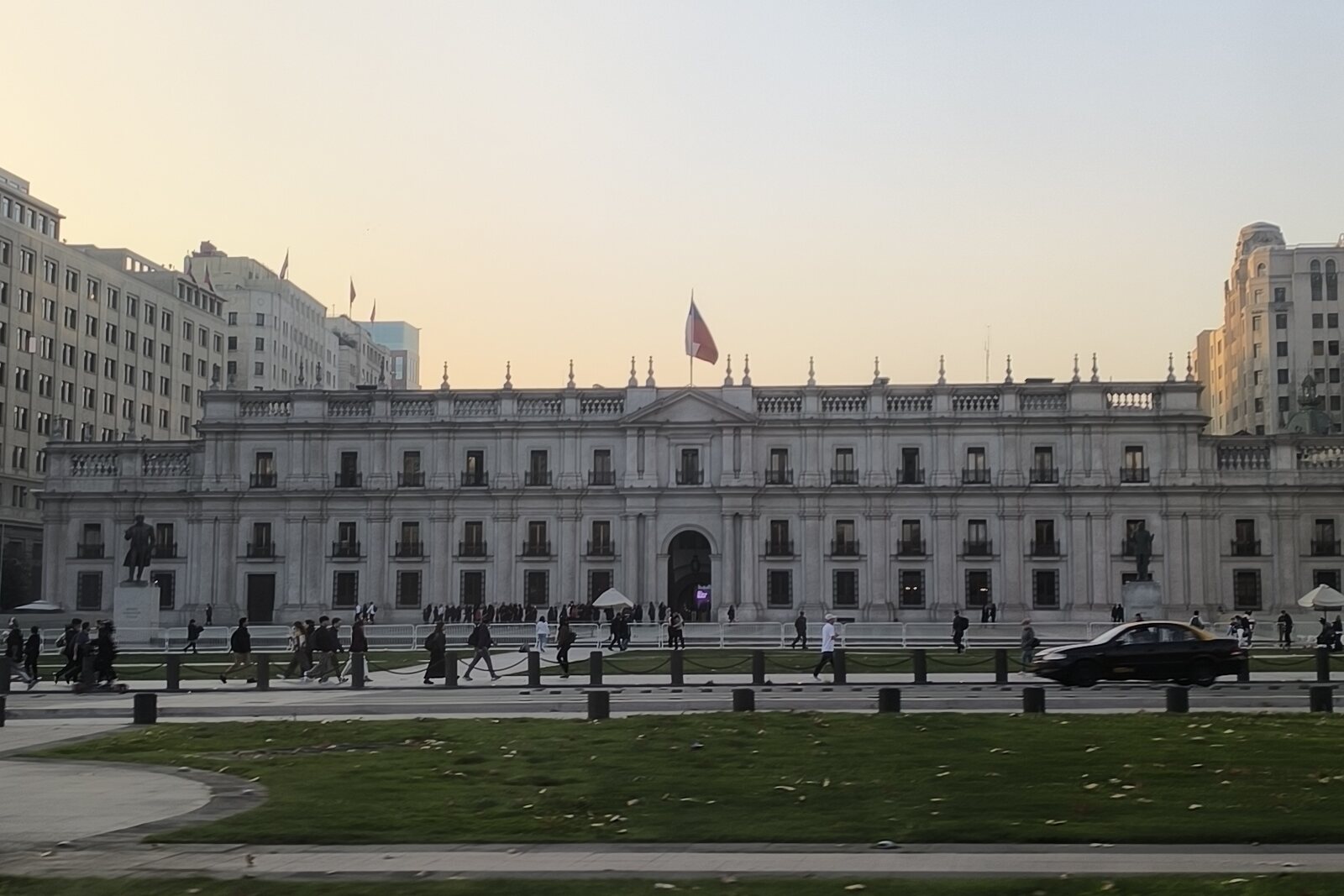
Look around first
What to notice
- White northern façade
- Plaza de la Constitución
- Morandé 80 door
- Ministry buildings on either side of the square
The story of the place
The northern façade of La Moneda faces Plaza de la Constitución. The palace is almost a century and a half older than the square. In the nineteen thirties, several Chilean governments ordered the Ministry of War and the Dragoon Barracks that stood here to be demolished, an entire block to be cleared, and ministry buildings to be built around it. This gave the presidential residence an open northern façade, while the square received the name of the country’s main law.
The name La Moneda remains from the building’s original purpose. Architect Joaquín Toesca designed it as the Royal Mint of Santiago, and coins were minted here from eighteen oh five onward. In eighteen forty-six, President Manuel Bulnes moved his office and government departments here. Coins continued to be produced in neighboring rooms until nineteen twenty-two; then officials and the presidential administration occupied the entire palace.
On September eleventh, nineteen seventy-three, President Salvador Allende came here after receiving reports of a naval forces mutiny in Valparaíso. He had been elected three years earlier on a platform of moving toward socialism through elections and laws. By the autumn of nineteen seventy-three, the country was divided by disputes over his reforms, inflation, shortages of goods, and political violence. Less than three weeks before the coup, Allende himself appointed Augusto Pinochet commander of the army. Pinochet now led the military officers demanding the president’s resignation and the transfer of power to the junta.
The ultimatum demanded that La Moneda be vacated by eleven o’clock. Police units that had initially guarded the palace were ordered to leave. Allende’s personal guard, advisers, doctors, and several ministers remained with him. The president refused to resign, ordered the women and some of the unarmed staff to leave the building, and then delivered his final address by telephone to Radio Magallanes. He was already speaking as a man certain that the station would soon be taken off the air and that he himself would not leave the palace.
Before noon, Air Force commander General Gustavo Leigh sent Hawker Hunter aircraft to La Moneda. They fired rockets at the palace. The wooden floor structures and the roof caught fire; tanks and infantry were occupying Plaza de la Constitución and the neighboring streets at the time. After the bombing, Allende ordered the resistance to end and the remaining people to be taken out through the side exit on Morandé Street. He himself remained in Independence Hall and killed himself with an assault rifle.
Those who surrendered were made to lie on the pavement near the palace and were taken away to military units. Several of Allende’s advisers and guards disappeared afterward; a state commission later established that they had been captured alive. The president’s body was carried out through the same side door at Morandé eighty. The military junta removed the elected government, dissolved Congress, and governed Chile for the next seventeen years.
The fire destroyed the roof, the floors, and most of the rooms of La Moneda; mainly the exterior brick walls survived. The white northern façade facing the square was restored, while the opening on Morandé was replaced with a window during reconstruction. The present door numbered eighty was made later from old plans and photographs. Salvador Allende was carried out of the ruined palace through the original opening.
Useful on site
View the palace only from permitted public areas; ceremonies, security measures, and temporary barriers take priority over the planned listening point.