 Guide On Map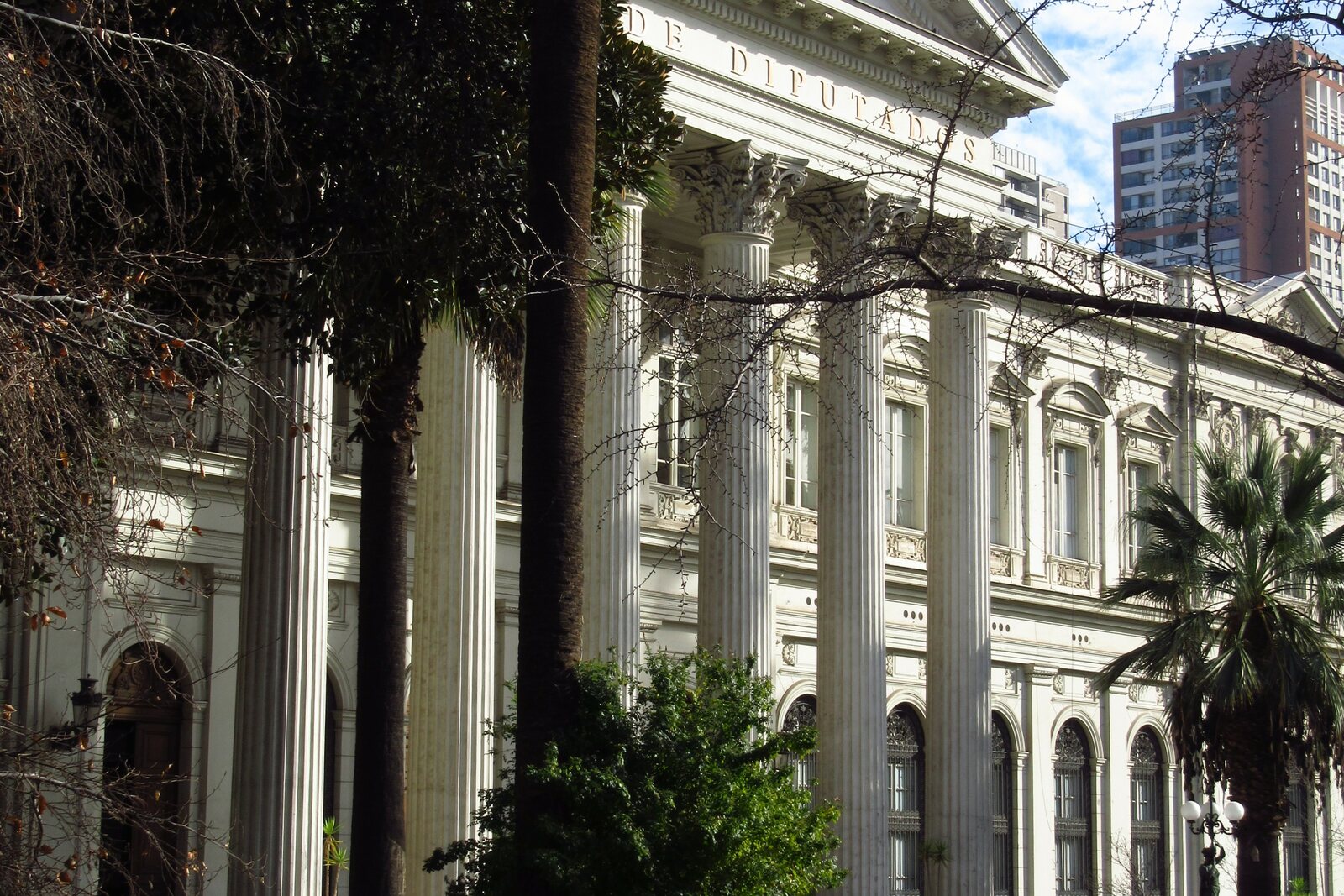
Look around first
What to notice
- Former Congress façade
- Former Congress garden
- Senate gallery
- Marble staircases
The story of the place
On September third, nineteen twenty-four, young army officers occupied the Senate gallery in this building. Since eighteen seventy-six, both chambers of the National Congress of Chile had met here: deputies passed laws in one hall, while senators debated them in another.
The officers lived on salaries that had lagged behind prices for years. From nineteen twelve to nineteen twenty, their pay barely changed, although the cost of living rose by at least eighty percent. By nineteen twenty-four, both a rise in military salaries and laws on the eight-hour working day, insurance, and accidents had stalled in Congress. They were championed by President Arturo Alessandri, a lawyer elected four years earlier on a promise to carry out social reforms.
That evening, the senators turned to the parliamentary allowance—a monetary payment for the deputies and senators themselves. The officers came to show that they considered such a sequence unacceptable. One of the group’s leaders was Carlos Ibáñez del Campo, head of the cavalry school. Taking part in a political demonstration could end a career military officer’s career, yet he and his comrades appeared in uniform and armed.
The minister of war ordered them to leave the gallery. The officers obeyed, but as they left, they deliberately began striking the floor and walls with their sabers. This gesture became known as the Noise of Sabers. Two days later, the participants in the demonstration formed the Military Committee and presented Alessandri with a list of demands: raise salaries, pass the delayed laws, and replace several ministers.
Congress feared a coup. On September eighth, in one extended session, the parliamentarians passed almost the entire package of laws they had previously been unable to agree on for years. The officers did not then return to their barracks. They demanded that Congress itself be dissolved.
Alessandri resigned. The parliamentarians did not accept it and allowed the president to leave for six months. He took refuge in the embassy of the United States, then went to Italy. On September eleventh, the military junta of General Luis Altamirano dissolved Congress. Eight days passed from the officers’ appearance in the gallery to the closure of both chambers.
A few months later, Ibáñez and other young officers overthrew Altamirano’s junta and summoned Alessandri back from exile. Under the returned president, the constitution of nineteen twenty-five was adopted, significantly strengthening the presidency. Ibáñez continued his career and became president himself two years later.
Parliament continued to meet in these halls for decades, but after the nineteen seventy-three to nineteen ninety interruption, its main seat opened in Valparaíso. The old building was returned to Congress for sessions in the capital, ceremonies, and library work. Inside, the Senate chamber and marble staircases have been preserved—the interior where the debate over the parliamentary allowance ended with the Noise of Sabers and the closure of parliament itself.
Useful on site
Do not count on entering the building or the garden: if the gates are closed, view the complex from the accessible public area.