 Guide On Map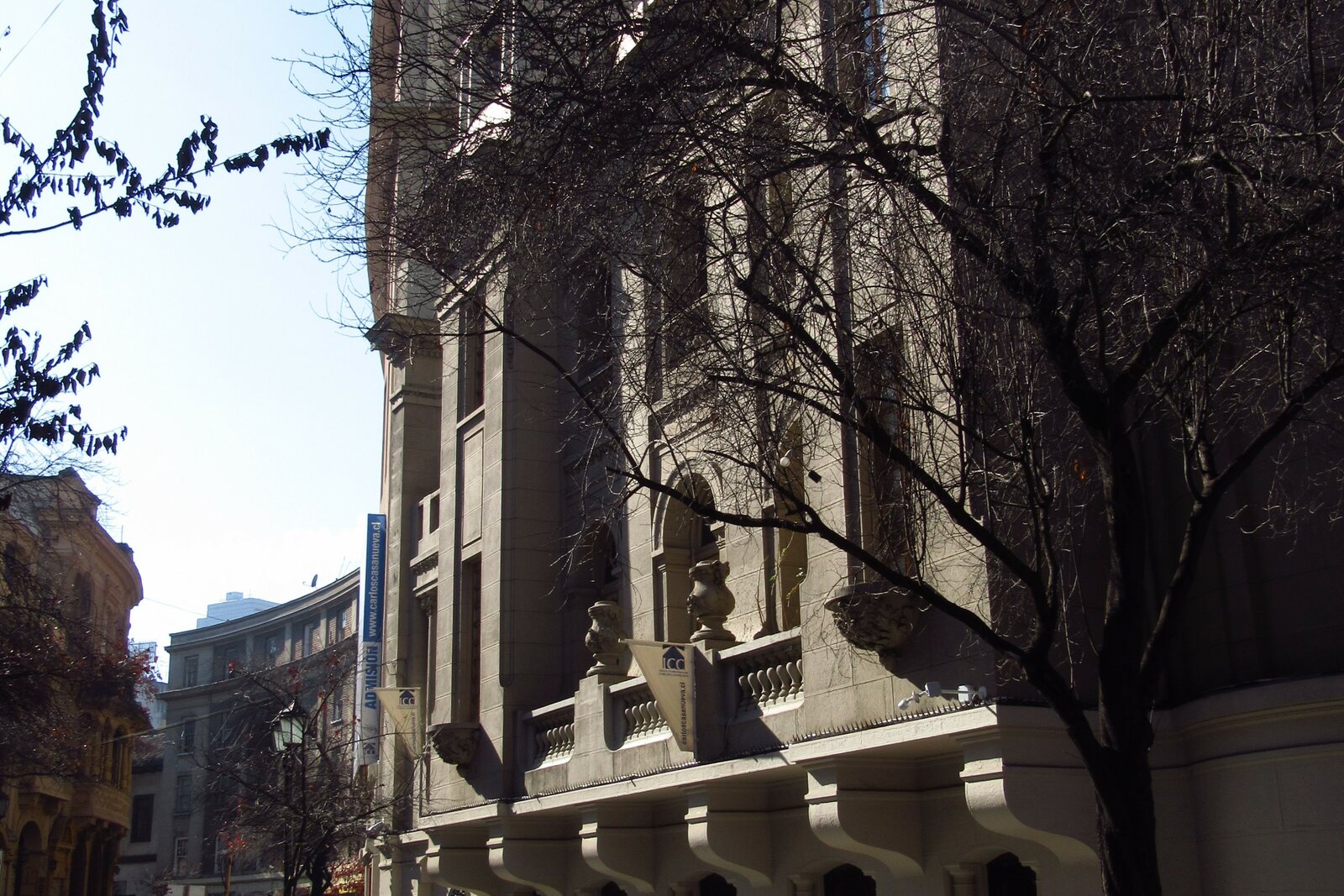
Look around first
What to notice
- Curved paved streets
- White and black inserts in the cobblestones
- Metal plaques with names
- Number 38 on the façade
The story of the place
At the bend of a paved street stands a former residential mansion with its restored number thirty-eight. While the rooms are closed for restoration, the memory of the house has been brought out to the façade and pavement: white and black stones lie among the old cobblestones, repeating the entrance tiles that prisoners could make out from beneath their blindfolds. Metal plaques by the wall name the dead and disappeared, and the building itself was preserved by their relatives and survivors.
In nineteen thirteen, the Franciscans sold part of the gardens of the neighboring San Francisco Monastery: its old buildings needed repairs, and the order had no money. A few years later, the developers Ernesto Holzmann and Roberto Araya acquired the land and conceived a “model residential quarter.” Instead of Santiago's usual rectangular grid, they laid out two curved streets around a small square. The European program was set by the names—París and Londres. Different architects filled the quarter with houses for wealthy families; the mansion at number thirty-eight was built in nineteen twenty-five by Ricardo Larraín Bravo.
Half a century later, its residential origins helped conceal a completely different purpose. Since nineteen seventy, it had housed a district branch of the Socialist Party of Chile. After the coup, agents of DINA (National Intelligence Directorate)—the military dictatorship's secret police—seized the existing building and set up one of the first secret centers for detention and torture there. In official documents, it was called “Cuartel Yucatán.” From the street, it remained an ordinary mansion among hotels, offices, and party premises.
On July thirtieth, nineteen seventy-four, DINA agents came for Alfonso Chanfreau Oyarce. He was twenty-three years old, in his third year at the faculty of philosophy, raising a fourteen-month-old daughter, and leading the eastern sector of the Revolutionary Left Movement (MIR). After the coup, the organization went underground; investigators needed the names and addresses of its members.
Alfonso was brought to Londres thirty-eight blindfolded. The following morning, agents took his wife and fellow activist, Erika Hennings, from her parents' home. They first registered her at the entrance, then led her into the room where Alfonso was being tortured and ordered her to identify herself: the abductors wanted him to understand that his wife was in their custody too. Then they switched the spouses' places—torturing each in front of the other and forcing Alfonso to reveal the underground network.
On August thirteenth, the agents allowed them to say goodbye. Alfonso was taken away from here with seven prisoners. There is no confirmed information about him after that. Erika was transferred to other camps and then expelled to France with her young daughter.
She returned to Chile nine years later. Again and again, Erika described the abductors and the interior layout of the house. The first complaint about Alfonso's disappearance reached military justice and was closed under an amnesty. Later, her testimony helped establish the agents' names and prove the abduction in court. Several DINA leaders and employees received prison sentences; the Supreme Court of Chile finally upheld two more verdicts in nineteen twenty-four. The court did not establish what happened to Alfonso himself after the farewell.
Survivors and relatives of the disappeared secured the building's preservation, and Erika Hennings joined the organization that turned it into a memorial center. The creators of the street monument used two details from former prisoners' testimonies. White and black inserts appeared among the old cobblestones—the same colors as the tiles at the entrance, which some detainees could make out from beneath their blindfolds. Metal plaques with the names of the dead and disappeared lie before the façade; among them is the name of Alfonso Chanfreau Oyarce.
The number thirty-eight was once replaced with forty in an attempt to erase the recognizable address. The former number was restored in the name: “Londres thirty-eight.” While the rooms are closed for restoration, the memorial remains outside—on the very street that Holzmann and Araya laid out as part of a model European quarter.
Useful on site
Check the memorial's visiting conditions separately. Speak quietly outside, do not disturb residents, and give yourself time to read the names without rushing.