 Guide On Map
Namba and Dotonbori: markets, stages, and restaurants
From Kuromon Market through Dotonbori to the alleys of Ura Namba
Guide On Map on your phone
Open the walk like a regular app
It takes about 10 seconds to install. No app store needed.
The whole path
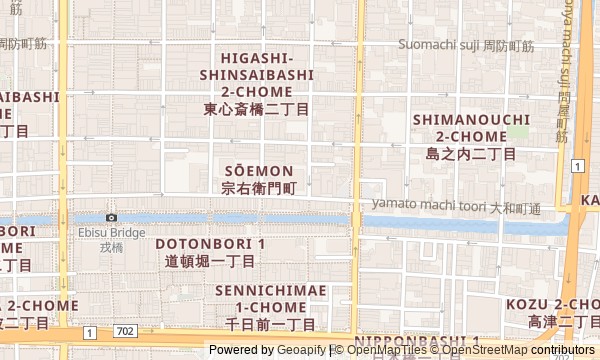
Route map
About the walk
The route begins at the fish stalls of Kuromon Market and first leads to the grand stage of the National Bunraku Theatre. Then it returns to narrow restaurant alleys, a theatre's stone arch, and Dotonbori Canal. Across the bridge, you will walk along a long shopping arcade before turning toward shops where a restaurant can be assembled piece by piece. The finale is in the alleys of Ura Namba.
Along the way, a whole fish meets a ready-made portion, the width of a roadway becomes a shared decision, and a pink umbrella outlives the building where it first appeared. By the canal, a question arises: whose name remained in the title, and who actually finished the work?
The story follows the actions of traders, restaurateurs, and theatre owners. No list of dishes, no general remarks about neon. After the walk, you will be able to explain why Kuromon Market, Dotonbori, and Ura Namba became parts of one Osaka trade.
Why this order
Kuromon Market poses the route's central question: who feeds Osaka, and who is a shopping street for? The short walk to the National Bunraku Theatre swaps the stall for the stage while keeping the theme of craft and audience. From the public stage, the route returns to Hozenji Yokocho Alley, a restaurant lane that grew up beside Hozenji Temple and its theatres. Next comes Osaka Shochikuza Theatre: its facade shows where audiences once entered this district. From the theatre, the route naturally reaches the canal and Ebisu Bridge, where water, advertising, and the flow of people meet. The bridge leads directly to Shinsaibashi-suji Shopping Street and shows how an audience becomes shoppers. After this consumer street, the route turns to Doguyasuji Shopping Street, to the suppliers of restaurants. From shops selling kitchenware, it is only one step to Ura Namba, where small establishments turned scattered alleys into a new restaurant destination.
Those who want to understand Osaka through food, trade, and theatre Those interested in the human decisions behind familiar signs Lovers of markets, working shops, and narrow restaurant alleys
Those looking only for tastings without stories Those who find dense shopping districts difficult to walk through Those expecting a quiet walk away from shops and restaurants
Before you go
It is best to do the first part while the market and specialist shops are still in the middle of their trading day, then reach the canal in the evening light. Check the bunraku program separately and decide in advance whether you want a performance: even without a ticket, the stop still works thanks to the building and its posters. Osaka Shochikuza Theatre closed after the May 2026 season, so plan only to view the preserved facade. At Kuromon Market and Doguyasuji Shopping Street, do not block narrow passages, and ask permission before photographing sellers or merchandise close up. Keep the quiet of Hozenji Temple, and in Ura Namba choose one establishment in advance if you want to end the walk with dinner.
When to go
Start during the day and cover the first four stops without long meals. It is best to catch dusk between Osaka Shochikuza Theatre and Ebisu Bridge: the old facade is still visible, while advertising reflections are already appearing in the canal. Do not linger in every shop on Shinsaibashi-suji Shopping Street if you want to reach Ura Namba with energy and an appetite.
Backup plan
If Kuromon Market is crowded, do not try to inspect every stall: walk the main corridor and pause at one quiet shop. If there is no performance at the National Bunraku Theatre, limit yourself to the facade and posters; at the closed Osaka Shochikuza Theatre, focus on the historic arch. In rain, much of the market, Doguyasuji Shopping Street, and Shinsaibashi-suji Shopping Street remains under cover, though the stones at Hozenji Temple can be slippery. If the evening loop feels like too much, finish at Shinsaibashi-suji Shopping Street and save Ura Namba for a separate dinner.
Route conditions
Surface. Paved — 2.7 km (data covers 94% of the route)
Facilities. Toilets — 4
Elevation. Ascent — 22 m; descent — 21 m
OpenStreetMap extract of June 18, 2026: database data, not a check on the ground. Data © OpenStreetMap contributors, ODbL licence
Walk plan
Open in maps ↗- 1
Kuromon Market
Here you will see how sellers changed the presentation of food and, with it, the composition of their customers. - 2
National Bunraku Theatre
This stop will connect a private troupe, a state-run stage, and the three distinct professions behind a single performance. - 3
Hozenji Yokocho Alley
The alley will show why restaurant owners had to protect not only their buildings, but also the distance between them. - 4
Osaka Shochikuza Theatre
The facade becomes an entryway into the history of Osaka revue and of a chance event that turned into a stage tradition. - 5
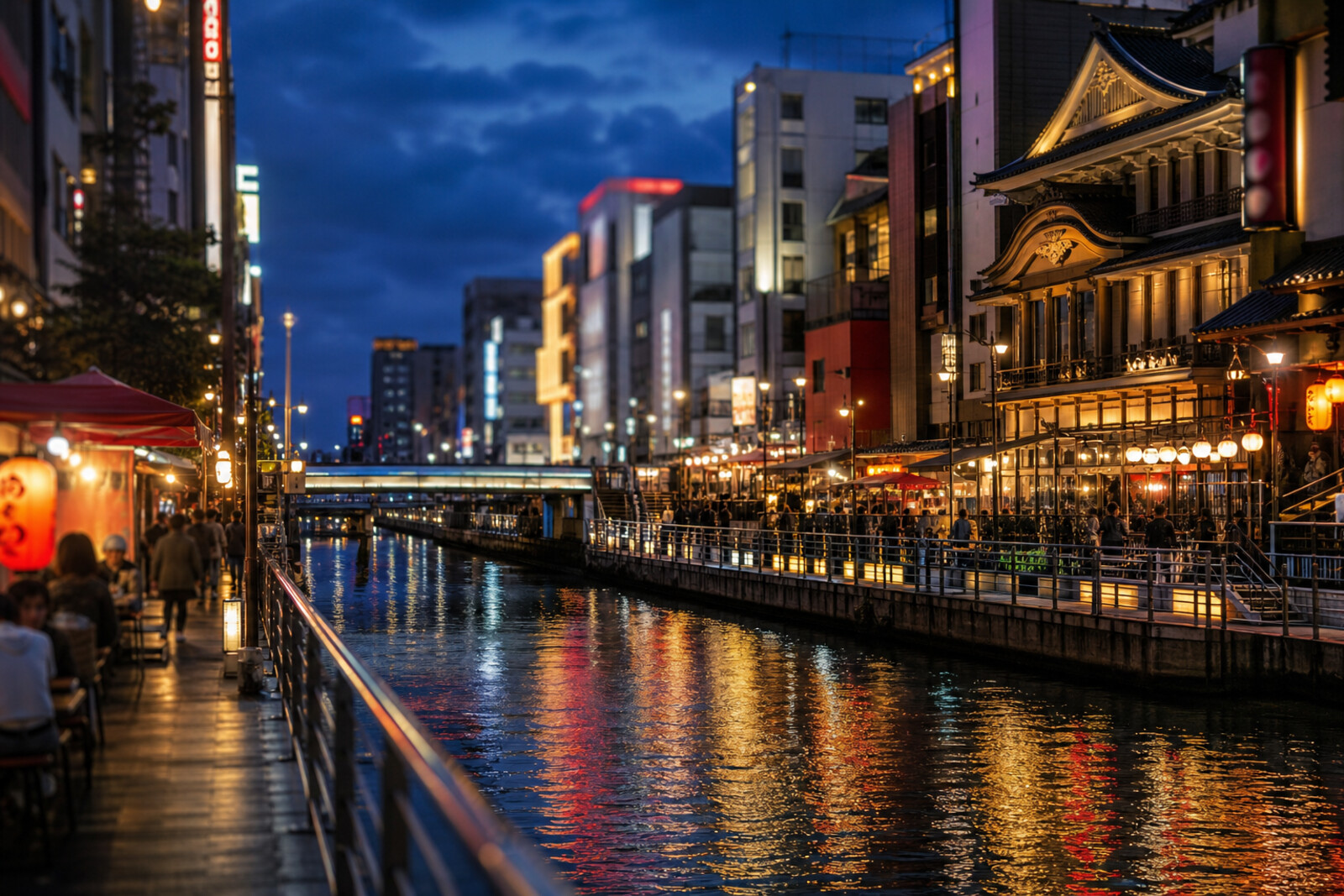
Ebisu Bridge and Dotonbori
Here you will connect a man-made canal, an old crossing, a theatre district, and today’s advertising screens. - 6
Shinsaibashi-suji Shopping Street
Here, the connection between the vanished bridge and the flow of shoppers toward Dotonbori will become clear. - 7
Doguyasuji Shopping Street
This stop will show the invisible workings of a restaurant city—from knife and stove to lantern and sign. - 8
Ura Namba
The finale will examine how several establishments gave a shared name and new visitors to a set of scattered alleys.
Route features
Everything you need stays in the browser
Progress, saves and your trip plan are stored on this device.
Add Guide On Map to your home screen so the walk opens outside the browser.
How we handle sources, maps and corrections: our editorial standards