 Guide On Map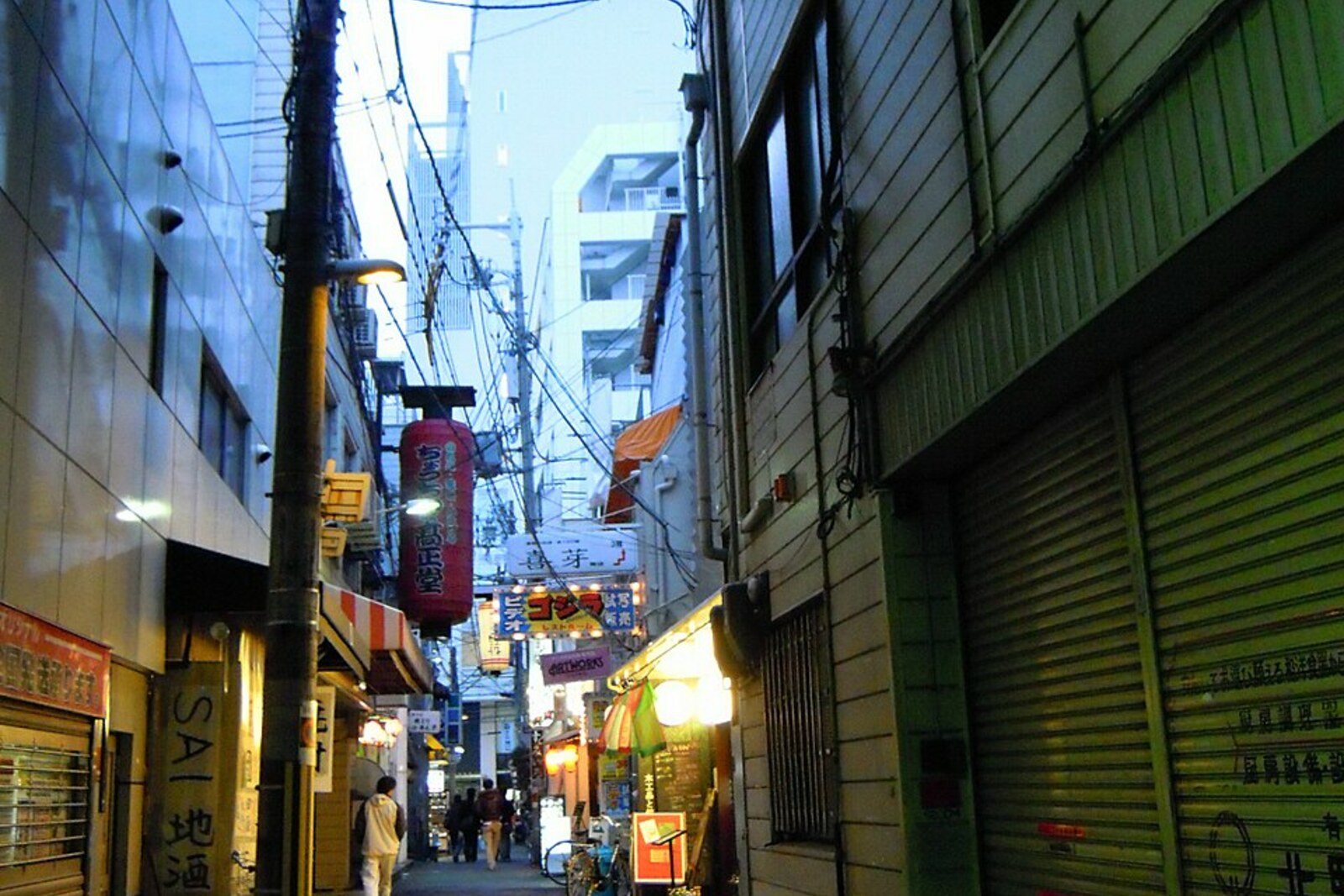
Look around first
What to notice
- An enormous red character meaning “way”
- Covered shopping arcade
- Knives and kitchen machinery
- Signs, lanterns, and curtains
The story of the place
“Doguyasuji” means “street of utensil merchants”: a “doguya” is such a shop, while in Osaka “suji” is what they call a street running north to south. But the first sellers here dealt in far more than kitchen supplies.
Around eighteen eighty-two, sellers of secondhand goods and small household items occupied this passage because it led from Sennichimae near Hozenji Temple to Shitennoji Temple and the Imamiya Ebisu Shrine. They lived off pilgrims: they laid out their wares by the roadside where the flow of customers was guaranteed by the calendar of temple visits. The passage got the name Doguyasuji from these shops.
Then more theaters, entertainment venues, and restaurants appeared around Namba and Sennichimae. The merchants saw that venue owners and cooks now provided steady income. By nineteen twenty-five, there were about twenty shops here; sellers were moving from miscellaneous old goods to manufacturing, wholesaling, and renting out professional equipment. By the mid-thirties, they were tailoring their merchandise ever more precisely to restaurant orders: knives, cauldrons, griddles, tableware, signs, lanterns, and curtains.
In nineteen forty-five, air raids destroyed the shopping row. The sellers' premises and stock burned down, and many restaurants they supplied closed. After the war, the merchants put up temporary shacks and began by bartering goods. When cooks started returning and reopening establishments, they once again needed everything at once—from a stove to a plate. By the end of the forties, commerce had been moved out of the black market, and shop owners restored Doguyasuji as a specialized row.
A distinctive way of working with a new restaurant developed here. Shops employed banto—managers who combined the duties of senior salesperson and adviser. They told the owner how to arrange the equipment, where to get ingredients, and what items would be needed before opening. If one seller did not have a needed item, the seller found it at a neighboring shop. An entire order could be assembled on one short street: staff uniforms, a sign, tableware, kitchen machinery, and even toothpicks.
The present covered row, about one hundred fifty meters long, appeared for Expo '70 Osaka. Later, an enormous red character meaning “way” was installed above the entrance. Beneath it, the same trading system continues: on the former pilgrims' road and on the site of the postwar shacks, one restaurant can still be fully equipped by going from shop to shop.
Useful on site
Hours and days off vary by shop. The city register describes the street as a shopping arcade with variable hours; allow daytime.
Checked: June 29, 2026. Check the official source before visiting.Do not pick up knives or professional equipment without an invitation from a seller. If you go inside, it is better to state a specific task—conversation here starts with work, not with a souvenir.