 Guide On Map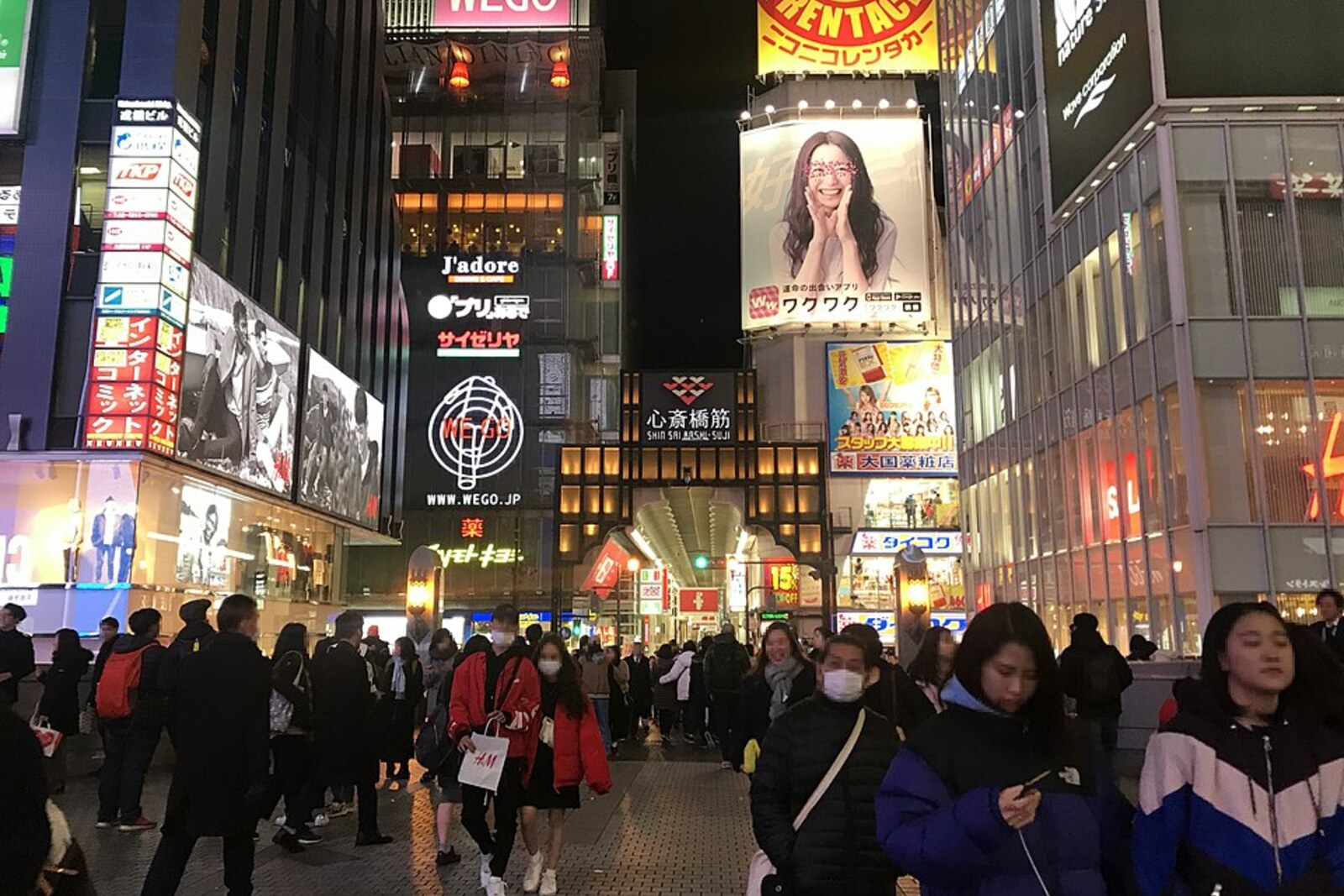
Look around first
What to notice
- The Shinsaibashi-suji Shopping Street arcade
- The street name above the passage
- Stone railings by Nagahori-dori Street
- Shopfronts
The story of the place
The name “Shinsaibashi-suji” consists of a merchant’s name and two clues: “bashi” means bridge, and “suji” means a long street. The bridge itself is no longer here.
The most widespread account of its appearance has been preserved in the Okada family genealogy. Shinsai Okada was a merchant from Fushimi. During the final siege of Osaka, he and three business partners supplied Tokugawa’s army with food and weapons. They counted on that side’s victory and spent nearly all their wealth on the supplies. The Tokugawa side won, but the four suppliers were ruined.
Tokugawa Hidetada, the second shogun and the country’s military ruler, assigned them to take part in rebuilding Osaka and gave them the chance to make money from a new shipping route and development along its banks. The merchants dug Nagahori Canal from the eastern moat to the western waterways. By sixteen twenty-two, water had crossed the old north-south road.
The canal brought in income, but it cut the street in two. In Osaka at the time, townspeople usually solved this problem themselves: of nearly two hundred bridges, the shogunate maintained only twelve, while merchants and residents of neighboring blocks built and repaired the rest. Shinsai paid for a wooden bridge about thirty-five meters long and around four meters wide. According to family tradition, it was named Shinsaibashi—Shinsai’s bridge.
The calculation paid off. Shinsai settled by the canal, opened a shop, and traded in goods that provincial domains entrusted to him for sale. He became wealthy again; after his death in sixteen thirty-nine, the business was inherited by his grandson, who also took the merchant name Shinsai. The bridge led a flow of people across this line toward the Shimmachi district and the theaters of Dotonbori. Merchants took up places where the public passed on its way to entertainment. A street description from seventeen forty-eight already lists shops selling lacquerware, books, secondhand goods, musical instruments, and jewelry.
Nagahori Canal was filled in in nineteen sixty-four. Shinsai’s wooden bridge had disappeared long before that. The stone railings at the present intersection with Nagahori-dori Street belong to a bridge from nineteen oh nine; they were returned here when the underground shopping center was built in nineteen ninety-seven. Not a piece of wood or masonry remains from the first crossing. What remains is the merchant’s name above the arcade and the street where sellers still make money from people walking toward Dotonbori.
Useful on site
The arcade can be passed through regardless of shop hours; individual shops and establishments keep their own hours.
Checked: June 29, 2026. Check the official source before visiting.The dense flow of people can easily stretch out this stop: choose a few details in advance, and do not turn the walk into a tour of every shop. The bridge’s historic elements are not in the bed of the former canal.