 Guide On Map
Mutrah: port, souq, and the road above the bay
From the fish market through the souq and fort to Riyam Pass
Guide On Map on your phone
Open the walk like a regular app
It takes about 10 seconds to install. No app store needed.
The whole path
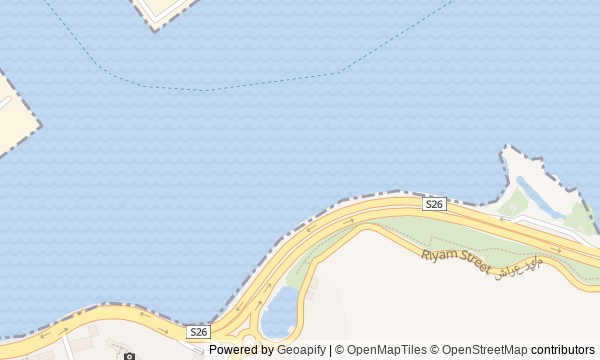
Route map
About the walk
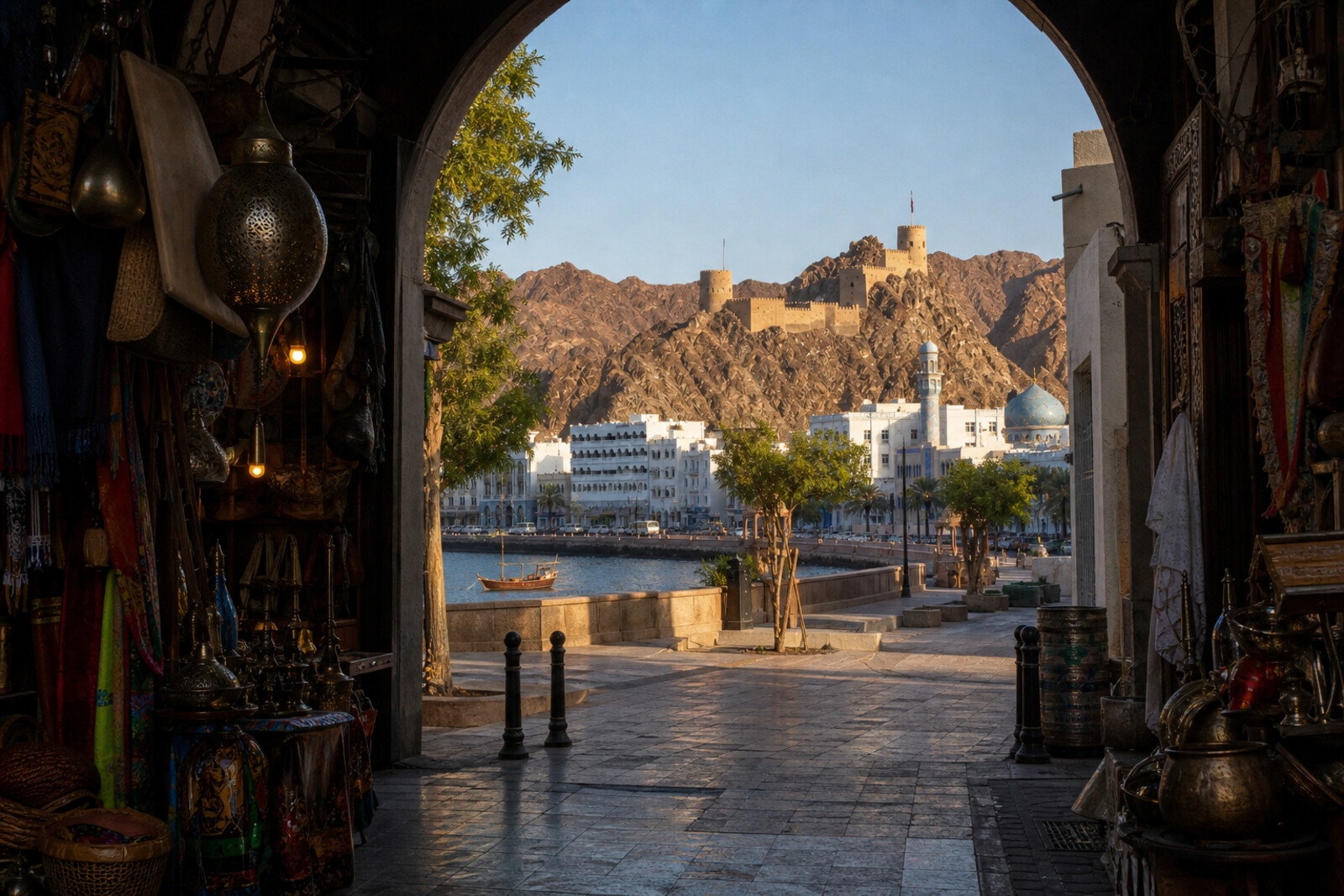
You will begin at the fish quay, where the morning catch travels several dozen meters from boat to chilled counter. Then the road follows the bay: to the wall of a merchant quarter, deep-water berths, the souq's dark passages, and a fort on the ridge. Beyond it lies the old harbor, while the finish is Riyam Pass beneath the white incense burner.
Mutrah unfolds not as a suburb of ceremonial Muscat, but as a port where trade kept changing the shore, education, security, and the ways people moved around. You will find out why a school stood outside a closed quarter, why an old sailing vessel never got to become a monument, and what boatmen lost after the first route through the mountains opened.
The story stays with documents, objects, and small decisions, without Orientalist exoticism. After the walk, you will be able to explain Mutrah along three lines: the boat by the market, the fort above the bay, and the road that took passengers away from the sea.
Why this order
Mutrah Fish Market sets the starting measure of Mutrah: goods move straight from boat into the city. Next, the wall of Sur al-Lawatiya shows who turned maritime deliveries into trading connections and why port families needed education. At the deep-water berths, the scale of the next step becomes clear—the shore was remade for vessels too large for the old pier. After that, the route enters the souq from the sea through the same threshold that cargo once used, then leads to a family shop where imported and exported goods still change hands. Above the market, the fort comes into view: from its height, it becomes clear why the trading bay and the passage to Muscat had to be defended together. The descent returns to the old harbor and the fate of its maritime monument. The final crossing to Riyam completes the port's story with the road after which passengers began leaving boats for cars.
Those who want to see Mutrah as a working trading city Fans of maritime history and human stories Those more interested in how a port works than in ceremonial palaces
Those expecting a walk focused only on Muscat's main landmarks Those uninterested in markets and port trade Those hoping to avoid the climb to the fort
Before you go
Mutrah Fish Market works best as a morning start, while the real work is underway; later, you can still see the building, but the main scene will be over. The souq has no single rhythm for every shop: daytime breaks, Friday, holidays, and Ramadan can noticeably change its character. Sur al-Lawatiya remains a residential space—see the gate, tower, and Al-Rasool Al-Azam Mosque from outside, without trying to follow local residents in. Treat a visit to the fort as a separate admission, and check current conditions with the operator before setting out. Bring water, sun protection, and shoes suitable for steps; stay on the public waterfront by the port, and do not continue on climbs in intense heat or poor visibility.
When to go
For the full sequence, begin in the morning when Mutrah Fish Market is operating. If softer light over the fort and Riyam matters more, take the route in the afternoon, accepting that the market will be quieter. It is best to wait out the midday heat, especially before the stairs and the exposed stretches by the hills.
Backup plan
If fish trading has already ended, look at the market's architecture and begin the main story by the water. Closed souq shops do not require canceling the route: its entrance, covered passages, and connection to the quarter can still be read without shopping, though the atmosphere will be different. If the fort is inaccessible, keep it as an exterior stop and consider its towers and defensive position from below; move the bay panorama to a safe public point on the way to Riyam. If heat, darkness, or the state of the path makes the climb unwise, end the walk where the incense burner is clearly visible from the ground: the meaning of the finale does not depend on going inside the monument.
Route conditions
Surface. Paved — 2.2 km (data covers 70% of the route)
Stairs. Flights: 2, 91 m in total
Access. Wheelchair — no; stroller — limited (stairs)
Facilities. Toilets — 4
Elevation. Ascent — 25 m; descent — 26 m
OpenStreetMap extract of July 3, 2026: database data, not a check on the ground. Data © OpenStreetMap contributors, ODbL licence
Walk plan
Open in maps ↗- 1
Catch beneath the wave-shaped roof
Here you will see how the new building preserved the short chain between a fishing boat, bargaining, and a cutting table. - 2
Gates of the Lawati Merchant Quarter
The enclosure will help connect the closed family quarter with the open school that prepared the city’s children to work in overseas offices. - 3
The Shore That Became a Port
The view across the bay shows the result of a project the treasury could not afford for almost half a century. - 4
Threshold of Al Dhalam Souq
This point explains how trade passages that could not be locked acquired their own permanent night guard. - 5
Frankincense, Coins, and a Curved Blade
The family trade unfolds through things that are sold, repaired, taken out of Oman, and years later returned to the very same counter. - 6
The Fort Above the Trading Bay
From the slope, the military cost of the road linking the trading bay with Muscat's fortifications will become clear. - 7
The White Arc of the Old Harbor
The empty space at the entrance to the harbor will preserve the story of a sailing ship brought here intact for a future monument. - 8
The White Incense Burner Above Riyam
The final stop will link the first motor road between Mutrah and Muscat with the disappearing livelihood of coastal boatmen.
Route features
Everything you need stays in the browser
Progress, saves and your trip plan are stored on this device.
Add Guide On Map to your home screen so the walk opens outside the browser.
How we handle sources, maps and corrections: our editorial standards