 Guide On Map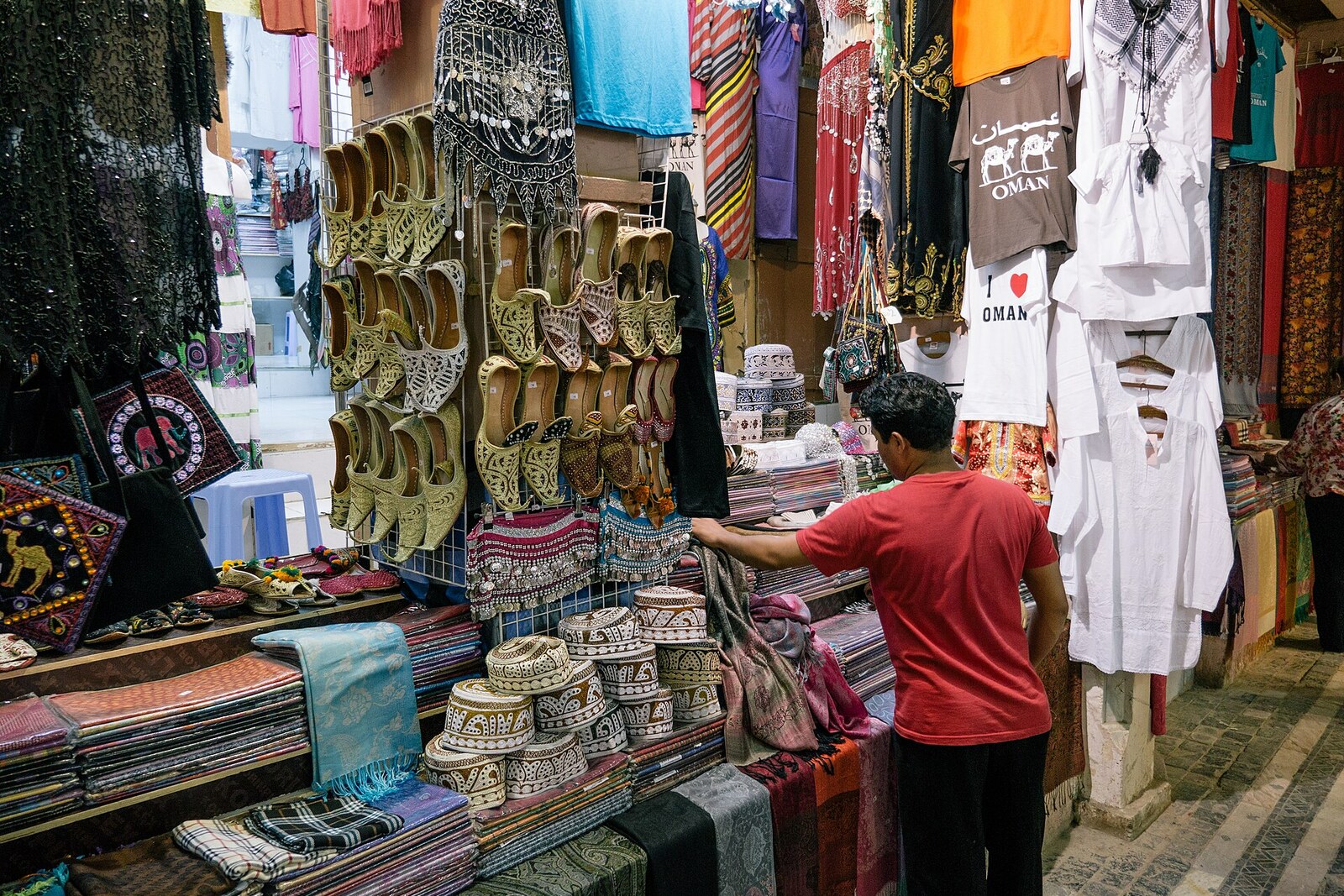
Look around first
What to notice
- Khanjars in sheaths
- Silver jewelry
- Old coins
- Silversmith's table
The story of the place
In these rows, frankincense is measured out from sacks, old coins are examined under a lamp, and curved khanjars are almost always left in their sheaths. Jamal Muhammad Ali Al-Balushi often receives merchandise from customers themselves: families bring him silver jewelry, daggers, and other items they had previously kept at home. He must establish an item's age, place of manufacture, and authenticity, then decide whether to buy it.
His father, Muhammad Ali, opened the first family shop here. He began with ready-made clothing on the waterfront, then dealt in antiques together with Dil Murad Al-Balushi and Abdullah Al-Lawati. They laid out Omani silver directly on a carpet. At first, business went well, but Dil Murad became seriously ill and Abdullah died suddenly. Their children did not want to continue the trade. Muhammad remained alone and kept the shop.
He began taking his son with him when the boy was eleven years old. Jamal did not learn from catalogs: his father showed him how to distinguish handwork, spot a later alteration, and understand where a piece of jewelry had been brought from. At sixteen, Jamal left school. Muhammad wanted his son to open his own shop one day, rather than take a job with another owner.
One risky deal provided the money for it. In Sur, Jamal bought one kilogram seven hundred grams of coral for seven hundred Omani rials and went alone to China to look for a buyer. There, the coral brought about nineteen thousand rials. The proceeds were enough to start his own business in the same souq.
Now collectors and museums turn to Jamal. By the number of rings on a scabbard, its leather, and the combination of gold and silver inlay, he determines for whom and in which part of Oman a khanjar was made. In the corner of the shop stands a silversmith's table: there, Jamal examines and repairs items that have been brought in.
Once, the children of a foreigner who had previously worked in Oman contacted Jamal twenty years after their father's departure. Their father had once bought a collection of Omani jewelry here and taken it away with him. The heirs did not need the silver, so they offered to sell it back to Jamal. Even today, the easiest way to find the shop inside the souq is to ask the sellers where Jamal sits. Even items that left Mutrah a whole generation ago return to his counter.
Useful on site
Depends on the shops; best in the morning after opening or in the evening after the daytime break. Free entry.
Checked: June 24, 2026. Check the official source before visiting.Ask before touching items or photographing a seller; buying an item and checking its provenance remain separate tasks.