 Guide On Map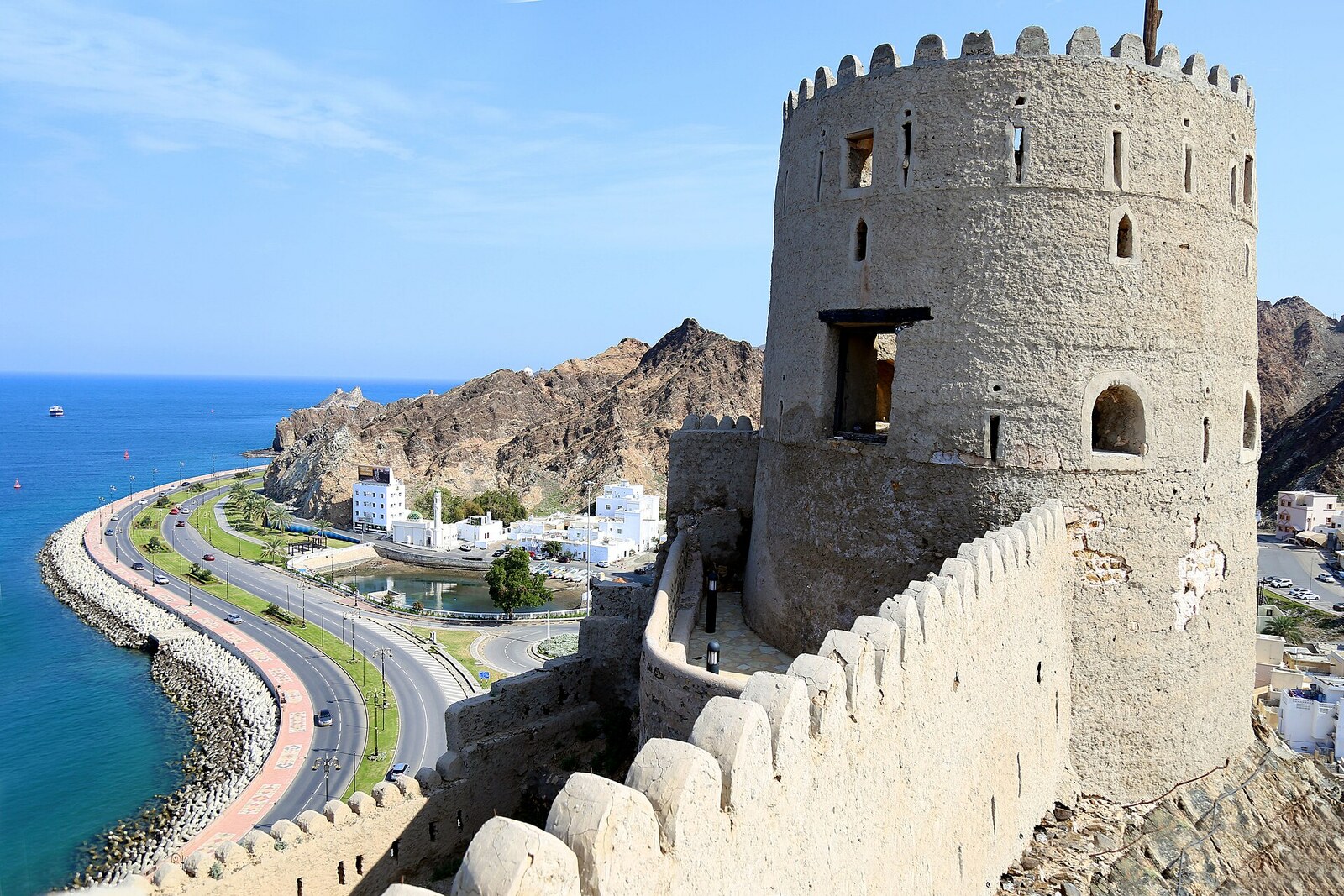
Look around first
What to notice
- Fort walls
- Towers on the ridge
- The trading bay below
- The rocky passage
The story of the place
The walls and towers of Mutrah Fort stretch along a narrow rocky ridge above the trading bay. There was almost no living space inside: the fortification was maintained for watch duty and cannon positions, and one captain and thirty soldiers recruited in India were enough for permanent service. Below lies the bay through which goods passed, while the present walls preserve the Portuguese appearance only in part. Later, the rulers of the Al Ya'aruba dynasty rebuilt the fort and raised towers above the slope again.
On October thirtieth, sixteen forty-eight, the Portuguese captain-general Gil Eanes de Noronha came down to the shore at Mutrah to sign a peace agreement. He served the king of Portugal and was responsible for holding Muscat together with this fort. Losing the fortifications could cost him his post and his freedom—and that is what later happened.
The fort protected what Muscat was difficult to defend without: the road to the neighboring trading bay. After the loss of Hormuz in sixteen twenty-two, the Portuguese commander Rui Freire de Andrade moved the main base of his operations to Muscat and ordered Mutrah to be fortified. From here, cannon fire could cover the only rocky passage between the two cities at that time, as well as the route taken by goods from the bay to Muscat's warehouses. Thirty lascars—soldiers recruited in India—and one Portuguese captain were assigned to serve here. The narrow ridge with walls and towers was intended for observation and firing; the fort did not require living quarters.
By sixteen forty-eight, the situation had reversed. The Omani army occupied Mutrah and set up camp here, although the Portuguese garrison continued to hold the fort. Plague was spreading in Muscat; one report spoke of about fifty deaths a day. There was a shortage of men, money, and supplies. Noronha agreed to negotiations.
Sultan bin Saif, the envoy and future successor of the Omani ruler, took part on the ruler's side. The terms concerned this very slope. The Portuguese were to demolish their Mutrah Fort, and the Omanis the fortification built nearby. The bay was to be left without artillery and opened to both sides; Omani merchants were exempted from duties in Muscat. Noronha signed the agreement and gained time for the exhausted garrison.
In Goa, his decision was considered a criminal concession. Noronha was recalled, arrested, and put on trial for weakening the defenses and harming customs revenues. The judges eventually acquitted him: they recognized that there were not enough men or ammunition, and that the peace agreement made it possible to preserve the forts, at least temporarily. Responsibility was placed on Francisco de Távora, the captain-general who succeeded him.
According to the Portuguese proceedings, Távora seized an Omani vessel, refused to return it during the truce, and insulted the envoy who came for the ship. Meanwhile, Sultan bin Saif was elected imam—the ruler of the united Omani tribes. He sought the complete expulsion of the Portuguese and resumed the siege.
In mid-December sixteen forty-nine, Sultan led his men through the mountains and was the first to climb up to Muscat's fortifications. The attackers passed through unattended gates at night. The Portuguese lost the city, and by the end of January sixteen fifty, their last forts by the harbor. Hundreds of residents and military personnel left by sea for Diu; Portuguese rule in Muscat had ended.
The present walls of Mutrah Fort cannot be regarded entirely as a Portuguese construction. After the Portuguese were expelled, the rulers of the Al Ya'aruba dynasty, to which Sultan bin Saif belonged, rebuilt the fortification. Noronha's peace treaty required the towers and cannons here to be removed; Al Ya'aruba builders put them up again above the same trading bay and the same rocky passage.
Useful on site
Officially daily 08:00–23:00. Tickets: nonresident adult — 3 Omani rials, child — 2; resident adult — 1, child — 0,500. Checked 2026-06-24.
Checked: June 24, 2026. Check the official source before visiting.Entry inside is not automatically included in the walk: check access in advance. Conserve your strength on the stairs, and do not climb in severe heat.