 Guide On Map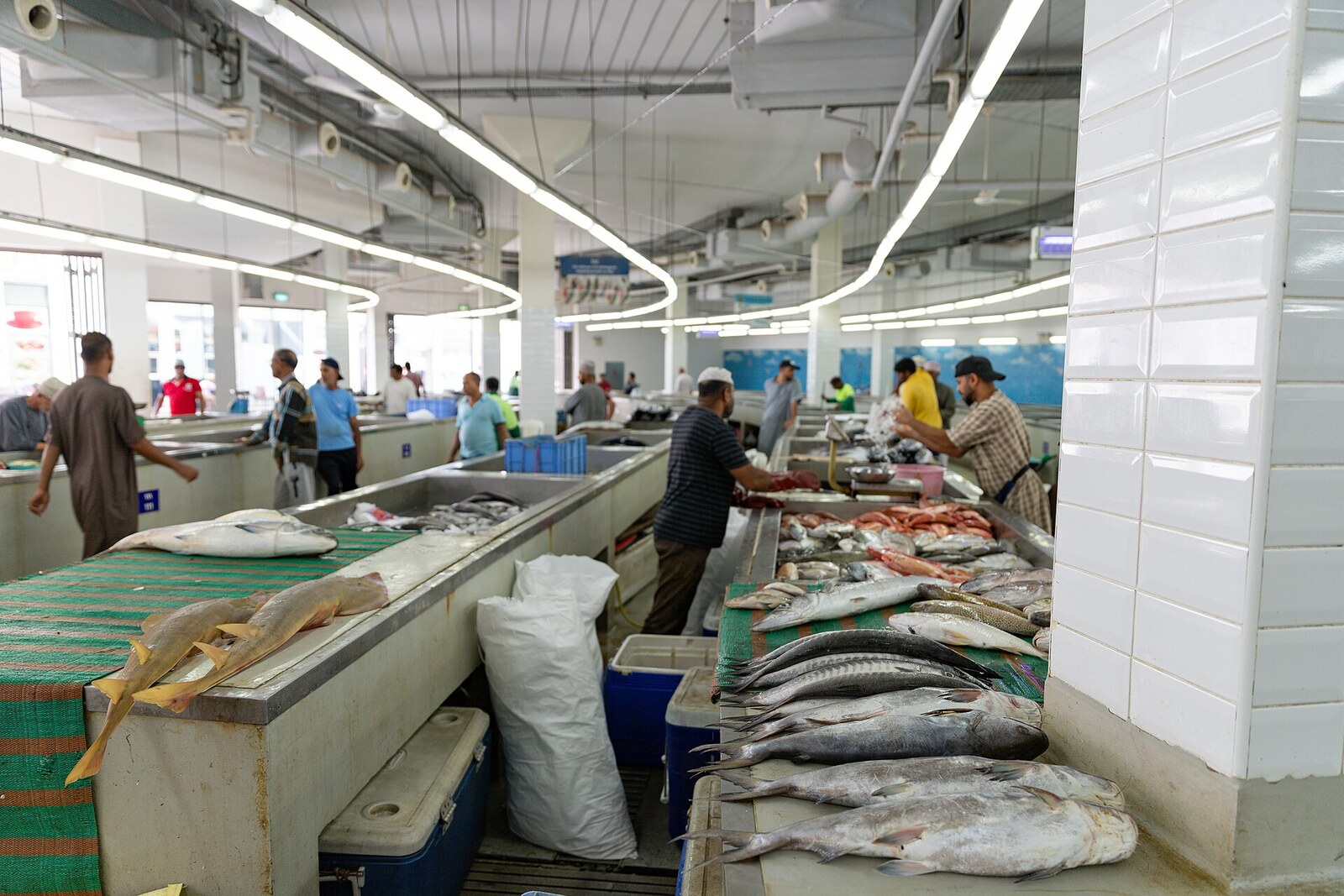
Look around first
What to notice
- Wave-shaped roof
- Aluminum panels
- Chilled counters
- Fishing boats
The story of the place
Before the current building, open market rows with simple boxes stood by the harbor: catches had been sold here since the nineteen sixties, but without sufficient cold storage, warehousing, or space for preparing fish. The new market kept this end of the waterfront for the fish trade, bringing cold-storage rooms, cutting tables, and more than one hundred trading places under one roof. Above them curves a white roof of more than two thousand four hundred aluminum panels; they provide shade and leave a path for air from the sea.
Shortly after the new market opened, a six-meter fishing boat came alongside the pier. A small batch of garfish, caught that same morning, lay in a box of ice. For the fisherman, this catch was his income, and the ice merely gave him time to find a buyer. Two wholesalers came down to the boat: each needed fish for his own stall. The market manager conducted the bargaining right by the water. Once the price had been agreed, porters transferred the garfish to a wheelbarrow and took it inside.
This is how work begins at Mutrah Fish Market. A fisherman can sell an entire batch to a wholesaler, a seller lays it out on a chilled counter, and a fish cutter cleans and cuts the purchased fish. Only a few dozen meters separate the boat from each of these people. That is why the market stands by the harbor: catches are unloaded before dawn and passed on to the next participants in the trade almost immediately after a vessel returns.
Fish was traded here long before the wave-shaped roof appeared. The old market, established in the nineteen sixties, consisted mainly of open stalls and boxes. It was considered one of Oman’s oldest fish markets, yet it lacked cold-storage rooms, warehouses, and places for packing. The building needed to be replaced while keeping the trade at the same pier.
In two thousand nine, Sultan Hamdoon Al-Harthi—an engineer and head of Muscat Municipality who sought to renew the city’s public spaces—took on the task. Al-Harthi was impressed by the Bibliotheca Alexandrina and personally wrote to the Norwegian firm Snøhetta, which had designed it. He described the fish market to the architects in romantic and exotic terms, but set them an entirely practical task: fishermen, traders, and fish cutters needed a working building, while the city also wanted to receive visitors here from the waterfront.
Al-Harthi included the market in a program of twenty-three urban projects. Most of them stopped; only three reached completion, and the Mutrah market was among them. Design and construction stretched into the autumn of two thousand seventeen. The old building was demolished, but the fishermen were not removed from this end of the waterfront.
On the ground floor of the new market, they placed more than one hundred sellers and fish cutters, chilled counters, refrigerators, and rooms for preparing, packing, and storing the catch. Above them, the architects raised a curved roof with more than two thousand four hundred aluminum panels. They drew its lines from the movement of Arabic calligraphy and angled the panels to provide shade and let air pass through.
Some fish is still sold directly from boats beneath the edge of this roof. The deal begins at the side of the hull, a wheelbarrow crosses the square, and the morning catch ends up on a chilled counter. The white wave covers the catch’s entire short route from the sea to the fish cutter’s knife.
Useful on site
Working market; it is best to come around 06:00–10:00. Officially reliable stall hours have not been confirmed; activity drops noticeably later.
Checked: June 24, 2026. Check the official source before visiting.Come in the morning, do not stand between sellers and work areas, and ask permission before photographing people.