 Guide On Map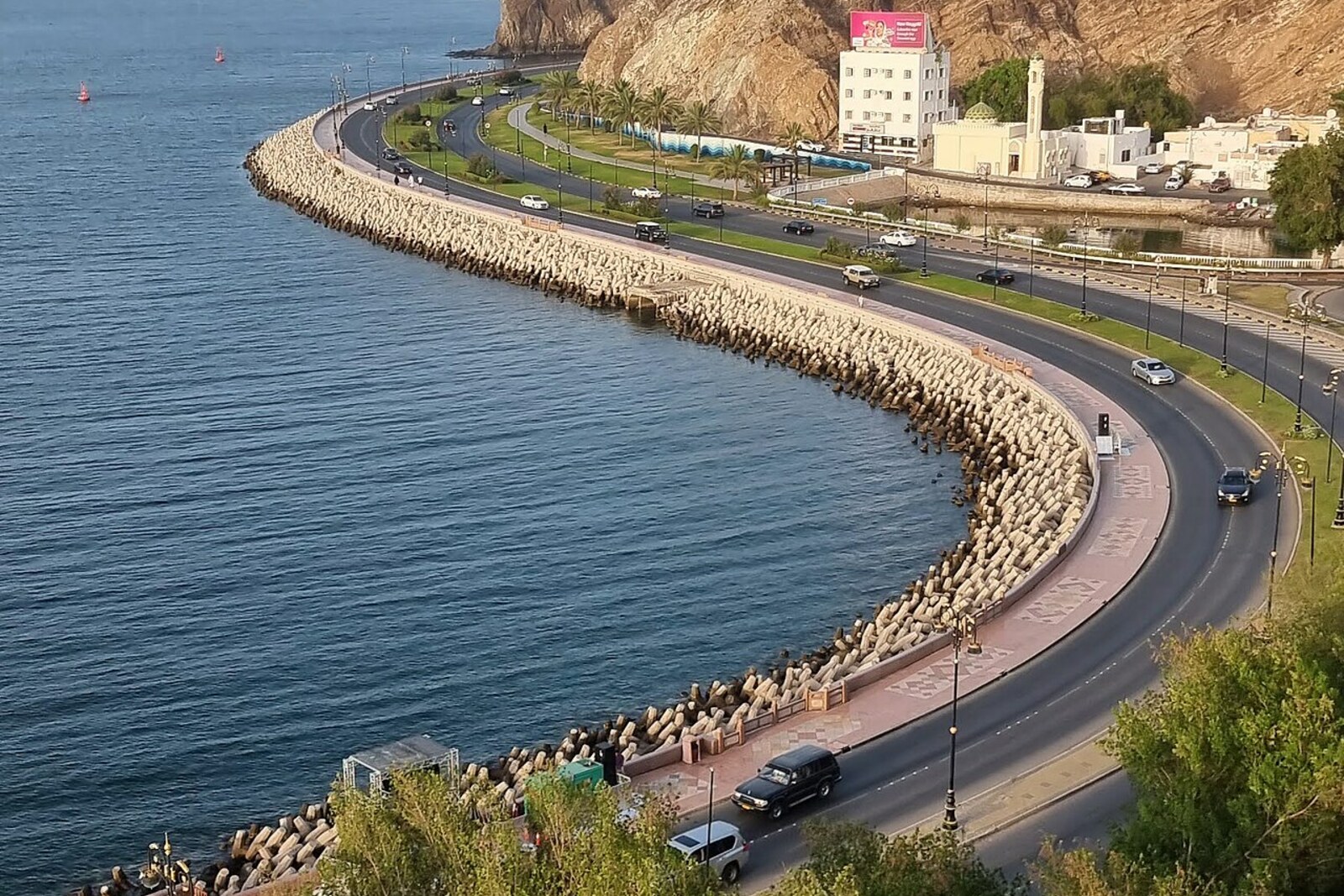
Look around first
What to notice
- White facades
- The curve of the old harbor
- The line of Mutrah Corniche
- The entrance to the harbor
The story of the place
White facades follow the curve of Mutrah's old harbor. Only a few decades ago, a large wooden vessel with tall masts stood at its entrance—Atiyyat al-Rahman, “House of the Merciful.” Nothing of it remains here now.
The vessel was built in the city of Sur in nineteen twenty-four for the Al-Bilal family, who made their living through maritime trade. It was a ghanjah—a large Omani sailing vessel with a capacity of about two hundred twenty tons. About twenty sailors sailed on it, along with boys taken on voyages to learn the trade. Mangrove poles were brought from East Africa; Iraqi dates were loaded in the ports of the Persian Gulf and then sold in Yemen and India.
The sailing ship supported the family for almost half a century. It collided with a steamer, broke its bow, and made it to Bahrain, where craftsmen from Sur fitted new parts. After another accident off Aden, part of its side had to be replaced. The vessel put to sea again even when other owners were selling large sailing ships and looking for work ashore.
In nineteen seventy-three, the Directorate General of Development began acquiring old Omani vessels as monuments to maritime trade. Sheikh Hamad bin Khalfan Al-Bilal, the senior member of the owning family, agreed to hand over Atiyyat al-Rahman: he wanted the shipwrights of Sur to be remembered in the capital. Delivering the vessel was entrusted to his relative Nasser bin Hamad Al-Bilal—an experienced captain who had commanded this ghanjah for many years.
Nasser inspected the old planks, assembled a crew, and brought the vessel to Muscat. At the entrance to the harbor, it was to be pulled ashore and left as a monument. The captain proposed that his sailors carry out the lifting. He warned the officials: the wooden hull had survived half a century of voyages and several major repairs, so the iron tackle could break it apart.
The lifting was nevertheless assigned to a company that did not work with old vessels. Workers wrapped a steel cable around the middle of the hull and began to pull. The ghanjah split in two.
The vessel that Nasser had brought to Muscat intact remained damaged beside the corniche. City residents saw its wreckage for a long time, then it was removed. Now, at the entrance to the old harbor, there is neither hull nor masts; the white facades stand where the maritime monument was destroyed during installation.
Useful on site
The public waterfront is accessible from outside. Port and service areas are not included in the route.
Checked: June 24, 2026. Check the official source before visiting.Look from the public section of the corniche, do not linger by private doors, and watch traffic carefully near the road.