 Guide On Map
Mérida: From the Colonial Square to the Henequen Boulevard
From Plaza Grande through Santa Ana to Paseo de Montejo
Guide On Map on your phone
Open the walk like a regular app
It takes about 10 seconds to install. No app store needed.
The whole path
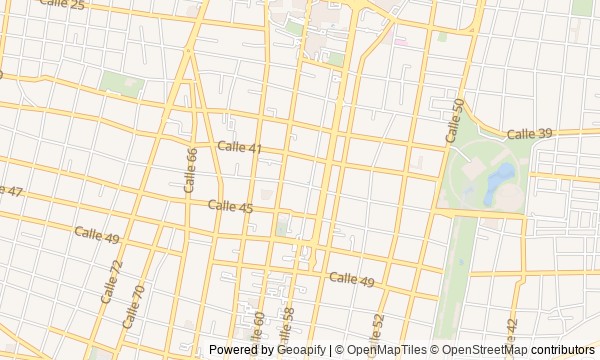
Route map
About the walk
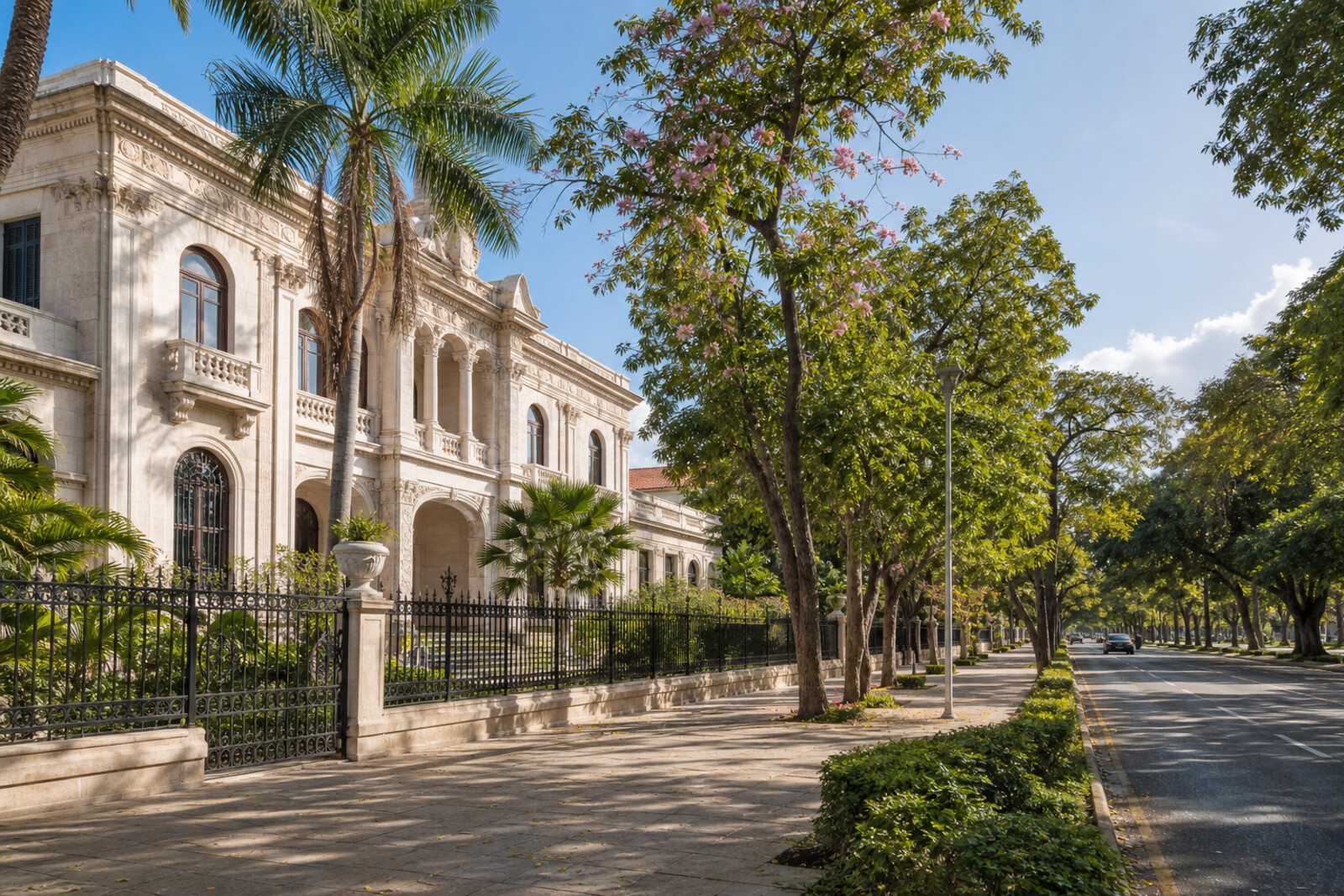
You will begin at Plaza Grande, where the cathedral, palaces, and an ancestral home still occupy the sides assigned to them when Spanish Mérida was founded. Then the route leads out of the dense city grid, through Santa Ana, toward the broad Paseo de Montejo and its mansions.
This is not a walk through architectural styles, but through people's decisions. You will encounter a vanished crucifix, a house a widow had to buy back from creditors, a brief note on the back of a thermometer, and an empty block left behind by an unfinished construction project. At the final monument, another question comes up: whose name does a work bear when someone else reworked the original design?
The story will separate documents from legends and stay close to things you can see on the spot. By the end, you will be able to explain how the rectangle of Plaza Grande and the long Paseo de Montejo became two different ways of distributing land, power, and memory in Mérida.
Why this order
First, you will circle three sides of Plaza Grande, because the cathedral, Casa de Montejo, and Palacio de Gobierno test the city's original plan right where it stands: faith, family ownership, and power turn out to be neighbors around one rectangle. From Palacio de Gobierno, Calle 60 heads north toward Santa Ana—a position from which troops could have broken back through to the central square. From there, a short crosswise walk leads to El Remate: beside the old neighborhood, you can see where the broad line of the Paseo could not be extended into the dense center. From that point, the boulevard itself and henequen money set the order. Passing the matching facades of The Twin Houses, you will first reach Palacio Cantón and learn how a family lost its palace. Then you will briefly return to Montejo 495, where another family instead chose to open a private home to the public. After that, the long northern stretch of Paseo de Montejo gathers the mansions you have seen into one perspective and ends at Monumento a la Patria—a structure where a dispute over who owns an idea echoes the route's larger conversation about land, home, and authorship.
Those who want to understand how Mérida works through specific buildings and human decisions Those interested in colonial history, the henequen boom, and the fortunes of city mansions Those who enjoy documentary details, disputed versions, and visible traces of change
Those looking only for a light overview of beautiful facades Those who prefer to avoid stories of violence, coercion, and lost property Those who need a short loop without a long straight stretch
Before you go
Bring water, a hat, and sun protection: after Santa Ana, the distances between stops increase, and Paseo de Montejo is noticeably more exposed than the historic center. The entire route can be done from outside. Entry to San Ildefonso Cathedral depends on services, Palacio de Gobierno remains an active administrative building, and Palacio Cantón and Montejo 495 operate as separate museum venues—check their current conditions on official resources before you set out. Choose clothing suitable for a religious space when visiting churches, and keep quiet inside. On the avenue and at the final traffic circle, cross only at designated places.
When to go
Start in the morning, so you can see the square and walk the northern part of the route before the heat becomes intense. The outdoor walk takes one long outing; each accessible interior adds its own block of time. If you want to explore both museums and Palacio de Gobierno in detail, it is best to leave most of the day free and plan a break before walking to the final monument.
Backup plan
A closed interior does not take away the meaning of any stop. At San Ildefonso Cathedral, focus on its heavy stone mass; at Casa de Montejo, on the carved portal; at Palacio de Gobierno, on the arcades, balconies, and its place in the square's ensemble. Palacio Cantón already reveals its owner's status through the exterior staircase and facade, while at Montejo 495 it matters to see the two neighboring mansions as a family pair. If the heat makes it hard to continue, end the first part in Santa Ana and return separately to El Remate for the northern stretch. View Monumento a la Patria from the outside of the circle: stepping onto the central platform is not necessary to complete the story.
Route conditions
Surface. Paved — 2.9 km (data covers 80% of the route)
Facilities. Toilets — 1
Elevation. Ascent — 17 m; descent — 19 m
OpenStreetMap extract of July 3, 2026: database data, not a check on the ground. Data © OpenStreetMap contributors, ODbL licence
Walk plan
Open in maps ↗- 1
Plaza Grande
The square sets out Mérida’s original layout and shows why the city’s main institutions ended up around a single open space. - 2
San Ildefonso Cathedral
This stop links the stones of dismantled T'ho to the fate of a shrine that had to be created anew. - 3
Casa de Montejo
The house will show that the conquerors’ family residence had to be defended not from enemies, but from creditors and its own heirs. - 4
Palacio de Gobierno
Here, a change of people in one office will lead from a rebellion to the abolition of workers’ debt bondage. - 5
Santa Ana
The square will explain why taking a single position raised above the street opened the way to Mérida’s center. - 6
The Beginning of Paseo de Montejo
A small square marks the exact point where the attempt to extend the wide boulevard into the old center came to a stop. - 7
Palacio Cantón
A family note on a household appliance turns a grand palace into the site of a precisely dated farewell. - 8
Montejo 495
Here, a private family home makes it possible to trace how space paid for by henequen passed into the tourism business and then became a museum. - 9
Monumento a la Patria
The finale will bring the entire route to the question of who the city's form belongs to after another person has filled it with their own content.
Route features
Everything you need stays in the browser
Progress, saves and your trip plan are stored on this device.
Add Guide On Map to your home screen so the walk opens outside the browser.
How we handle sources, maps and corrections: our editorial standards