 Guide On Map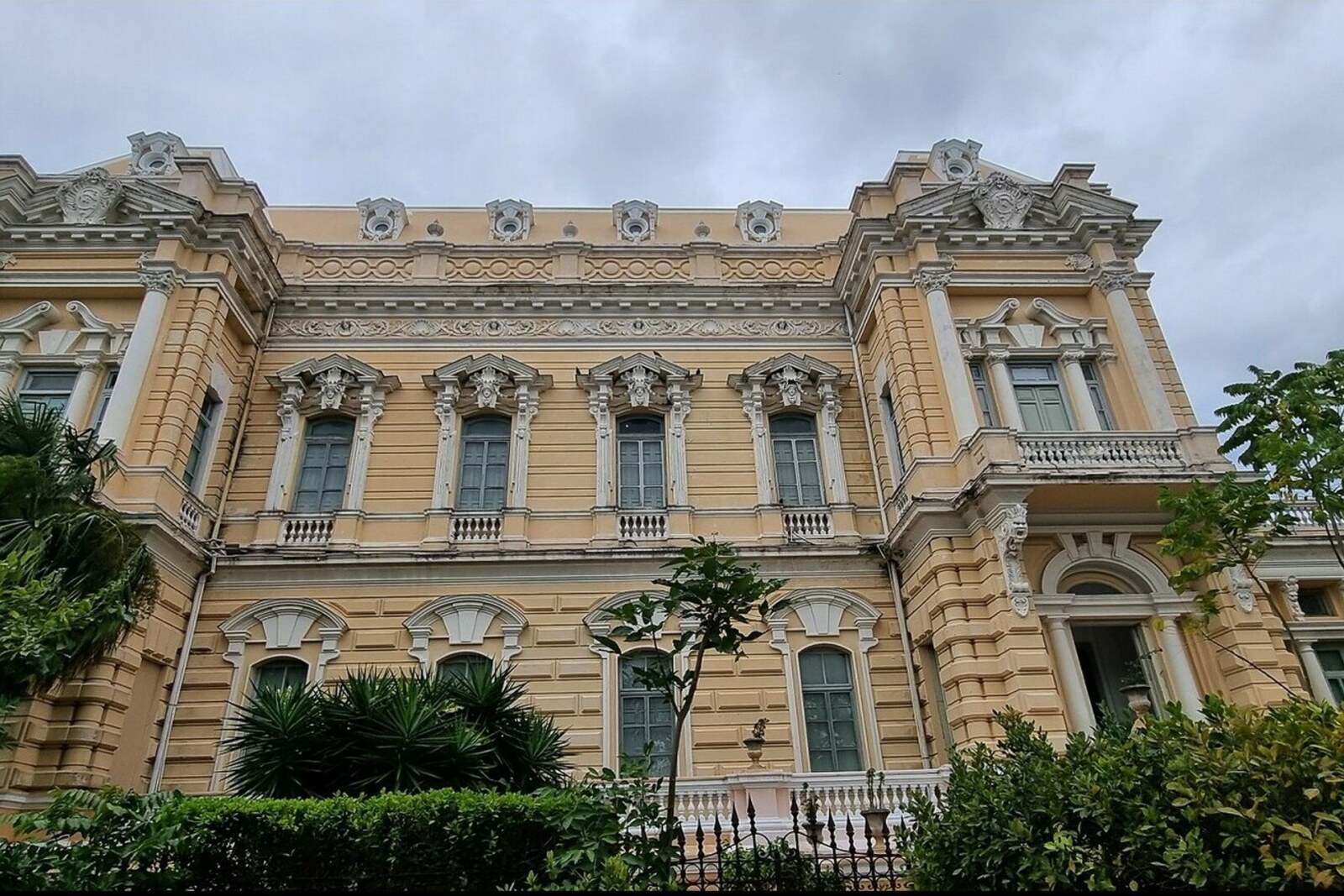
Look around first
What to notice
- Marble staircase
- European chandeliers
- Passenger elevator
- Former family chapel
The story of the place
The Regional Museum of Anthropology occupies a former private estate on the new Paseo de Montejo. The house took seven years to build: it acquired a Carrara marble staircase, European chandeliers, and the city’s first passenger elevator. The former bedrooms now present Maya culture and the history of Yucatán, while lectures and concerts take place in the family chapel. Tickets are bought in the former dining room, beneath the chandeliers brought for this house.
On May eighteenth, nineteen thirty-two, Delfina Cano de Cantón, the daughter-in-law of the deceased owner of this house, left a brief note on the back of a room thermometer: “We moved out of Montejo.” The thermometer bore the monogram of General Francisco Cantón. The family was leaving the residence because of debts.
Francisco Cantón Rosado was a former governor of Yucatán, the owner of henequen estates and the Mérida–Valladolid Railway. He wanted to spend his old age in a large family home on the new Paseo de Montejo. Part of the funds came from the sale of the railway, which carried henequen to the port of Progreso. With that money, from nineteen oh four through nineteen eleven, Cantón built a residence with a Carrara marble staircase, European chandeliers, and Mérida’s first passenger elevator. Newspapers called it General Cantón’s palace. Hence its present name: Palacio Cantón, Cantón’s Palace.
The general himself did not use the house for long. At the beginning of nineteen seventeen, he died here, in his bedroom. His son inherited the residence; Francisco Cantón’s grandchildren lived and were born in the rooms on the upper floor. Fifteen years later, the cost of upkeep was beyond the family’s means, and its tax debt had accumulated in the city treasury. The heirs agreed to transfer the palace to the state government in exchange for a more modest house and the settlement of the debt. That is how Delfina’s note acquired an exact date: the family moved out, and the building passed to Governor Bartolomé García Correa.
The new owner immediately gave the former residence to the School of Fine Arts. Then children from a primary school studied here, and later governors were housed here. In nineteen fifty-nine, archaeological collections occupied the basement, and after the renovation of nineteen eighty, the Regional Museum of Anthropology received the entire house. Exhibitions on Maya culture and the history of Yucatán are now shown in the former bedrooms, the family chapel is used for lectures and concerts, and tickets are sold in the Cantóns’ former dining room. Above the ticket desk, the chandeliers that Francisco Cantón brought for his final home still hang.
Useful on site
Tue–Sun 08:00–17:00; Mon closed. General admission 210 pesos; 105 pesos for Mexican citizens and foreign residents.
Checked: date not specified. Check the official source before visiting.The façade can be viewed independently from the street. Plan a museum visit separately and check the current admission conditions in advance.