 Guide On Map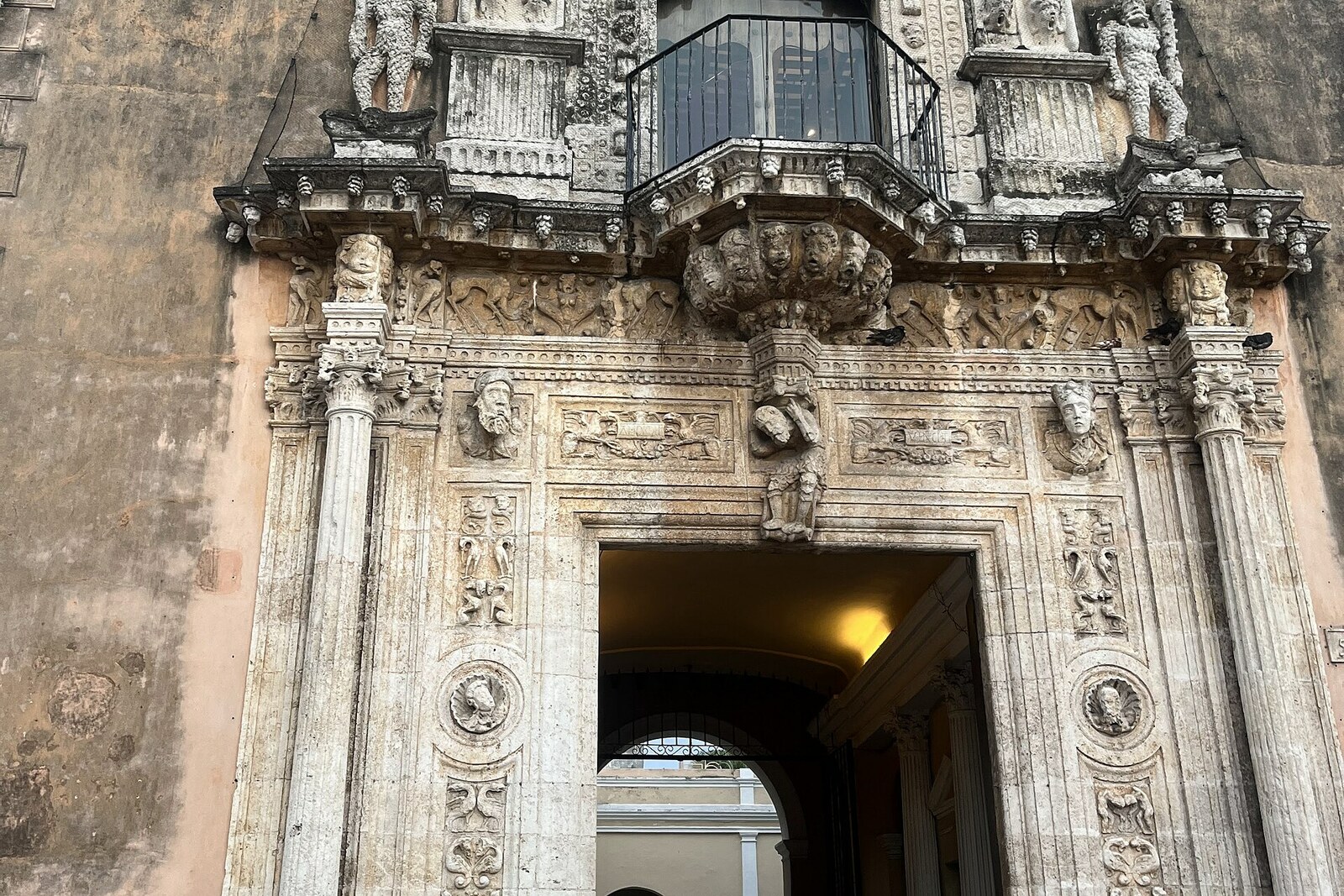
Look around first
What to notice
- Carved stone portal
- Inscription above the entrance
- Family coat of arms
- Armed figures on either side of the balcony
The story of the place
The carved stone portal on the southern side of the main square leads into what remains of the large family residence of the city’s first Spanish rulers. As Mérida took shape on the site of the Maya city of T'ho, its first houses were assembled from stone taken from dismantled buildings of the former city; this one occupied almost the entire block. The coat of arms above the balcony and the armed figures on either side of it still speak the language of the conquerors’ power. Inside is now a museum with rooms furnished much later, for another family.
After her husband’s death, Andrea del Castillo, the widow of Mérida’s founder, had to attend a public auction for her own home. Francisco de Montejo the Younger, commander of the expedition through which his family sought to conquer Yucatán, died in fifteen sixty-five. He left about thirty thousand pesos in debts. Creditors demanded that the family residence be sold.
The history of those debts began before the house itself. The deceased man’s father, Francisco de Montejo the Elder, received a royal contract in fifteen twenty-six for the conquest and settlement of Yucatán. He assumed all expenses himself; the Spanish Crown renounced any obligation to reimburse them in advance. If successful, Montejo would receive the title of adelantado—hereditary leader of the new province—and the right to govern it. The venture was financed from his previous holdings, while future income was meant to come from offices and encomiendas: granted rights to collect tribute from communities assigned to their holder.
After several unsuccessful expeditions, the Elder entrusted the continuation of the enterprise to his son. Montejo the Younger founded Spanish Mérida on the site of the Maya city of T'ho in fifteen forty-two and assigned the southern side of the main square to his family. Stone for the first buildings was taken from dismantled structures in T'ho. By fifteen forty-nine, the residence here had been completed, originally occupying almost the entire block.
Carved above the entrance is the statement that Don Francisco de Montejo ordered the house built in fifteen forty-nine. The family coat of arms is set above the balcony, with armed stone figures standing on either side. The inscription glorifies the Elder, although his son directed the construction. The Elder himself soon lost his post as governor, went to Spain to seek its restoration, and died without achieving anything. Montejo the Younger, Andrea, and their children moved into the house.
When the creditors put the residence up for sale, Andrea appeared at the auction and managed to recover it for herself and her descendants. Twenty years later, she secured the result in her will: the house was not to be sold, mortgaged, or divided. Thus arose a mayorazgo—an indivisible family estate that passed in its entirety to the next heir.
The prohibition kept the house in the family, but did not erase the debts. Andrea’s son was already selling part of the land. Later, impoverished descendants ceded the southern plot. Finally, a court permitted the remaining property to be sold, and in eighteen thirty-one the mayorazgo came to an end. What remains of the block the Montejos assigned to themselves when founding the city is the present part of the building.
Since two thousand ten, a museum and cultural center have operated here. The study, living room, bedroom, and dining room are furnished in the fashion of the late nineteenth and early twentieth centuries, when the house belonged to another family. Of the residence that Andrea del Castillo saved from the creditors, what remains above all are the carved portal and the inscription above the door bearing her father-in-law’s name and the year the work was completed.
Useful on site
Tue–Sat 10:00–18:00; Sun 10:00–14:00; Mon closed. Admission is free.
Checked: date not specified. Check the official source before visiting.The stop’s main object is on the facade. To visit the interior, check the separate visiting conditions in advance; going inside is not required.