 Guide On Map
The South Bank of the Thames: South Bank and Bankside
From Westminster Bridge to Borough Market
Guide On Map on your phone
Open the walk like a regular app
It takes about 10 seconds to install. No app store needed.
The whole path
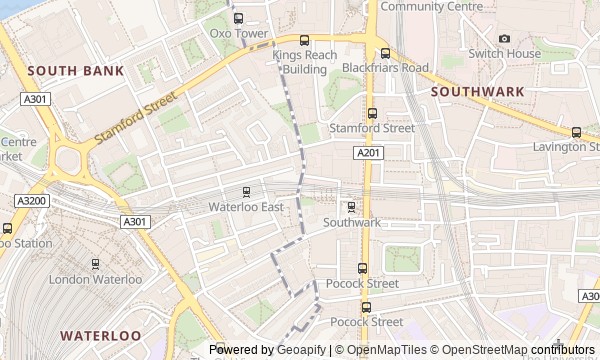
Route map
About the walk
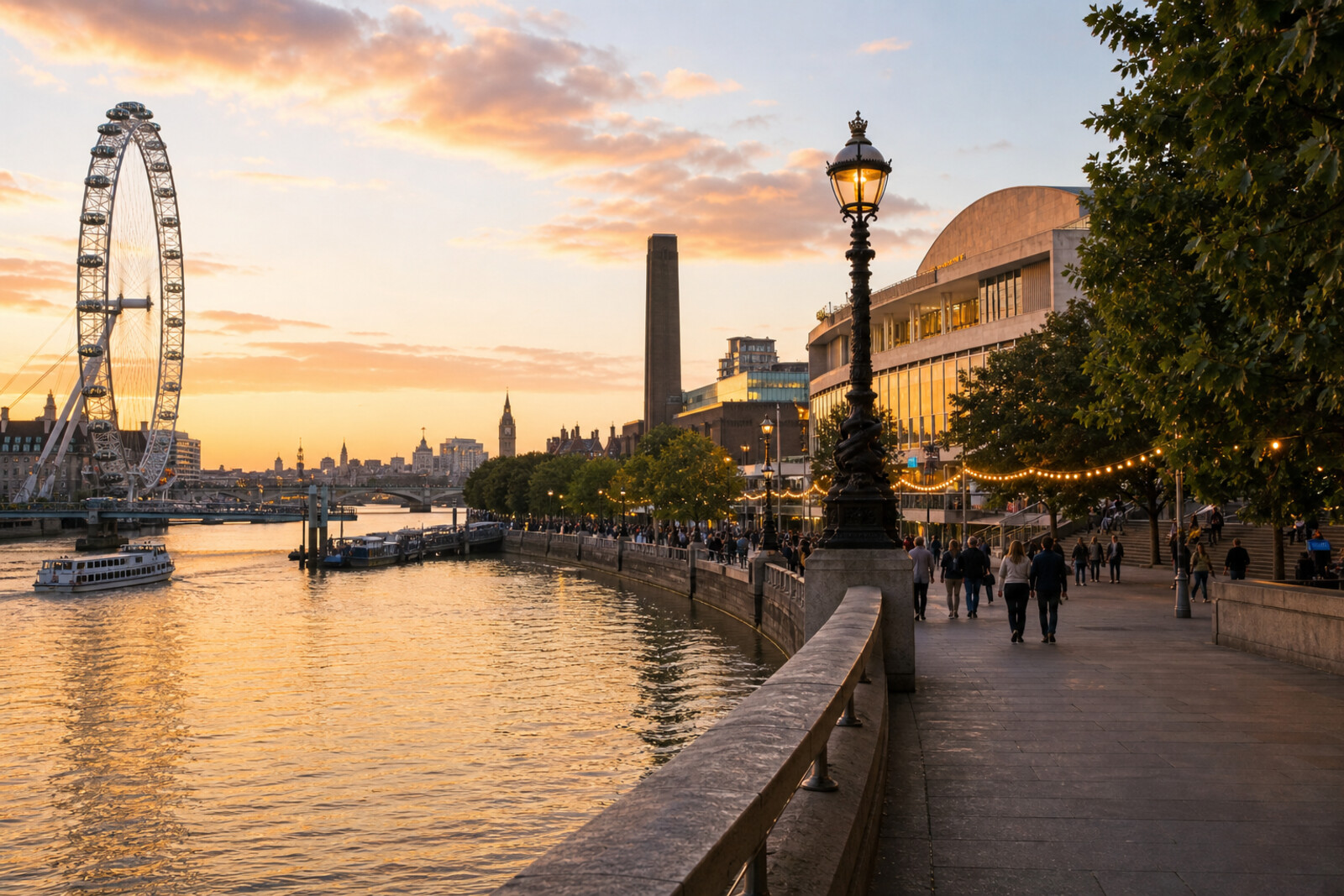
You’ll follow the south bank of the Thames—from Westminster Bridge through South Bank and Bankside to Borough Market. The river will stay beside you, while ceremonial London remains on the opposite shore. The way runs between the Ferris wheel, postwar concert halls and theaters, workshops in former garages, a power station turned museum, and the new Shakespeare's Globe.
But this walk is not a checklist of sights. You’ll hear how this bank was pieced together by people who were turned down, how a theater opened one auditorium at a time, and why an artist was allowed to damage a museum floor. The answers appear only at the places themselves.
The story turns on decisions, debts, disputes, and traces left in plain sight. There will be no ceremonial chronicle or parade of famous names. By Borough Market, you’ll see South Bank differently: as a riverbank where temporary pavilions, unfinished stages, and stubborn private ideas became permanent London.
Why this order
The route heads east without leaving the south bank. From Westminster Bridge, you’ll first see the panorama that made a poet and his sister stop here; at the foot of the bridge, London Eye immediately shows how people fought for a new symbol on a former festival site. Royal Festival Hall continues the story of the postwar remaking of the riverbank, while the neighboring National Theatre tells of a cultural quarter that began operating before construction was finished. After the large public buildings, the workshops at Gabriel's Wharf and the cooperative apartments of OXO Tower offer another scale: a riverbank reclaimed by local residents. Farther on, the former power station turns transformation into art, and Shakespeare's Globe beside it brings the route back to theater and a private campaign. Beyond the stage comes everyday Bankside: Borough Market ends the walk at another place preserved through a shared decision.
Those who want to walk through London along the Thames rather than between royal façades Lovers of theater, architecture, and urban history Those who care about the human decisions behind familiar landmarks
Those looking for a walk only through Westminster and royal London Those who want a quick overview of symbols without fully developed stories Those who prefer an old city without postwar and contemporary architecture
Before you go
You can complete the whole route outdoors, but a ride on London Eye, a performance or tour at Shakespeare's Globe, a National Theatre show, and individual exhibitions require planning on your own. Before you set out, check the venues’ official pages: interior access, events, and restrictions change. Bring comfortable shoes and rain protection—much of the route is exposed to wind off the Thames. The riverside is busy with people, cyclists, and street performers, so try not to block the way when you stop to listen. Leave yourself a little extra time for the market: the final stretch can easily run long because of the lines and the urge to browse the stalls.
When to go
Allow about three hours for the stories, walking, and an unhurried look from the outside. If you want to ride the wheel, visit Tate Modern, see a performance, or eat at the market, count that as separate time. The first half of the day is usually best for an uninterrupted walk; toward evening, the riverside grows noisier and cultural venues begin to follow the rhythm of their events.
Backup plan
In rain, shorten your stops on exposed stretches and use the public foyers at Southbank Centre or Tate Modern for a break, if they are open. If the line for the wheel or the market is too long, listen from the riverside and keep going: the route’s meaning does not depend on paid entry. It is easy to split the walk into two parts—up to Tate Modern, then from there to Borough Market. If you get tired, do not feel you have to reach the end: there are exits to city streets and public transport along the route, and you can continue later from the nearest familiar stop.
Route conditions
Surface. Paved — 1.2 km (data covers 38% of the route)
Stairs. Flights: 4, 9 m in total
Access. Wheelchair — no; stroller — limited (stairs)
Facilities. Toilets — 6; drinking water — 1
Elevation. Ascent — 29 m; descent — 21 m
OpenStreetMap extract of June 18, 2026: database data, not a check on the ground. Data © OpenStreetMap contributors, ODbL licence
Walk plan
Open in maps ↗- 1
Westminster Bridge
From here, the poet's private journey becomes the story of one of London's most famous views. - 2
London Eye and Jubilee Gardens
This stop will link the legacy of the Festival of Britain with the long struggle for a new symbol of the city. - 3
Southbank Centre / Royal Festival Hall
Here you will see how a postwar concert hall survived a boycott and became an orchestra’s permanent venue. - 4
National Theatre
This stop will show how the company moved into a complex building before construction was complete. - 5
Gabriel's Wharf and OXO Tower
Small workshops and cooperative housing will show that the riverside was changed by more than just large institutions. - 6
Tate Modern
In the former power station, a physical trace will remain of the work for which the museum floor was opened up. - 7
Shakespeare's Globe
The new theatre completes the story of a campaign that began with a weathered plaque in the wrong place. - 8
Borough Market
The final stop will show how parish ownership and one fair brought retail life back to the market.
Route features
Everything you need stays in the browser
Progress, saves and your trip plan are stored on this device.
Add Guide On Map to your home screen so the walk opens outside the browser.
How we handle sources, maps and corrections: our editorial standards