 Guide On Map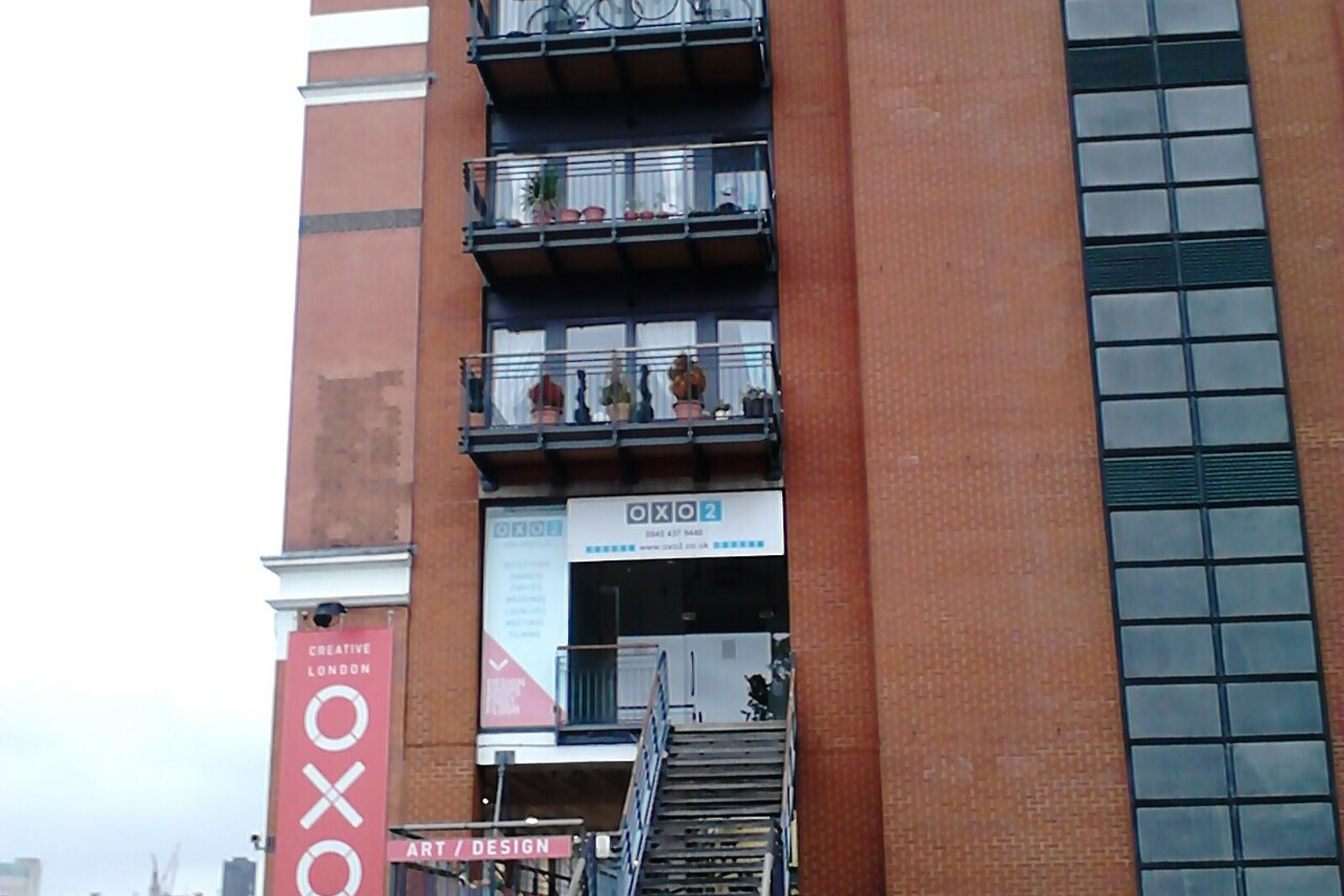
Look around first
What to notice
- Garage units with added facades
- The tower's three windows: circle, cross, circle
- The brick building of OXO Tower
The story of the place
Gabriel's Wharf is named after a vanished timber-trading yard, where timber was once unloaded and sold. Today's shops occupy low garage units with shopfronts, where the workshop and sales area share one cramped room. Beside them rises a brick warehouse building with OXO Tower, which was converted for the cold storage of stock cubes. On each face of the tower, a circle, a slanting cross, and a second circle form the product name, while behind the brick walls there are now apartments, shops, and workshops.
In nineteen ninety-one, Alison Pinner received a one-year fixed-term contract here. She was to help turn the vacant warehouse with OXO Tower into housing, workshops, and restaurants. Seven people then worked at Coin Street Community Builders, a company of local developers, and Alison was hired for only three days a week. To give her more working hours, she was also put in charge of the mail: every morning she came in early, opened envelopes, copied letters, and distributed them onto desks.
This small organization emerged after a seven-year dispute over the future of the riverside. Ian Tuckett, a Waterloo resident and coordinator of a local residents' group, campaigned for affordable housing to be built here, for the embankment to be opened up, and for spaces to be kept for small businesses. Another proposal called for a high-rise hotel and a huge office district. After two lengthy public inquiries, the residents created their own company and in nineteen eighty-four bought thirteen acres of land from the citywide council of the time.
They had no money to rebuild the entire area immediately. In nineteen eighty-eight, they opened Gabriel's Wharf as a cheap temporary site: they took factory garage units, added shopfronts to them, and gave them to small shops and workshops. Here they tested an idea that they intended to move later into OXO Tower: a craftsperson makes an object in the same room where they display and sell it to the customer.
The wharf's name is older than these pavilions. Christopher Gabriel made his living making planes, and after his death his sons shifted the family business to importing and selling timber. In eighteen fifteen, they leased a wharf and timber yard here. The family retained the wharf until nineteen thirty. None of the old timber warehouses remain on today's square; all that is left of the Gabriels' business is the name.
When Alison arrived here, many of the garage shops stood empty. She began looking for tenants, dealing with the press, and attracting customers. By the end of her one-year contract, she was offered a permanent post: she was now to let workshops and restaurants in the future OXO complex. From a temporary employee whose work had been supplemented by sorting letters, Alison eventually came to lead the commercial side of the whole organization.
The brick building with the tower was formerly called Stamford Wharf. In the late nineteen twenties, Liebig's Extract of Meat Company, which made OXO stock cubes, converted it into a cold-storage warehouse. The company's architect, Albert Moore, was refused permission to install illuminated advertising: city rules prohibited such signs above the Thames. Moore then built the product name into the structure itself. On each side of the tower, he placed three windows—a circle, a diagonal cross, and another circle. Together they formed the word OXO out of building elements.
The cubes have not been stored here for a long time, but the window advertising remains. In nineteen ninety-six, the converted building opened: shops, exhibition spaces, and designers' workshops occupied the lower floors, while the upper floor housed a restaurant and a public viewing platform. Between them, seventy-eight cooperative apartments were placed; residents set the rents themselves, allocate the apartments, and elect the management committee. The organization directs income from the commercial spaces toward maintaining the area and local programs.
The shops at Gabriel's Wharf still occupy those same factory garage units with added facades. And behind the brick walls beneath the OXO windows, five floors are occupied by cooperative apartments—the housing for which Ian Tuckett and his neighbors once brought their proposal to the first public inquiry.
Useful on site
The waterfront courtyard at Gabriel's Wharf is open around the clock; boutique and café hours vary. The rooftop gallery at OXO Tower is open daily; check the restaurant's schedule.
Checked: June 17, 2026. Check the official source before visiting.The riverside is slippery and depends on the tide—view it from the embankment and do not go down without understanding local conditions. The workshops operate independently.