 Guide On Map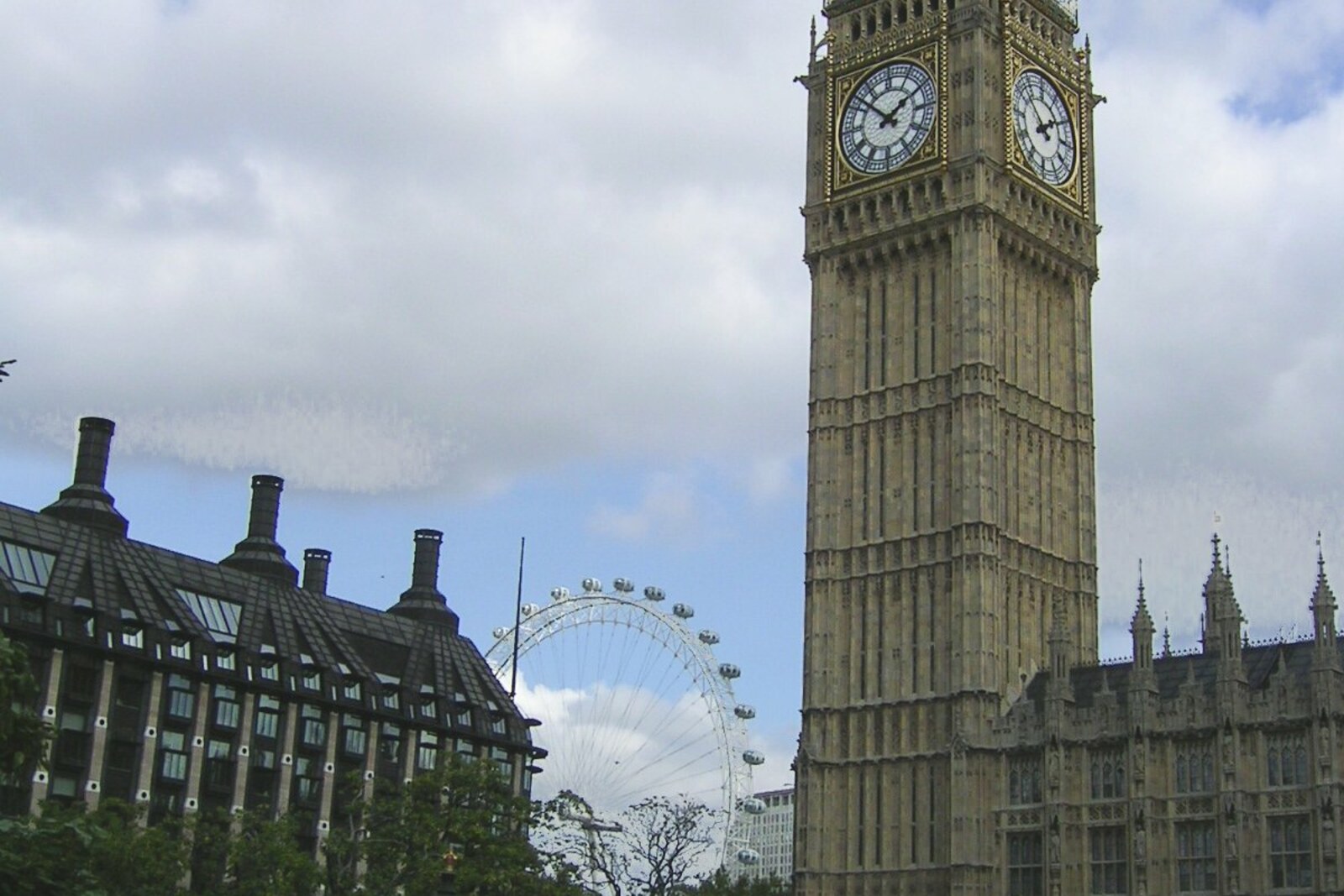
Look around first
What to notice
- Rounded glass capsules
- The wheel’s rim
- The lawn of Jubilee Gardens
The story of the place
The London Eye carries passengers in rounded transparent capsules attached to the outer side of its rim; in one revolution, they rise above the Thames and descend again to the bank. Beneath the wheel lie Jubilee Gardens, laid out where a car park once stood. Before that, the Dome of Discovery and the pointed Skylon stood here, and both structures were removed after the exhibition. The gardens were named in honor of the silver jubilee of Elizabeth II, marking twenty-five years of her reign.
In nineteen ninety-three, architects David Marks and Julia Barfield worked together in their own practice. The construction market was in decline, commissions amounted to small extensions and brochure design, and the couple were raising three children at home. So they needed The Sunday Times competition for a London symbol of the new millennium at least for the chance to have their project published. The winner was promised neither a site, nor money, nor the construction itself.
Marks proposed a wheel that lifts people above the city and returns them to the ground after a full revolution. At first, he had Hyde Park in mind. Barfield insisted on the south bank of the Thames: this was where the Festival of Britain had been held in nineteen fifty-one, a major exhibition of postwar achievements.
On the site of today’s lawn stood the Dome of Discovery, the festival’s main exhibition building, while the pointed Skylon rose beside it. Both structures were intended to be temporary and were dismantled after the exhibition closed. The cleared site was turned into a car park. The park appeared here only in nineteen seventy-seven. It was named Jubilee Gardens in honor of the silver jubilee of Elizabeth II—twenty-five years since her accession to the throne. On June ninth, the Queen herself opened the gardens.
The judges of the newspaper competition did not choose Marks and Barfield’s project. They did not award a victory at all: no entry seemed convincing enough to them. The couple then decided to get it built themselves. They mortgaged their house, put their practice at risk, and for several years went from office to office with models, meeting landowners, river authorities, city agencies, and neighboring organizations. Bob Ayling, head of British Airways—and their neighbor—agreed to provide the project’s first major funding.
Even after the permits were obtained, the wheel nearly lost its present appearance. Mitsubishi won the contract with a bid that was too low. To cut costs, it decided to economize on the cabins: instead of rounded glass capsules on the outside of the rim, the contractor wanted to suspend ordinary half-enclosed cabins inside it, like those on a fairground wheel. Marks and Barfield refused to accept that substitution. The first contractor withdrew from the project, the schedule was reduced to almost two years, and the couple had to assemble a new international team.
The wheel was assembled lying down above the Thames. The first attempt to raise it, in nineteen ninety-nine, failed: a cable slackened, and the structure had to be lowered again. On the eve of the new millennium, the wheel was ceremonially declared open, although passengers were not yet allowed inside because of problems with the capsule stability system. Paid rides began in March two thousand.
Success did not leave the wheel in its creators’ hands. Construction cost overruns became a major debt, and in two thousand six Marks and Barfield sold their one-third stake to The Tussauds Group. The rounded glass capsules remained on the rim, the reason they had rejected the first contractor. The present layout of the gardens was completed in two thousand twelve; Elizabeth II came again to open them—thirty-five years after the first opening.
Useful on site
The wheel operates on a schedule: normally from 10:00 to 20:30 in summer and until 18:00 in winter; closed at Christmas and during January maintenance. Jubilee Gardens is open year-round, and the playground closes from 16:00–21:00 depending on the season.
Checked: June 17, 2026. Check the official source before visiting.The wheel can be seen well from the ground. Plan the ascent separately and check visiting conditions in advance; in the gardens, do not obstruct passageways or the work of the children’s areas.