 Guide On Map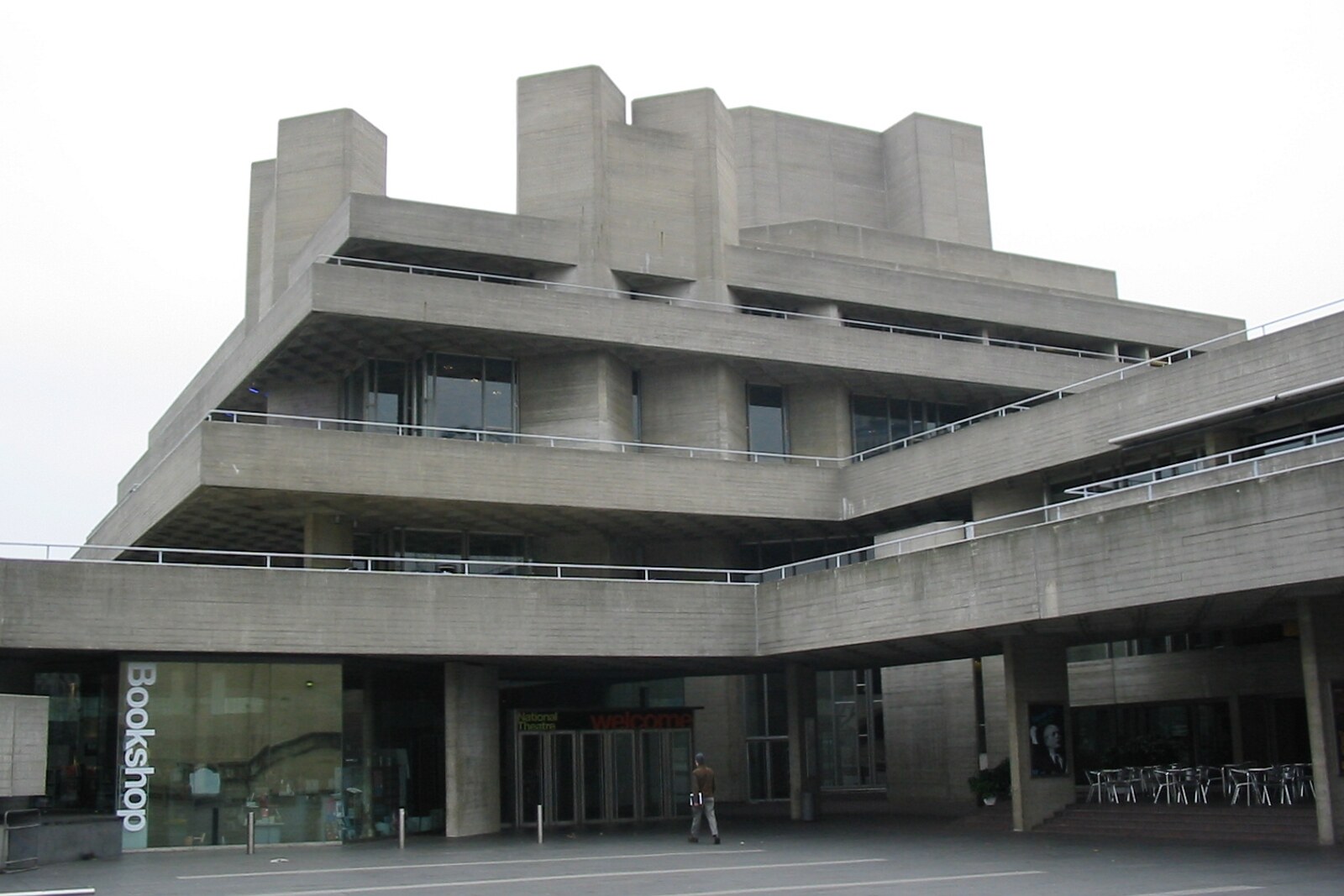
Look around first
What to notice
- Concrete terraces
- Olivier Theatre
- Lyttelton Theatre
The story of the place
On October twenty-fifth, nineteen seventy-six, Laurence Olivier stepped onto the stage of the National Theatre's largest auditorium. The auditorium already bore his name, although this proved to be Olivier's only appearance on its stage. He was the National Theatre's first artistic director and wanted to turn a long-standing London project into a strong permanent company with a home of its own.
The word “National” appeared long before the concrete building. As early as eighteen forty-eight, the London publisher Effingham Wilson proposed creating a public theatre worthy of Shakespeare. Parliament allocated money for construction only a century later. The London County Council provided a site on the south bank of the Thames, where a new cultural quarter was taking shape, but both the site and the design were changed repeatedly.
Olivier did not wait for the building. In nineteen sixty-three, he assembled a company and began performances at the Old Vic, an old Victorian theatre by Waterloo station. The administration was housed in huts on a neighboring street. This continued for thirteen years.
Olivier expected at least to take part in choosing the person who would receive his company and the theatre under construction. Instead, the council presented him with a decision already made: Peter Hall, a director and the founder of the Royal Shakespeare Company, was appointed as his successor. Olivier felt he had been treated humiliatingly. Hall received the post along with the distrust of people loyal to the former director, attacks from the press, and a building with no reliable opening date. He was risking his reputation as a theatre organizer: the whole country could see how much money and time the construction was consuming.
Hall stopped waiting for full completion. As soon as the first auditorium was finished, he moved the company here. The actors rehearsed in rooms where construction work was still continuing. The Lyttelton Theatre opened in March nineteen seventy-six. Six months later, Hall staged Tamburlaine the Great in the main Olivier Theatre. The third auditorium was handed over the following year. The National Theatre began operating in stages before the builders had completed the highly complex stage equipment.
At the official opening, Olivier appeared on a London stage for the first time after a serious illness. The audience greeted him with a long ovation. He thanked Hall for managing to wedge his foot in the door and not allowing it to close again. Hall led the National Theatre until nineteen eighty-eight; Olivier never performed here again.
Behind the concrete terraces are three independent theatres, rehearsal rooms, workshops, dressing rooms, and offices: performances are conceived, rehearsed, and assembled here under one roof. Beneath the stage of the Olivier Theatre, a five-story rotating drum with two semicircular lifts has been preserved. At the opening, it was not yet fully operational; the system for lifting scenery was completed only in nineteen eighty-one. Now parts of the stage can turn, descend, and lift scenery up from below—inside the auditorium where its first director stepped out only once.
Useful on site
The foyers are open from 10:00 to 23:00 on performance days; the box office operates from 10:00 to 18:00 Monday–Saturday; tours run according to the schedule.
Checked: June 17, 2026. Check the official source before visiting.Walk around the building from several sides: it has no single main viewing point. A separate booking is required for a performance or tour.