 Guide On Map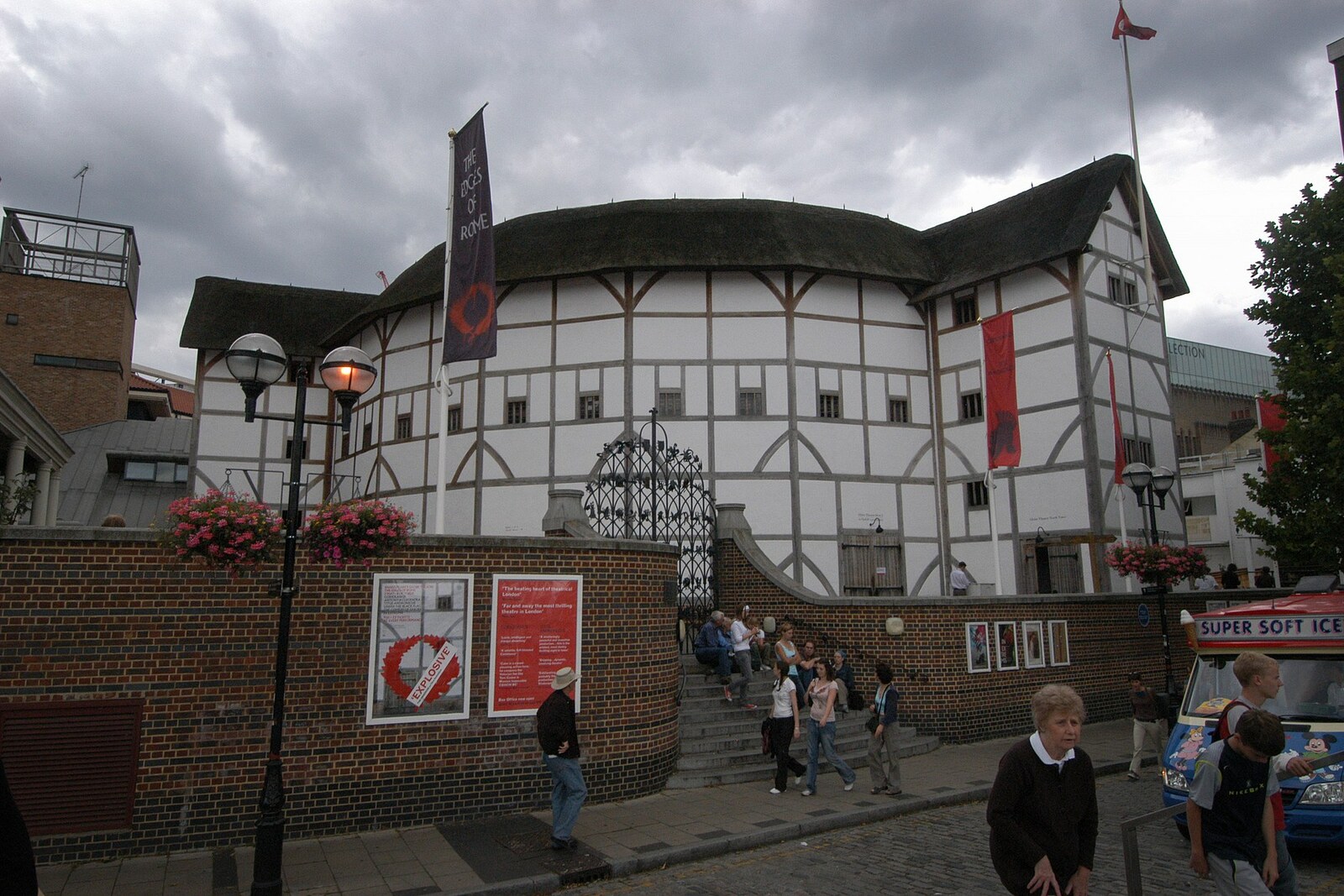
Look around first
What to notice
- White circular structure
- Open yard
- Projecting platform
- Covered galleries
The story of the place
The white circular structure surrounds the stage, from which actors step out onto a platform in the open yard; higher up, covered galleries run around it. During a performance, up to seven hundred people may stand by the platform, while the rest take seats in the galleries. The present stage reproduces this layout: the old theatre served the Lord Chamberlain's Men, whose actors themselves leased part of the site, invested money, and shared the takings. The exact form of the earlier building has not survived, so the present stage was assembled from documents and archaeological finds, with fire exits and protection for the thatched roof provided.
The white circular theatre in front of you opened in nineteen ninety-seven. William Shakespeare never performed here: the remains of his Globe Theatre lie about two hundred meters farther east, beneath the houses of Anchor Terrace. The present building arose from the twenty-three-year campaign of the American actor and director Sam Wanamaker.
In nineteen forty-nine, Wanamaker came to London to make a film and set out to find the old Globe Theatre. As a teenager, he had first performed Shakespeare in an American reconstruction of this theatre, and he expected to find at least a prominent memorial on Bankside. Instead, there was a weathered plaque on the wall of a brewery. Even that had been placed inaccurately.
The theatre Wanamaker was looking for was built in fifteen ninety-nine for the acting company under the patronage of the Lord Chamberlain. Shakespeare was its playwright, actor, and shareholder. He was one of five actors who jointly leased half the site, invested money in the theatre, and received a share of its income. He wrote many of his plays for this stage and for the performers he worked with himself. That is why the name Shakespeare's Globe points to Shakespeare's business involvement in the theatre's history, not merely to the author's posthumous fame.
A few years after his first visit, Wanamaker learned that his former membership in the Communist Party put him at risk of being blacklisted in Hollywood. He remained in Britain and earned his living as an actor and director in theatre, film, and opera. Some of that money later went to the Globe Theatre. In nineteen seventy, Wanamaker established a charitable foundation that was to find a site, raise donations, and secure permission to build.
In nineteen eighty-two, the foundation obtained a long-term lease for this very plot of land from Southwark Council. The council then tried to terminate the agreement and allocate the site for housing. Wanamaker and his associates went to court. The proceedings ended in an agreement in nineteen eighty-six: the site remained with the theatre, and the foundation was laid here the following year.
Wanamaker sought a working stage with an open yard, a projecting platform, and galleries around the audience. The exact appearance of the first Globe Theatre is unknown, so the architects compared documents and archaeological finds, adding fire exits and protection for the thatched roof where modern regulations required them. In nineteen ninety-two, Wanamaker took part in the opening of the first two wooden bays. He died in December of the following year; construction was still continuing.
Now, during performances, up to seven hundred spectators stand outdoors directly in front of the stage, while the rest sit in the covered galleries. Shakespeare, his contemporaries, and new plays are performed here. The large theatre bears Shakespeare's name, while the neighboring covered hall is named for Sam Wanamaker, the man who died four years before his Globe Theatre opened.
Useful on site
The box office is open Monday–Friday 11:00–18:00, Saturday 10:00–18:00, Sunday 10:00–17:00; tours and performances follow separate schedules.
Checked: June 17, 2026. Check the official source before visiting.From outside, the materials and construction of the building are easy to make out. To see the yard and stage, choose a tour or performance in advance; outdoor places depend on the weather.