 Guide On Map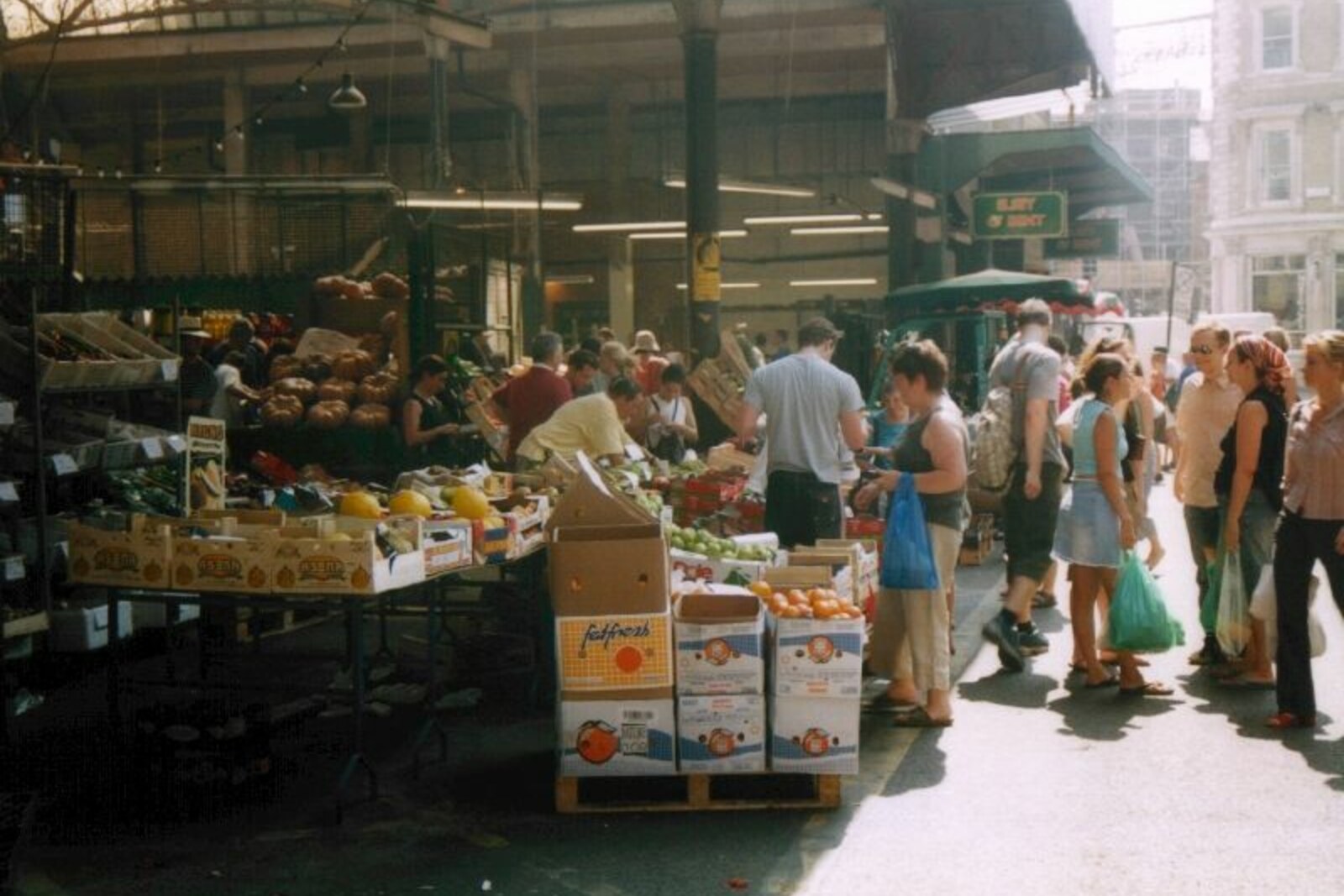
Look around first
What to notice
- Iron-and-glass halls
- Three Crown Square
- Retail traders' stalls
The story of the place
Borough Market occupies the plot behind Three Crown Court that the people of Southwark once bought for food trading. The old market house has not survived, and nineteenth-century iron-and-glass halls now stand above the rows. Retail stalls operate beneath them, and nearby, long-standing participants in the local trade still sell cheese and meat.
In seventeen fifty-four, the people of Southwark had less than two years left to save their food market. At the time, trading took place on Borough High Street, at the southern end of London Bridge. Carts, stalls, and herds driven to the butchers blocked access to the bridge. The City of London managed the market and collected income from it, but the congestion was already disrupting trade on both sides of the Thames. Parliament ordered the market to close by March twenty-fifth, seventeen fifty-six.
The people of St Saviour's Parish—the local community around what is now Southwark Cathedral—sought the right to open their own market away from the main road. They secured a second Act through Parliament. It allowed them to buy land within the parish and prohibited the sale of food within a thousand yards of the new market. This gave the parishioners both a place to trade and protection from their nearest competitors.
All that remained was to pay for the plot. The parishioners sold annuities to townspeople: a person paid money up front and, in return, received the right to regular payments. They raised six thousand pounds this way and bought a piece of land called The Triangle behind Three Crown Court. On March twenty-fifth, seventeen fifty-six, precisely by the deadline for closing street trading, the site was already receiving farmers' food carts.
The new Act stated that the market must remain parish-serving property forever. The iron-and-glass halls came later, in the nineteenth century; the old market house disappeared. What remained were the plot bought by the residents and the way it was managed. Borough Market belongs to a charitable trust, and decisions are made by a board of volunteer trustees.
In the late nineteen nineties, those trustees had to decide how to fill the nearly dying market. Supermarkets had taken customers from the independent greengrocers to whom Borough's wholesalers had once sold crates of fruit and vegetables. New food businesses began renting the empty warehouses. Cheese merchant Randolph Hodgson, founder of Neal's Yard Dairy, suggested holding a fair here to Henrietta Green, the author of a guide to small British producers for whom she was seeking customers.
In November nineteen ninety-eight, Green gathered more than fifty producers in the main hall for a three-day Food Lovers' Fair. The day before, she did not have enough participants, but she refused to fill the spaces with random vendors. At a quarter to ten on the first morning, Green stood among people who had brought goods from many miles away and feared that they would sell nothing. By noon, several participants had sold out of stock intended to last all three days. One producer had brought nine hundred pork pies—not a single one remained.
After the fair, the trustees set aside every third Saturday of the month for retail trading, then made it weekly. Green's official work with the market proved brief, but the vendors she assembled formed the foundation of the new Borough Market. Neal's Yard Dairy still sells cheese on Park Street, and The Ginger Pig sells meat in Three Crown Square. Both were among the participants in that fair.
Useful on site
The market is open Tuesday–Friday 10:00–17:00, Saturday 9:00–17:00, Sunday 10:00–16:00; closed on Mondays (except public holidays).
Checked: June 17, 2026. Check the official source before visiting.Keep the walkways clear and be prepared for crowds and the sharp noise of trains. The selection and traders' operations change, so it is best not to regard any particular food as guaranteed.