 Guide On Map
Podgórze and Zabłocie: From an Independent Town to a Museum District
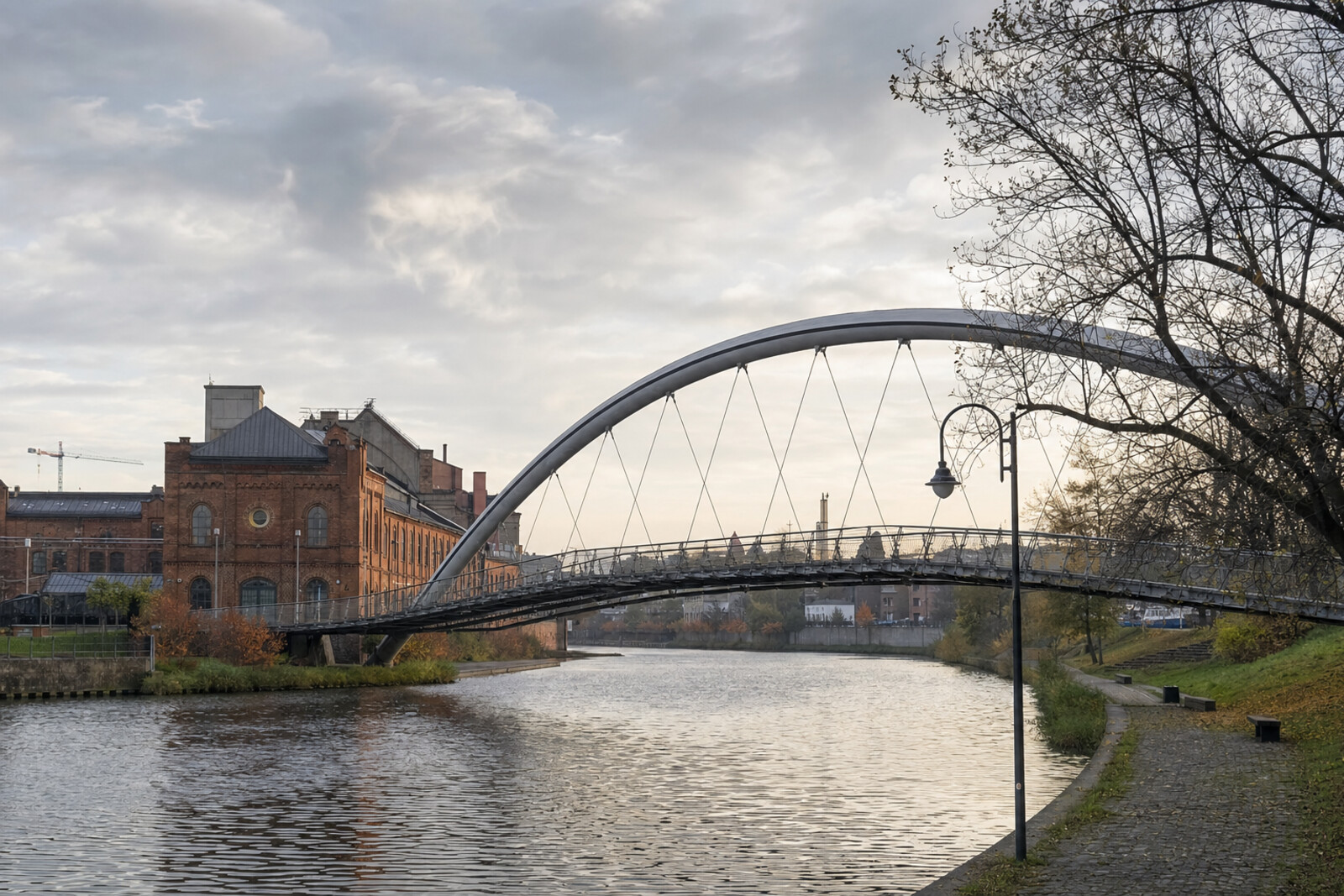
From the Father Bernatek Footbridge through Podgórze to the factory buildings of Zabłocie
Guide On Map on your phone
Open the walk like a regular app
It takes about 10 seconds to install. No app store needed.
The whole path
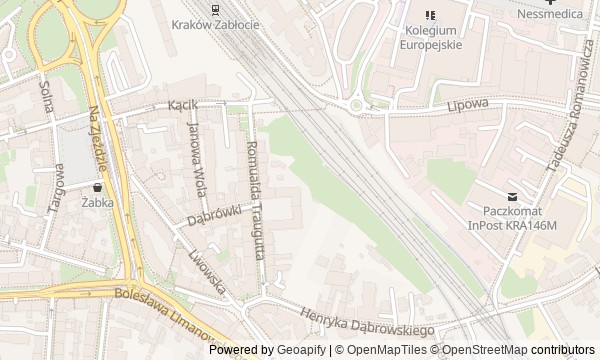
Route map
About the walk
You will cross the Vistula River from Kazimierz into Podgórze, moving from the former center of an independent town to the traces of a closed district, then on to industrial Zabłocie. The route begins on a steel footbridge and leads to the town hall and the tall tower of the parish church. Further on, dressed-up facades give way to a short stretch of wall, empty chairs, and a pharmacy sign. Beyond the railway, there are gates, workshop roofs, and a white museum wall.
The story will be calm and precise. Small things will matter here: a worker's stamp, a hiding place beneath a counter, a cart carrying someone else's furniture, and lists compiled more than once.
By the end, you will be able to distinguish 3 layers of Krakow on the right bank: independent Podgórze, the closed occupation-era district, and Zabłocie, where museums have taken over former factory buildings.
Why this order
The footbridge takes you across the former boundary between Krakow and Podgórze and onto the square from which the independent town was governed. St. Joseph's Church stands at the far end of this market square, showing the scale of its civic ambitions. From this ceremonial center, Limanowskiego Street leads to the surviving Krakow Ghetto Wall; once you have seen the boundary, return along Lwowska Street to the square that once lay inside it. The Eagle Pharmacy comes immediately after the square: the events of the open urban space continue in a single room at its edge. The passage beneath the railway carries you from the former ghetto into industrial Zabłocie, to the factory where forced labor became an opportunity for rescue. MOCAK Museum of Contemporary Art in Krakow completes the route in neighboring workshops of the same enterprise: after the administrative building, you will see what became of the complex's production wing.
Those who want to go beyond the Old Town and Kazimierz Those who value human stories without grand rhetoric Those ready to connect urban history, the memory of the ghetto, and contemporary art
Those looking for an easy walk without difficult subjects Those who want a route only through medieval Krakow in the open air Those not planning to enter museum spaces
Before you go
Settle into an unhurried pace and leave time to pause by the wall and in the square: these places are not meant to be taken in on the run. Most of the route can be understood from outside, so the walk still works without museum entry. The Eagle Pharmacy, Schindler's Factory, and MOCAK are separate institutions; check the visiting terms and booking requirements for each in advance, especially if you hope to go inside the factory. Bring headphones, comfortable shoes, and rain or sun protection: the open stretches by the river and in the square offer very little shelter. Speak quietly at memorials and do not use them as backdrops for staged photographs.
When to go
2–3 hours
Backup plan
If the weather turns, your energy runs out, or museum tickets are unavailable, keep the outdoor backbone of the route: cross the bridge, see the market square and church, then spend time at the wall, the empty chairs, and the pharmacy facade. After that, you can continue to Lipowa Street and look at the former factory buildings from outside—the transition from memorial Podgórze to industrial Zabłocie will still be clear. If needed, shorten the walk after the pharmacy and save Schindler's Factory and MOCAK for another day: their exhibitions need time and should not become a rushed add-on.
Route conditions
Surface. Paved — 3.2 km
Stairs. Flights: 2, 14 m in total
Access. Wheelchair — no; stroller — limited (stairs)
Facilities. Toilets — 2
Elevation. Ascent — 20 m; descent — 18 m
OpenStreetMap extract of June 18, 2026: database data, not a check on the ground. Data © OpenStreetMap contributors, ODbL licence
Walk plan
Open in maps ↗- 1
Father Bernatek Footbridge
Here you will see why a link between the two riverbanks appeared before they were united in one city. - 2
Podgórze Market Square
The square shows that Podgórze became part of Krakow not as a nameless outskirt, but as a town with its own government. - 3
St. Joseph's Church
This stop explains how an unrealized plan became a statement by independent Podgórze. - 4
Fragment of the Krakow Ghetto Wall
The surviving masonry will give a physical measure to the boundary that people tried to cross in both directions. - 5
Ghetto Heroes Square
Here, one personal escape will turn out to be linked to the belongings left behind after whole families vanished. - 6
The Eagle Pharmacy
The small retail room shows how an ordinary professional workplace became a refuge. - 7
Schindler's Factory
This stop explores how an enterprise created for profit and military orders became a route to salvation. - 8
MOCAK Museum of Contemporary Art in Krakow
The final stop will connect the fate of a private collection with the new purpose of the factory buildings.
Route features
Everything you need stays in the browser
Progress, saves and your trip plan are stored on this device.
Add Guide On Map to your home screen so the walk opens outside the browser.
How we handle sources, maps and corrections: our editorial standards