 Guide On Map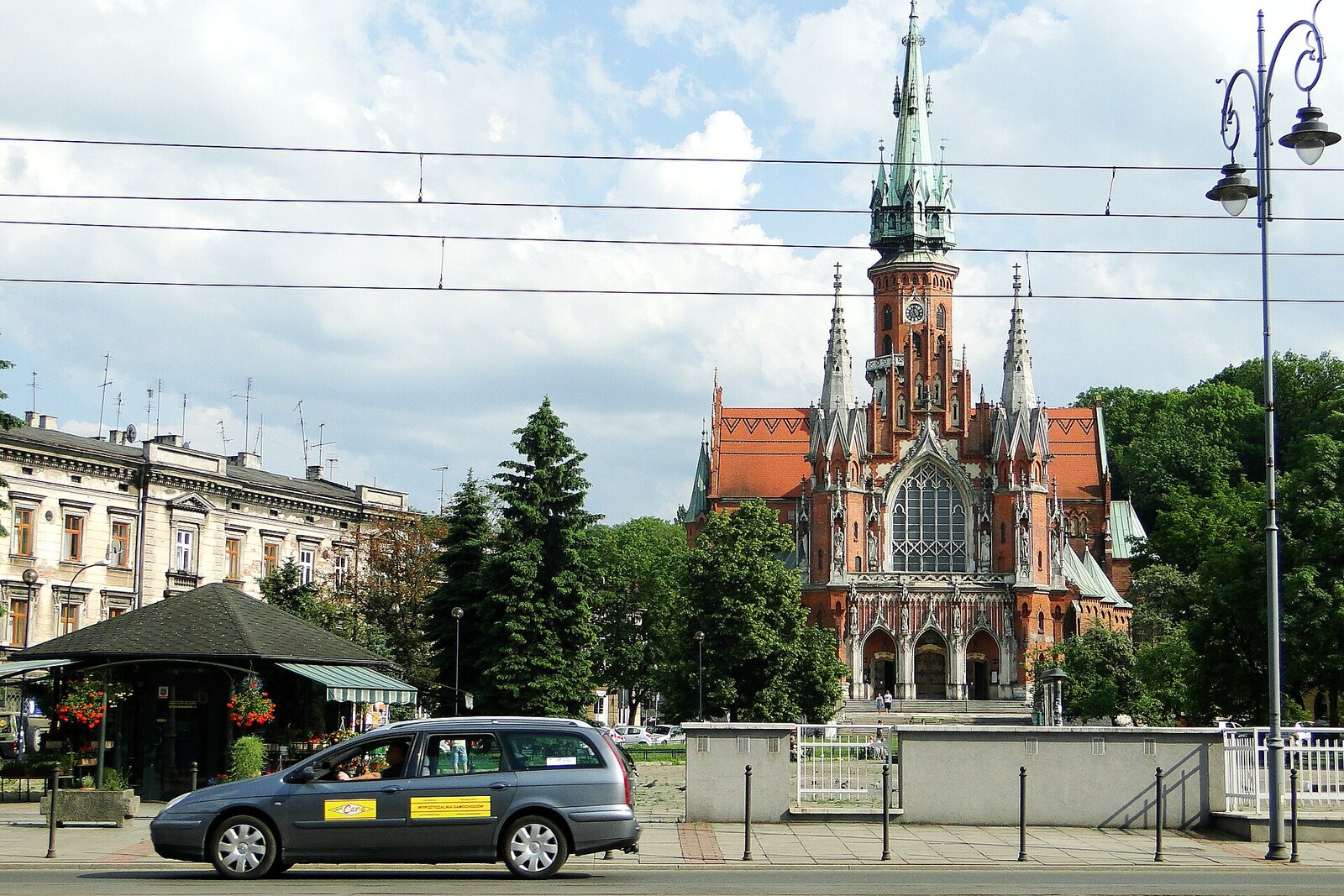
Look around first
What to notice
- Town hall façade
- Coat of arms above the windows
- Square in front of the town hall
The story of the place
On April fifteenth and sixteenth, nineteen thirteen, it was decided in the town hall on the eastern side of this square whether Podgórze would remain a separate town. Twenty-five city councilors voted for unification with Krakow, and six against it.
At the time, Podgórze had its own mayor, council, coat of arms, businesses, and budget. The square was called the Main Market Square, to distinguish it from the Small Market Square—today's Ghetto Heroes Square. The Polish word “rynek” means a central market square. The site was chosen at the junction of roads to Krakow, the Wieliczka salt mines, and toward Kalwaria-Zebrzydowska. On Tuesdays and Fridays, merchants came here; the market provided income for the owners of shops, inns, and municipal levies. When Podgórze grew prosperous, the council built a spacious town hall here with a council chamber.
By the beginning of the twentieth century, this chamber was overseen by Franciszek Maryewski—the last mayor of Podgórze, who sought independence for the town or at least favorable terms of unification. He came here as a cashier for the mills of the industrialist Maurycy Baruch, then became director of the businesses, sat on the city council for more than thirty years, and held the mayor's seat for fifteen years. With the disappearance of Podgórze's independence, the post to which his entire career had led also disappeared.
Juliusz Leo, the president of Krakow, pushed for unification. He needed land to expand the overcrowded city, hemmed in by a ring of Austrian fortifications. Podgórze had industrial businesses, quarries, and vacant plots. In nineteen eleven, the local council refused: its councilors believed that the economy and the interests of residents could be protected only through complete independence.
Maryewski continued negotiations. He demanded seats for Podgórze residents on the joint city council, a town hall branch on the right bank, preservation of institutions, support for local trade and industry, street lighting, and a tram connection with Krakow. The agreed treaty ran to seventy-one articles. After a roll-call vote, it was signed on June seventh, nineteen thirteen.
On July first, nineteen fifteen, Podgórze became Krakow's twenty-second district. Maryewski joined the Krakow council and received the post of fourth deputy to the city president, but left a year later. The town hall ceased to be the administration of an independent town.
One of the treaty's terms concerned a double-track tram line. In nineteen seventeen, a tram turning loop was laid out on the square, and trade was removed from here. The loop was later dismantled, but the market never returned.
Number one now houses the municipal architecture administration and the council of Podgórze's thirteenth district. Above their windows, the coat of arms of the town remains, whose independence was abolished in the chamber behind this façade.
Useful on site
Open city square; check events, markets, and church activities separately.
Checked: June 26, 2026. Check the official source before visiting.This is an active city square with traffic and pedestrians. Choose a quiet place away from the roadway to listen, and do not try to look for the no-longer-surviving gates as a separate feature.